

Seoul, March 10, 2026 (Agencies) – The government of South Korea has confirmed the partial redeployment of key American military assets from the Korean Peninsula to the Middle East as tensions continue to rise over the conflict involving Iran.
President Lee Jae-myung announced during the ninth State Council briefing in Seoul that certain missile batteries and air defence systems belonging to United States Forces Korea (USFK) had been moved from South Korea to support American operations in the Middle East.
Lee stated that while Seoul expects USFK to continue contributing to peace and stability on the Korean Peninsula, the redeployment was carried out based on Washington’s military requirements. He acknowledged that the South Korean government had expressed concerns about removing some air defence assets but admitted that Seoul could not fully influence the final decision taken by the United States.
Despite the redeployment, the South Korean president emphasized that the move would not weaken the country’s deterrence capability against North Korea. He said the overall military balance between the two Koreas remains strongly in favour of South Korea in terms of conventional military strength, although North Korea’s nuclear arsenal remains a significant factor.
Lee also noted that the removal of certain assets would not cause serious disruption to the defence posture of South Korea. He said the gap in military power between the two sides remains “enormous in real terms,” stressing that South Korea maintains overwhelming advantages in conventional combat capabilities.
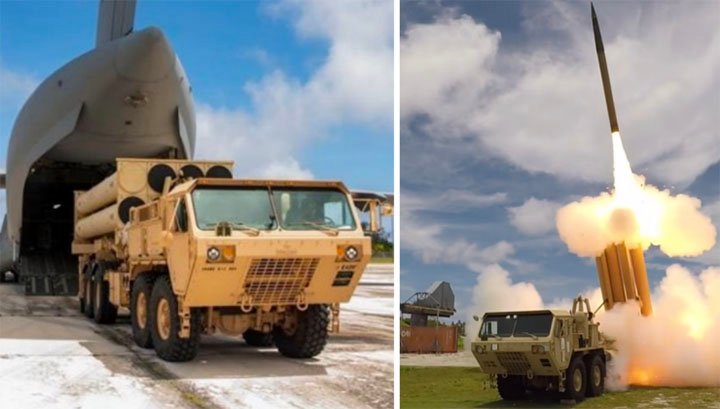
Although the president did not reveal specific details about the systems involved, local media footage showed the movement of the Terminal High Altitude Area Defense (THAAD) missile defence system through Seoul, indicating that elements of the system may be among the assets being relocated.
According to defence analysts, the redeployment is likely intended to support American forces engaged in Operation Epic Fury, an ongoing US military campaign targeting Iran amid escalating regional tensions.
The move comes at a time when the Middle East is witnessing heightened military activity, with the United States strengthening its defence posture and repositioning assets across different regions to support its operations. Analysts say the shift also reflects Washington’s effort to concentrate advanced air defence capabilities in areas where the risk of missile and drone attacks is currently higher.