


ANCHORAGE, August 26, 2026 (Agencies) — A 23-year-old US Air Force civil engineer was among eight people killed when a contracted aircraft crashed near a remote military radar installation in western Alaska last week, officials said.
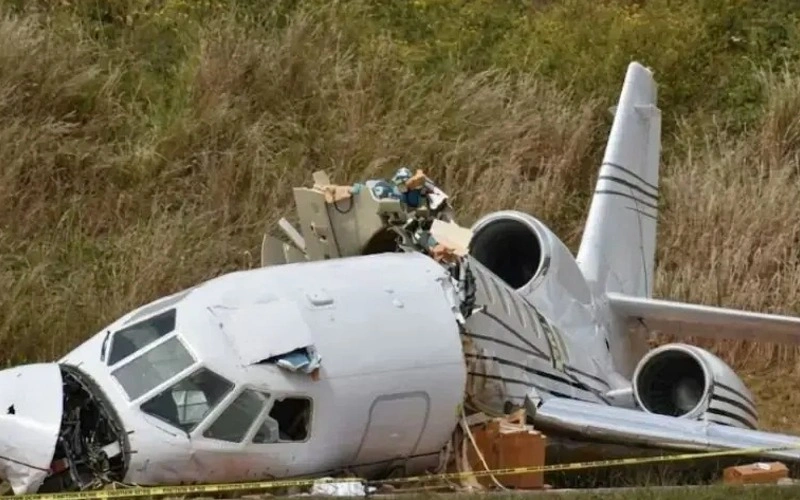
Second Lt. Leah A. Borsich, a member of the 611th Civil Engineer Squadron at Joint Base Elmendorf-Richardson, was travelling aboard a Cessna 441 on August 20 when the aircraft crashed while approaching the Cape Newenham Long Range Radar Site. All eight people aboard were killed.
The 611th Civil Engineer Squadron supports more than 40 remote and austere radar installations across the region as part of the Pacific Air Forces Regional Support Center under the 11th Air Force.
Col. Timothey Meerstein, commander of the regional support centre, described Borsich as a positive leader who brought energy and enthusiasm to the organisation, praising her professionalism, compassion and commitment.
Borsich was originally from Ohio and had participated in the US Air Force ROTC programme while studying at the University of Dayton.
The US Army Corps of Engineers identified two other victims as its employees Sabrina Hansen and Hayden Scalise, both from Anchorage. Officials had not released the identities of the remaining victims at the time of the latest announcements.
The Army Corps said it had contracted Security Aviation, an air charter company, to transport personnel to Cape Newenham to inspect and carry out maintenance on a newly installed fire-suppression system at the facility.
The Cape Newenham installation forms part of the Alaska Radar System, a network of 15 remote long-range radar sites and three remote radio sites used to monitor Alaskan airspace, including potential activity approaching from the direction of Russia.
The radar station was established during the Cold War, when dozens of Air Force personnel were stationed at the remote location. It is now operated primarily by a small number of contractors with support from the Air Force.
Preliminary information from the National Transportation Safety Board indicated that the aircraft had made a missed approach before the crash. NTSB Alaska Region Chief Clint Johnson said the pilots had no visual reference and were relying on instruments while attempting to land.
Johnson said the aircraft was lost from radar and communications after a subsequent missed approach, prompting an immediate search operation.
US military and Alaska Air National Guard personnel took part in the response, including an HH-60W rescue helicopter, an HC-130 personnel recovery aircraft and Guardian Angel personnel.
The NTSB is continuing its investigation to determine the precise cause of the crash, including the aircraft’s condition, weather, flight operations and circumstances surrounding the failed approaches.
The accident highlights the difficult operating conditions faced by aircraft servicing Alaska’s remote military installations, many of which are located far from major population centres and are accessible only by air or limited transportation infrastructure