

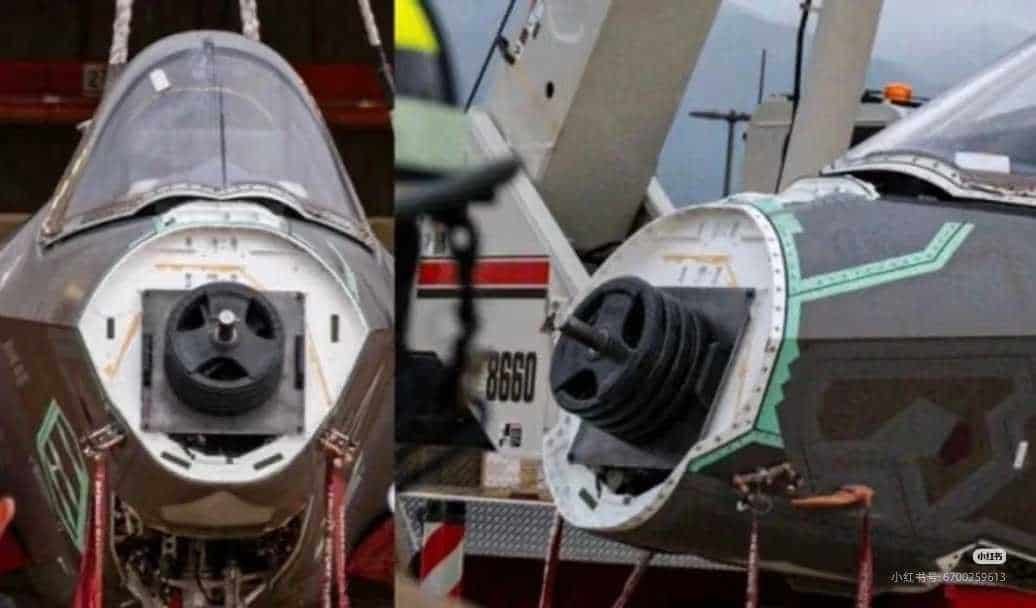
Washington, February 15, 2026 (Khyber Mail): The long running modernization effort for the Lockheed Martin F-35 Lightning II — the centerpiece of U.S. and allied tactical airpower — is facing intensified scrutiny as technical setbacks, supply chain bottlenecks and material export restrictions complicate integration of its next generation radar system. Recent reports and official responses illustrate a multifaceted challenge involving the planned AN/APG?85 advanced AESA (Active Electronically Scanned Array) radar, underlying supply dependencies and procurement timelines.
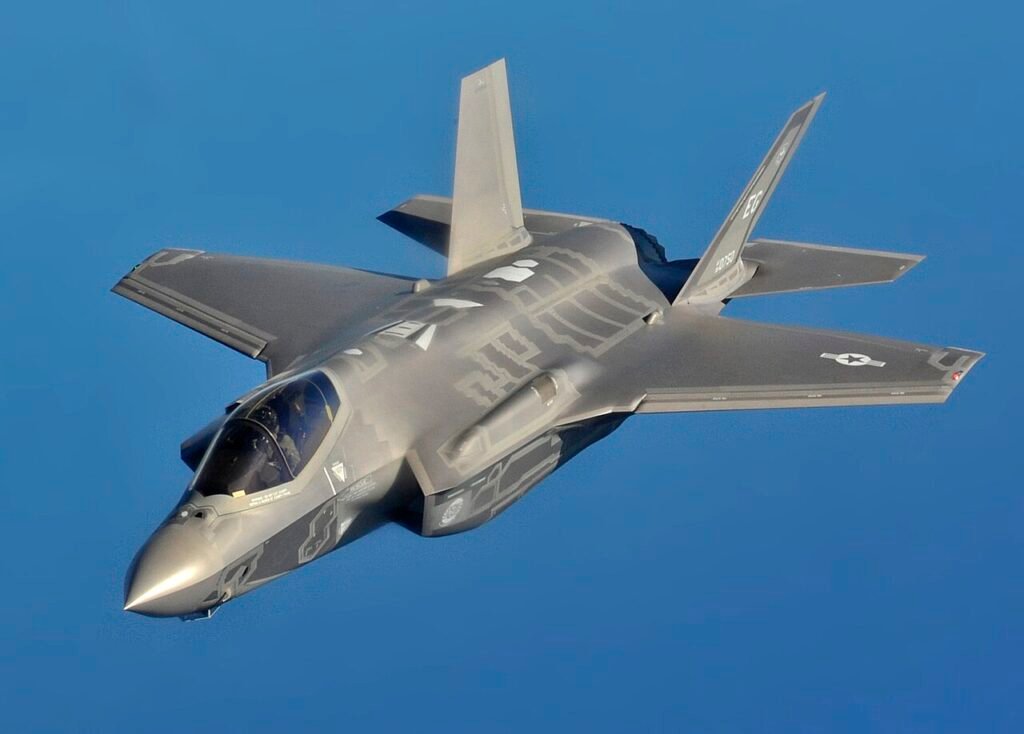
At the core of concerns is the transition from the existing AN/APG-81 radar to the more powerful AN/APG-85, which is part of the broader Block 4 and Technology Refresh 3 (TR-3) modernization packages designed to extend the fighter’s detection range, electronic warfare capabilities, processing power and future growth potential. Block 4 was originally projected to be complete by 2026 but is now at least five years behind schedule and billions of dollars over budget.
Recent unconfirmed industry reporting suggested that some of the latest F-35s from Lot 17 production — slated to begin fielding aircraft configured for the AN/APG-85 — had been delivered without radars installed due to delays in radar availability, with aircraft delivered with ballast in the nose to maintain balance. Such jets could theoretically still fly by relying on data links and sensor fusion from radar equipped wingmen, but would lack an onboard primary sensor critical for independent operations.
However, the United States Air Force publicly denied receiving radar less F-35As, stating that Lot 17 aircraft are being delivered with the existing APG-81 radar while the program continues working toward APG-85 integration. The F-35 Joint Program Office noted that details of modernization plans and schedules remain classified to protect program security.
- Supply chain and China’s export controls
Beyond integration and software challenges, a key strategic vulnerability remains dependency on critical minerals and materials that underpin radar and electronics manufacturing. Advanced AESA radars and aircraft systems depend on high?performance semiconductors, gallium?nitride components and rare earth elements (REEs) such as dysprosium, terbium and neodymium — materials in which China commands dominant share of global production and refinement. Beijing’s tightening of export licenses and restrictions on materials such as gallium and germanium since 2023 has exerted pressure on Western defense supply chains, raising costs and creating uncertainty for programs like the F-35 Block 4 upgrades.
According to analysis from defense and industry observers, China’s control of more than 90 percent of some refined materials risks making the U.S. and its allies vulnerable when accessing enough specialized inputs for high power radar systems and other advanced electronics. Even when raw materials are available, processing and magnetic materials for T/R (transmit/receive) modules and electronic warfare arrays remain difficult to source outside the Chinese supply chain, prompting investments in domestic rare earth mining and processing capacities — a multi year effort.
- Operational and geopolitical implications
While the F-35 remains a central pillar of U.S. and partner air forces, delays in Block 4 modernization and radar upgrades have implications for maintaining competitive edge against advancing adversary platforms. The APG-85 is designed to enhance detection of low observable threats and support integrated combat operations, but its integration is tied to broader aircraft power, cooling and electronics architecture that itself has faced schedule slippages.
The supply chain vulnerabilities underscore broader strategic competition with China — a dominant producer of several critical minerals — and have fueled overseas investment to diversify sourcing. U.S. initiatives are underway to establish domestic “mine-to-magnet” supply chains and reduce reliance on single source suppliers.
Despite the challenges, program officials emphasize that deliveries continue and modernization efforts remain ongoing, with retrofit and upgrade paths planned for aircraft as technology matures. However, the combination of export controls, resource dependencies and integration complexity illustrates a broader trend in advanced defense manufacturing where geopolitical supply chains increasingly influence timelines and capability deployment.