

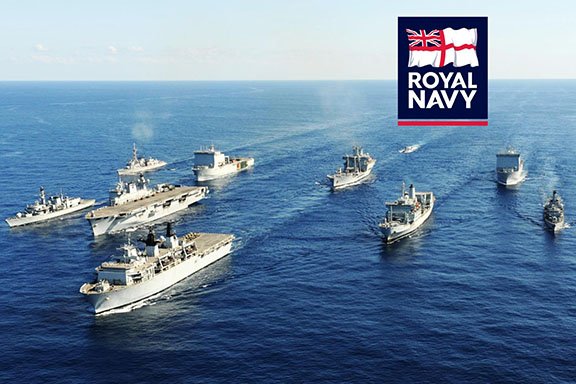
LONDON (Agencies) July 29, 2025 — The Royal Navy is facing mounting scrutiny over an apparent structural imbalance, with the number of serving admirals exceeding the count of active warships—a situation drawing concern among defense analysts and members of Parliament as the United Kingdom prepares for its 2025 Strategic Defence Review.
As of July 2025, the Royal Navy fields only 25 combat-ready warships, including two Queen Elizabeth-class aircraft carriers, six Type 45 destroyers, and eight Type 23 frigates. The fleet also includes nine submarines—four Vanguard-class ballistic missile subs and five Astute-class attack submarines—alongside minehunters and support vessels, bringing the broader operational total to 63 ships.
By contrast, the Navy’s leadership comprises 40 admirals and 63 commodores, many of whom occupy administrative, joint service, or NATO-linked positions rather than traditional seagoing commands. This results in a ratio of roughly 1 admiral per combat ship, drawing comparisons to the service’s World War II structure, which had 367 warships and just 53 admirals, or approximately 1 admiral per seven ships.
Defense experts argue the shift is symptomatic of wider military reorganization, reflecting the post–Cold War downsizing of Britain’s naval forces and a growing emphasis on multinational coordination, cyber warfare, and high-tech platforms that require fewer personnel.
“The disparity speaks to a bureaucratization of defense command rather than an increase in seaborne capability,” said a retired Royal Navy officer, who requested anonymity.
The controversy has also reignited parliamentary debate about fleet readiness and procurement delays, including setbacks in the delivery of new Type 26 frigates, Type 31 general-purpose frigates, and future Type 83 destroyers envisioned to replace aging platforms in the 2030s.
Despite the optics, the Ministry of Defence maintains that current leadership numbers are appropriate for global responsibilities, which include nuclear deterrence operations, NATO deployments, and maritime security missions in the Indo-Pacific, North Atlantic, and Red Sea.
A Ministry spokesperson emphasized that “senior leadership is distributed across joint and international commands, reflecting the modern demands of integrated defense and coalition operations.”
Nevertheless, calls for greater transparency and operational streamlining are expected to grow louder as the Defence Review approaches. The Navy’s command structure, its relevance to fleet composition, and long-term maritime strategy are likely to be major focal points.