

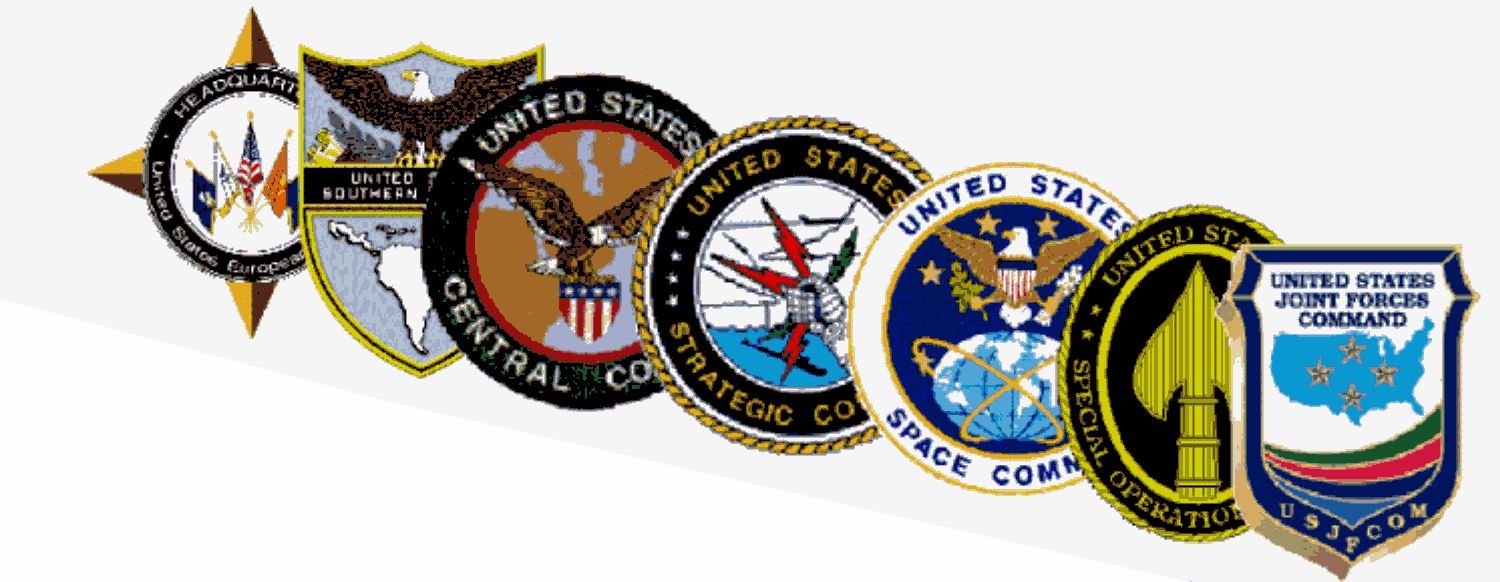
Washington, D.C., December 17, 2025 (Agencies) — In response to evolving global security dynamics, the U.S. Department of War is undertaking significant restructuring efforts across its Unified Combatant Commands (COCOMs), including U.S. Central Command (CENTCOM), U.S. European Command (EUCOM), and U.S. Indo-Pacific Command (INDOPACOM). These restructuring efforts are aimed at adapting to new threats, particularly from China and Russia, while strengthening regional partnerships, modernizing military capabilities, and improving the Pentagon’s readiness in the face of great power competition, cyber threats, and non-traditional warfare.
For decades, CENTCOM has been primarily focused on counterterrorism operations and stability missions in the Middle East, South Asia, and Central Asia. However, under the leadership of the Trump administration, there has been a shift toward addressing the growing influence of China and Russia in the region, particularly in terms of military influence, cyber warfare, and economic partnerships. CENTCOM’s traditional focus on counterinsurgency operations in places like Afghanistan, Iraq, and Syria is being supplemented by a renewed emphasis on countering Chinese and Russian influence in the region. The strategic pivot comes as both China and Russia expand their military, technological, and diplomatic footprint in the region.
China’s growing presence in Central Asia, its investments in Iran’s nuclear program, and the expansion of its Belt and Road Initiative (BRI) in the Middle East are central to CENTCOM’s restructuring. The Pentagon has refocused CENTCOM’s efforts to counter Chinese moves, which include enhanced military relationships with countries like Pakistan and Iran, as well as economic investments in critical infrastructure. Similarly, Russia’s actions in Syria and its alliances with Iran and other regional actors have prompted CENTCOM to increase its surveillance and intelligence capabilities in the region, in order to respond to both conventional and hybrid warfare tactics used by Moscow. CENTCOM has also prioritized enhancing its cyber capabilities and integrating space defense into its operational planning. The rising threat of cyberattacks from state and non-state actors has pushed CENTCOM to develop more robust cyber defense mechanisms. The introduction of unmanned aerial systems (UAS), such as drones for surveillance and strike missions, is also a core part of CENTCOM’s future force posture.
The war in Ukraine has fundamentally reshaped the priorities of U.S. European Command (EUCOM), placing the Russian threat front and center. EUCOM’s restructuring emphasizes deterrence and defense against Russian aggression while strengthening NATO’s role in Eastern Europe. Following Russia’s invasion of Ukraine, EUCOM has ramped up its efforts to reinforce NATO’s Eastern Flank, particularly in countries like Poland, Romania, and the Baltic States. This includes deploying additional forces to the region, increasing the frequency of joint military exercises, and enhancing the pre-positioning of military equipment to ensure that the U.S. and its NATO allies can quickly respond to any Russian threat. With Russia’s increasing use of cyberattacks and disinformation campaigns, EUCOM has expanded its focus on cyber defense and information warfare, working closely with European partners to counter these threats.
INDOPACOM, responsible for the Asia-Pacific region, is undergoing a major restructuring to respond to the growing strategic competition with China. With Beijing’s increasingly assertive stance in the South China Sea, Taiwan Strait, and Indian Ocean, INDOPACOM has reoriented its focus on deterrence, defense, and engagement with regional allies. The restructuring of INDOPACOM places a significant emphasis on bolstering military alliances with Japan, South Korea, Australia, and India. Through the Quad (Quadrilateral Security Dialogue) and other bilateral agreements, the U.S. is reinforcing security ties in the region to counter China’s rise. The U.S. has increased its military presence in the region by expanding deployments to Guam, Australia, and the Philippines. The focus is on improving interoperability among U.S. forces and their regional allies, especially in terms of cybersecurity, space operations, and air and missile defense. As the U.S. military faces new challenges from China’s cyber capabilities, INDOPACOM is incorporating cyber defense operations and space-based assets into its strategic planning. The integration of AI-driven defense systems, such as autonomous drones, and the use of advanced satellite communication and GPS systems, are central to maintaining a technological edge.
While CENTCOM, EUCOM, and INDOPACOM are at the forefront of the Pentagon’s restructuring efforts, other combatant commands are also adapting to new realities. AFRICOM, which historically focused on counterterrorism efforts in North Africa and the Sahel, is increasingly shifting its attention to countering China’s influence on the continent, especially as Beijing makes strategic investments through its Belt and Road Initiative. AFRICOM is working to strengthen its partnerships with African Union (AU) forces and expand military cooperation with African nations in both counterterrorism and regional stability efforts. Similarly, SOUTHCOM, which oversees U.S. military operations in Latin America and the Caribbean, is adjusting its strategy to address China’s growing influence in the region. This includes Beijing’s investments in infrastructure, trade, and military relations with Venezuela and other Latin American nations. At the same time, SOUTHCOM is enhancing its focus on counter-narcotics and humanitarian operations, especially with the ongoing migration crises in Central America.
NORTHCOM, which is responsible for domestic defense within the U.S. and North America, has evolved to focus more on cybersecurity, homeland defense, and natural disaster response. This includes a significant emphasis on domestic counterterrorism operations, improving cyber defense capabilities, and working alongside federal agencies like FEMA (Federal Emergency Management Agency) to respond to natural disasters and other domestic crises.
A key theme of the Pentagon’s restructuring efforts is the emphasis on Multi-Domain Operations (MDO), where U.S. military forces integrate capabilities across land, sea, air, space, and cyber domains to enhance agility, speed, and effectiveness. The growing prominence of cyber warfare, space defense, and artificial intelligence in modern conflict requires the U.S. military to rethink traditional warfare paradigms. Each combatant command is incorporating MDO into its strategies, focusing on faster decision-making, enhanced interoperability between services, and the ability to conduct joint operations that span multiple domains.
The restructuring of U.S. combatant commands is a direct response to an increasingly complex global security environment. As the Pentagon reorients its forces to deal with threats from China, Russia, cyber adversaries, and non-state actors, it is investing in new technologies, strengthening partnerships with allies, and rethinking traditional defense paradigms. With the rise of great power competition and the increasing significance of cybersecurity and space operations, the restructuring of CENTCOM and other commands will play a pivotal role in ensuring U.S. military superiority in an unpredictable world.