

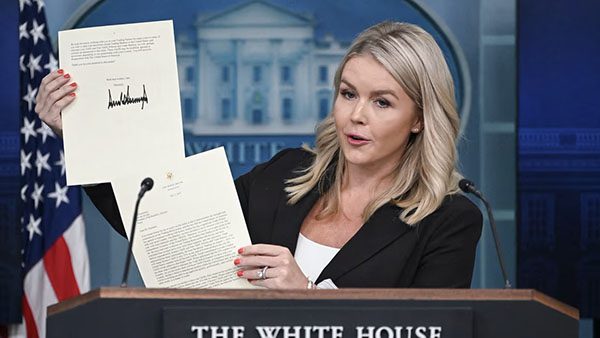
Washington, D.C. (Agencies): July 8, 2025 — President Donald Trump has announced sweeping new tariffs on a growing list of U.S. trading partners, with rates climbing as high as 40% for some countries. The move—outlined in a series of official letters sent Monday—marks a dramatic escalation in Trump’s campaign to correct trade imbalances and push foreign governments toward fairer deals, according to the White House.
In an executive action issued the same day, Trump extended the deadline for implementing the bulk of the “reciprocal tariffs” to August 1, except for China. Originally set to take effect this week, the tariffs are part of a strategy to retaliate against what Trump calls discriminatory trade practices and unbalanced import-export relationships.
Japan and South Korea, the sixth- and seventh-largest exporters to the U.S., will each face a 25% tariff starting August 1. Other affected countries include Malaysia, Kazakhstan, South Africa, Myanmar, Laos, and seven additional nations—with some facing penalties as high as 40%.
Trump emphasized that the tariffs are designed to pressure governments with significant trade surpluses with the U.S., and encouraged them to relocate manufacturing to American soil to avoid the new levies.
“If they call up and want to do something a different way, we’re going to be open to that,” Trump told reporters Monday evening, signaling a willingness to negotiate.
The announcement sparked immediate global reaction:
- Japan: Prime Minister Shigeru Ishiba expressed “regret” and confirmed ongoing efforts to secure a bilateral trade deal.
- South Korea: Officials warned of market instability and pledged to act “boldly” if necessary.
- South Africa: President Cyril Ramaphosa challenged the data underlying the 30% rate and urged domestic industries to diversify.
- Thailand and Malaysia: Both governments said they’re seeking revised agreements in “good faith.”
The new tariffs won’t stack with existing industry-specific duties—such as the 25% auto import tariff—but Trump has threatened to raise rates further if targeted countries retaliate.
Despite previous tensions, the European Union was not among the recipients of Monday’s letters. The EU and U.S. are reportedly in ongoing talks to finalize a broader trade agreement before the August deadline.
With $465 billion in goods imported from the 14 countries last year—$280 billion of that from Japan and South Korea—experts warn that higher tariffs could increase consumer prices in the U.S. and strain supply chains in key sectors like semiconductors, machinery, and apparel.
Whether Trump’s high-tariff strategy yields new trade deals or sparks countermeasures remains to be seen. For now, the clock ticks toward August.