

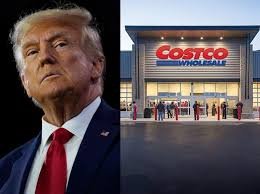
- The Costco lawsuit is more than a corporate challenge — it is a stress test of the entire tariff strategy, with the potential to reshape America’s economic trajectory.
Washington, United States, December 2 2025 (Agencies) – A lawsuit filed by Costco Wholesale Corporation has ignited fears of a looming economic crisis, as the retail giant challenges the legality of tariffs imposed under the Trump administration. Analysts warn the case could force the government to refund hundreds of billions of dollars already collected, potentially destabilizing financial markets and federal revenues.
Costco, joined by dozens of other companies including Revlon and Kawasaki Motors, is suing not only to contest the tariffs but also to preserve its right to refunds if the Supreme Court rules the tariffs unconstitutional. The urgency stems from a customs procedure known as “liquidation” — once tariff entries are finalized, importers may lose their legal right to recover refunds, even if the tariffs are later struck down. With a December 15 deadline looming, corporations are filing preemptive lawsuits to avoid being locked out of potential claims. This unprecedented move signals the high stakes and uncertainty surrounding the administration’s trade policy.
Tariffs currently generate tens of billions of dollars per month, forming the backbone of Trump’s economic strategy. If the Supreme Court rules against the administration, the government would not only lose future collections but also face refund obligations for hundreds of billions already spent and allocated. With federal deficits at historic highs, analysts warn the bond market could panic, interest rates could spike, and Wall Street could face chaos as investors reprice assets amid a sudden fiscal hole. The White House acknowledged the risks, stating: “The economic consequences of the failure to uphold Trump’s lawful tariffs are enormous.”
Lower courts have repeatedly ruled against the administration, questioning Trump’s authority under the International Emergency Economic Powers Act (IEEPA) to impose tariffs unilaterally. The Supreme Court heard arguments on November 5 and placed the case on a fast-track schedule. Several justices appeared skeptical of the administration’s position, though tariffs remain in place pending a final ruling.
Costco has long attempted to mitigate tariff impacts by rerouting supply chains, front-loading inventory, and selectively absorbing costs on essential goods. Yet the company’s decision to sue reflects the untenable uncertainty facing major retailers. “We’re doing everything we can,” Costco’s CFO said earlier this year, but the lawsuit underscores that even disciplined corporations cannot absorb the risk indefinitely.
The tariff debate has traditionally centered on who pays — foreign exporters, American businesses, or consumers. The Costco lawsuit introduces a third possibility: American taxpayers footing the bill through massive refunds and a budget crisis if the legal foundation collapses.
The Supreme Court is expected to rule within weeks or months. If the administration prevails, Trump will claim vindication. If not, the U.S. could face one of the largest economic policy reversals in modern history, with repercussions for markets, government finances, and the remainder of Trump’s presidency.