

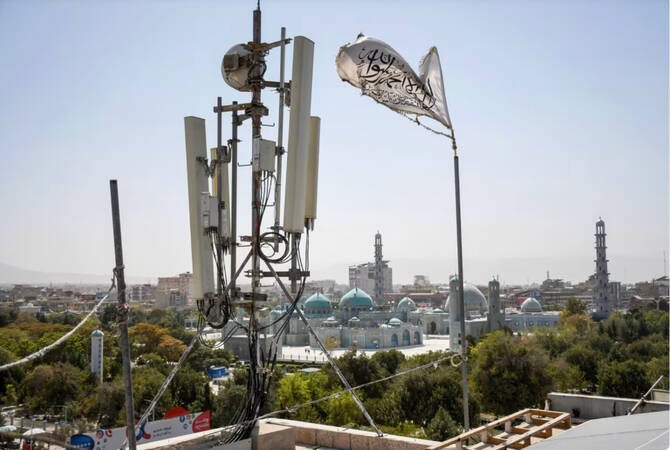
Kabul, September 19, 2025 (Agencies) – Taliban authorities have imposed a sweeping ban on fiber-optic internet services across northern Afghanistan, citing the need to prevent “immoral activities,” a move that has triggered widespread concern among rights organizations and civil society.
According to local media reports, the ban has affected at least ten provinces, including Kunduz, Badakhshan, Baghlan, Takhar, and Balkh, leaving government offices, businesses, public institutions, and households without high-speed internet access. While mobile internet remains operational, officials confirmed that fiber-optic connections have been deliberately disabled.
“The measure was taken to prevent immorality, and an alternative will be developed inside the country for essential needs,” stated Haji Attaullah Zaid, a Taliban provincial spokesman. He further disclosed that the directive was issued by Afghanistan’s Supreme Leader Hibatullah Akhundzada.
No official clarification has been provided regarding the selection of Balkh as one of the first provinces targeted, nor has any timeline been announced for the duration of the restrictions. Reports from Afghanistan International suggest that the ban may soon extend nationwide, with provinces such as Kandahar, Uruzgan, Helmand, and Nimroz already experiencing disruptions.
Human rights groups have condemned the move, warning of its catastrophic implications for Afghan society. The blockade is expected to severely impact access to education, particularly for women and girls who rely on online platforms following Taliban-imposed bans on school and university attendance.
The economic ramifications are also significant. Fiber-optic internet is a critical infrastructure for banks, companies, and government agencies, and its loss threatens to exacerbate Afghanistan’s ongoing financial crisis.
Beh Lih Yi, regional director at the Committee to Protect Journalists, described the action as “an unprecedented escalation of censorship that will undermine journalists’ work and the public’s right to information.”
Calls for the reversal of the ban continue to mount amid fears that Afghanistan’s digital isolation will deepen under the current regime.