

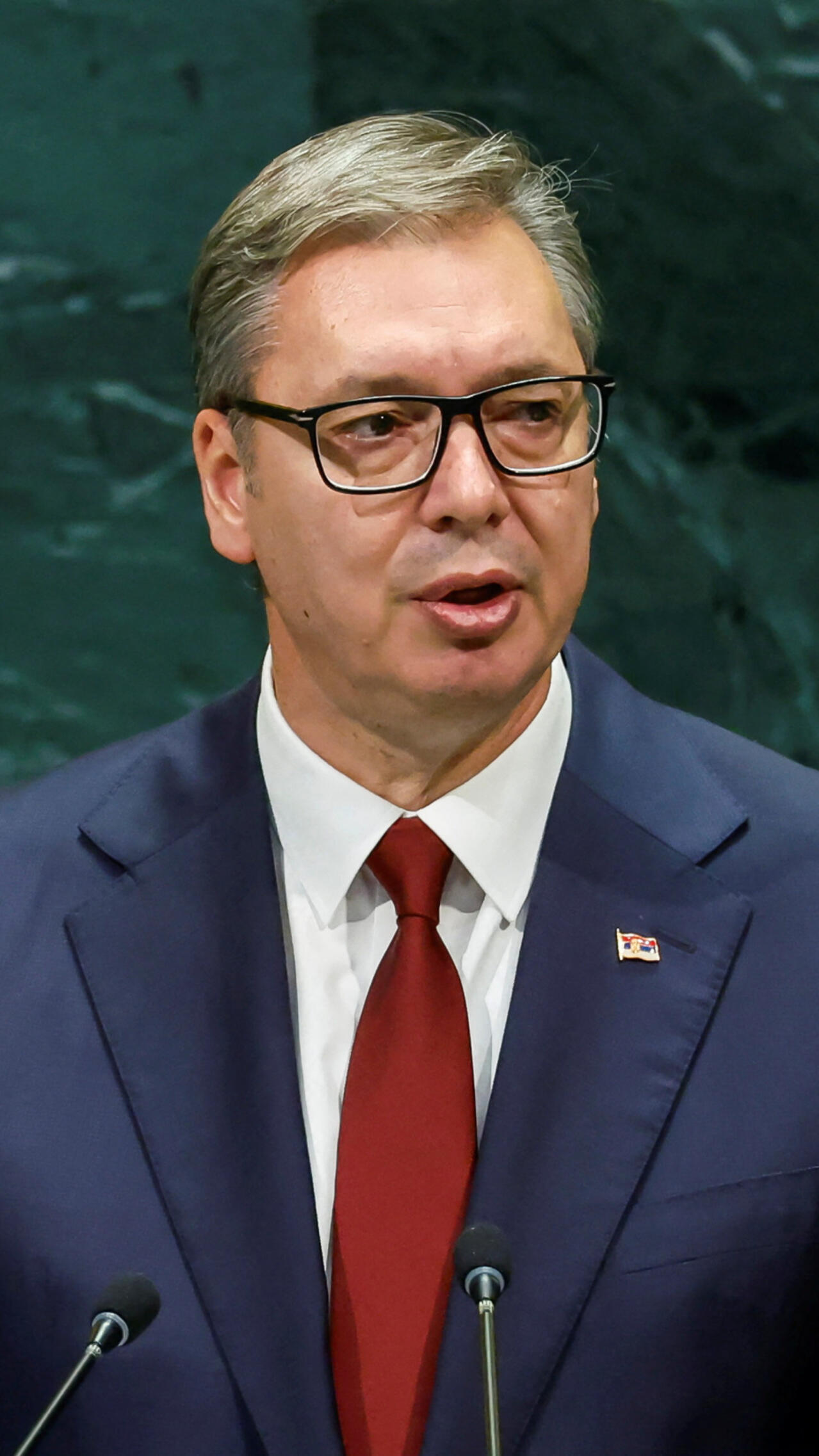
- Aleksandar Vucic ends his second and final term after 18 months of anti-government protests, but plans to run for prime minister in the October 25 election rather than leave politics
BELGRADE 27 SEPTEMBER 2026 (Agencies) – Serbia’s populist President Aleksandar Vucic announced his resignation on Sunday, ending his second and final five-year term and paving the way for early presidential elections, months after he first told supporters he intended to step down.
Vucic declared his resignation effective September 27, clearing the path for early parliamentary elections already scheduled for October 25, following a prior government request to dissolve parliament. Under Serbian law, once the president resigns, National Assembly Speaker Ana Brnabi? becomes acting president, and a new presidential election must be scheduled within three months. Vucic also announced plans to run for prime minister in the October 25 election, a route he is pursuing because Serbian law bars him from seeking a third term as president. He previously served as prime minister from 2014 to 2017.
Vucic first signalled his intention to resign at a pro-government rally in Belgrade in June, telling supporters he would remain president for only a couple more weeks before stepping down, though he did not specify an exact date at the time. He said then that he would help his Serbian Progressive Party campaign in the upcoming elections and suggested it was likely the last time he would address supporters as president.
The resignation follows roughly 18 months of sustained anti-government protests that have posed the most serious challenge yet to Vucic’s twelve years in power. The demonstrations were initially triggered by the collapse of a railway station canopy in the northern city of Novi Sad in November 2024, which killed 15 people and injured dozens more at a station that had only recently been renovated, and which many blamed on government corruption and substandard construction practices. The protests, led largely by students, previously forced the resignation of Vucic’s prime minister, Miloš Vu?evi?, in January 2025. Hundreds of protesters have been detained over the course of the demonstrations, with Serbia’s police accused by the European Union of excessive force and arbitrary arrests. Vucic has repeatedly described the protesters as “foreign agents” seeking to overthrow the government.
Power in Serbia has been heavily concentrated in the presidency under Vucic, who chairs cabinet meetings, directs government legislation, and oversees foreign and economic policy despite the office formally sitting above day-to-day governance. His Serbian Progressive Party’s electoral list for the October vote will reportedly be named “United Serbia.”