

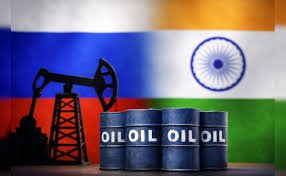
- Moscow drafting tax subsidies to import fuel from the very country it sells crude to, as Ukrainian strikes knock out over 20 refineries and push processing to a two-decade low
- Russia is preparing to launch large-scale seaborne gasoline imports from India to bridge a domestic fuel shortfall caused by sustained Ukrainian drone strikes on its refineries.
- Ukrainian strikes knocked out 16 Russian refineries in May and at least six more in June, cutting national oil processing to a two-decade low and gasoline output by roughly 25%.
- The resulting shortfall is about 25,000 tonnes of gasoline a day — roughly 20% of domestic consumption — pushing wholesale prices above 100 rubles and forcing some regions to ration fuel.
- Russia’s State Duma budget and tax committee has backed draft amendments to subsidize companies importing gasoline from India, based on Indian market prices and shipping costs.
- India is uniquely positioned to fill the gap: it imported a record 2.66 million barrels per day of Russian crude in June 2026, refining part of it for export — meaning Russia would effectively be buying back its own resource as finished fuel.
- India’s total gasoline exports hit a record 400,000 barrels per day in 2025, mostly to other Asian buyers.
NEW DELHI/MOSCOW June 26, 2026 (Agencies) — Russia is preparing to initiate large-scale gasoline imports from India to stabilize its domestic energy market and bridge a severe fuel deficit triggered by Ukrainian drone strikes on its refining infrastructure, the Moscow Times reported Wednesday — a striking reversal for a country that has spent the past four years as one of India’s largest crude suppliers.
The targeted aerial campaign has crippled Russia’s energy sector, knocking out 16 refineries in May and at least six more in June, effectively reducing national oil processing volumes to a two-decade low. According to industry data cited by Reuters, the resulting 25% drop in gasoline manufacturing has left a supply gap equivalent to roughly 20% of domestic consumption. Russian demand requires about 110,000 tonnes of gasoline daily during peak summer months, but operating refineries are now producing only around 85,000 tonnes a day — a structural shortfall of roughly 25,000 tonnes that has pushed wholesale gasoline prices above 100 rubles. The squeeze has even forced some Russian light-aircraft operators to substitute automobile gasoline for aviation fuel amid an aviation-fuel price surge.
The reliance on imports follows widespread fuel-sale restrictions already in place across multiple Russian regions, including the primary oil-producing Khanty-Mansi Autonomous Okrug, where local authorities have capped gasoline and diesel sales at as little as 40 litres per vehicle to curb panic-buying. Border regions have additionally banned the refuelling of portable containers, with officials openly attributing the disruptions to the ongoing drone campaign.
To make large-scale imports economically viable, Russia is moving to amend its tax code: under proposed rules, a subsidy would be calculated based on an indicative gasoline price on the Indian market plus the cost of shipping fuel from Indian ports to Russia. The State Duma’s budget and tax committee has already backed the draft bill, according to a report by Russian outlet RBC.
India’s position in this trade is, as the Moscow Times put it, “peculiar” — the country has become the primary destination for seaborne Russian crude, with imports hitting a record 2.66 million barrels per day in June 2026. A substantial portion of those volumes is processed domestically and exported worldwide as refined petroleum products, meaning Russia would essentially be buying back its own resource in the form of finished gasoline. India became Russia’s largest crude buyer following the full-scale invasion of Ukraine, initially purchasing 1.5 to 2 million barrels per day, while India’s total gasoline exports reached a record high of 400,000 barrels per day in 2025, with most cargoes going to other Asian buyers.
The arrangement underscores how thoroughly Ukraine’s drone campaign has reshaped global energy trade.
A nation long regarded as an energy superpower, capable of exporting crude across the globe, is now turning to one of its biggest crude customers to make up for its own collapsed refining capacity — a reversal that highlights both the scale of damage to Russia’s energy infrastructure and the growing strategic weight of India’s refining sector in global oil markets. No final agreement has yet been confirmed; the subsidy framework remains in the legislative drafting stage, pending further Duma action.