


Siberia (Agencies) July 11, 2025 — In a scientific feat that blurs the line between extinction and suspended life, researchers have successfully revived a microscopic nematode worm, Panagrolaimus kolymaensis, that lay frozen in Siberian permafrost for approximately 46,000 years. Discovered 40 meters beneath the surface near the Kolyma River, the worm was found in a fossilized burrow and remained in a cryptobiotic state since the late Pleistocene, a time when woolly mammoths roamed and early humans painted caves.
Upon thawing in a controlled lab environment, the worm resumed metabolic activity, fed on bacteria, reproduced asexually, and eventually died—leaving behind a new generation for genetic study. Radiocarbon dating of surrounding plant material confirmed the worm’s age, making it the longest documented case of cryptobiosis in a multicellular organism.
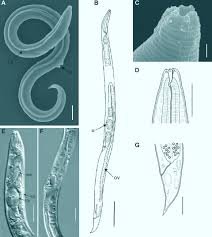
The species was identified as previously unknown and named after its discovery site. Genetic sequencing revealed that P. kolymaensis shares survival mechanisms with Caenorhabditis elegans, including the production of trehalose, a sugar that stabilizes proteins and DNA during extreme dehydration and freezing4. Mild dehydration prior to freezing was found to enhance its resilience at temperatures as low as –80°C, a trait that could inform future cryopreservation techniques.
Beyond its biological marvel, the revival of P. kolymaensis has profound implications for evolutionary biology, cryogenics, and space exploration. Scientists believe that understanding cryptobiosis could pave the way for long-term preservation of human cells, organs, and even astronauts on interplanetary missions.
As global warming continues to thaw ancient permafrost, researchers caution that more dormant organisms may emerge—some benign, others potentially disruptive. For now, Panagrolaimus kolymaensis stands as a testament to life’s astonishing ability to endure across geological epochs.