

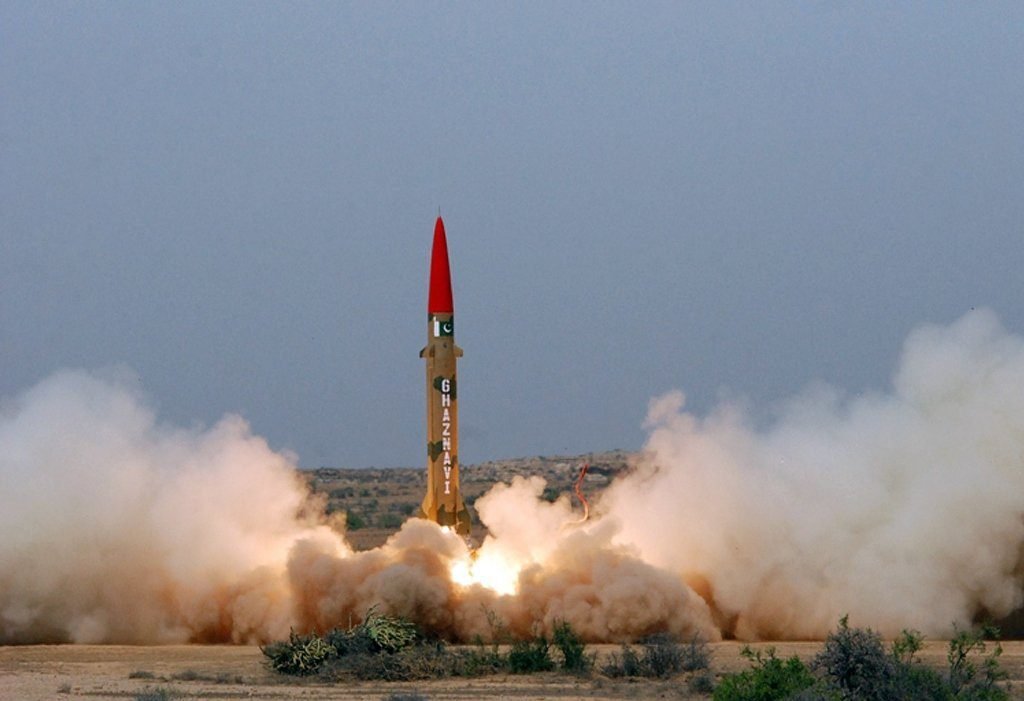
Islamabad (Khyber Mail): Pakistan has successfully conducted a training launch of the Abdali Weapon System, a surface-to-surface ballistic missile with a range of 450 kilometers (280 miles), amid escalating tensions with India following the deadly Pahalgam attack in Indian-administered Kashmir.
The missile test, carried out as part of Exercise INDUS, was aimed at validating operational readiness and assessing key technical parameters, including its advanced navigation system and enhanced maneuverability. The Abdali missile, capable of carrying both conventional and nuclear warheads, is named after Ahmad Shah Abdali, the 18th-century founder of modern Afghanistan.
The test comes just days after Pakistan’s Information Minister Attaullah Tarar warned that Islamabad had credible intelligence suggesting India was preparing for a military strike within 24 to 36 hours in retaliation for the April 22 attack in Pahalgam, which resulted in 26 deaths. India has accused Pakistan of backing the attack, a claim Islamabad has strongly denied.
Following the successful missile test, President Asif Ali Zardari and Prime Minister Shehbaz Sharif congratulated the scientists, engineers, and military personnel involved in the launch. The Chairman Joint Chiefs of Staff Committee and the Chiefs of the Armed Services also praised the test, reaffirming Pakistan’s commitment to maintaining credible deterrence.
On Friday, Pakistan’s Chief of Army Staff General Syed Asim Munir presided over a high-level meeting to discuss the Pakistan-India standoff, emphasizing the need for heightened vigilance and proactive readiness.
Since the Pahalgam attack, India and Pakistan have engaged in diplomatic expulsions, border closures, and military exchanges along the Line of Control (LoC). India has also suspended its participation in the 1960 Indus Waters Treaty, further straining relations.
Pakistan has warned that any Indian military action would be met with a swift and decisive response, with defense analysts describing the missile test as a strategic signal to India.
The United Nations and the United States have urged both nations to de-escalate tensions, but diplomatic efforts have so far failed to ease the crisis.
With both countries nuclear-armed, the situation remains volatile, and the international community is closely monitoring developments as fears of military escalation grow.