

- First in a series of webinars on conflict and humanitarian crises explores how successive wars and current restrictions have disrupted learning and the production of knowledge.
ISLAMABAD/PESHAWAR, OCTOBER 5, 2026 (Khyber Mail) – A hybrid webinar titled “Epistemicide in the Service of War” focused on education as a casualty of war in Afghanistan, in the first of a planned series of webinars exploring how conflict and humanitarian crises affect education.
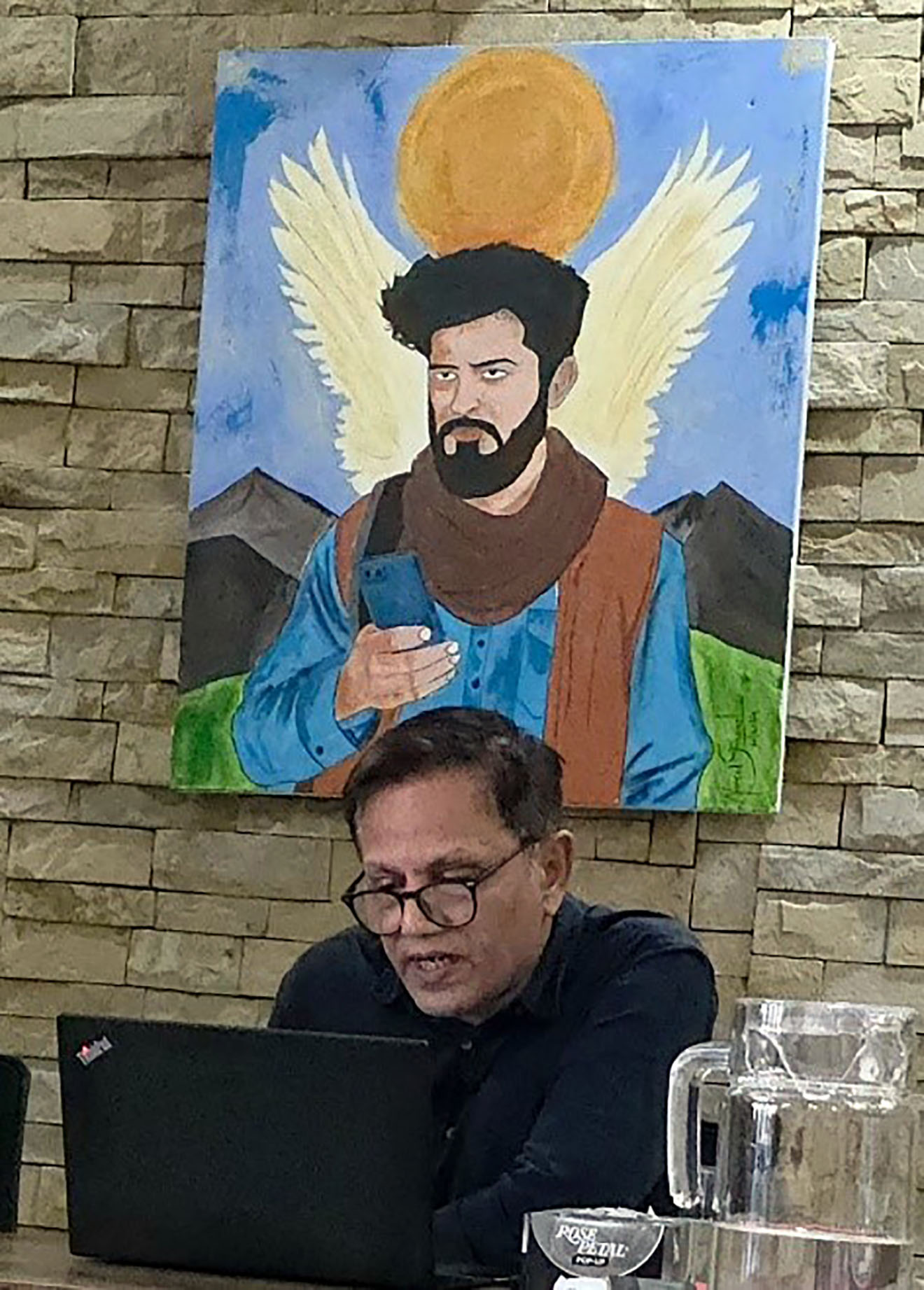
Hosted by Development Insights Pakistan and organised jointly with the Pakistan Humanitarian Observatory, the session was moderated by Dr Saba Gul Khattak and attended by representatives of civil society, including journalists, researchers, activists and development professionals. Journalist and researcher Aurangzaib Khan presented his research on education, conflict and the production of knowledge in Afghanistan, drawing on interviews with Afghan academics, students and others. He argued that the country’s education crisis cannot be understood as a recent or isolated development, saying successive wars and political changes have disrupted schools and universities, displaced generations, damaged archives and libraries, and repeatedly replaced education systems rather than building on them.
Khan also discussed the impact of current restrictions on education and academic life, addressing reported curriculum changes, limits on girls’ education, pressure on university staff, and the loss of research opportunities and institutional continuity. He said these restrictions affect not only students’ access to education but also Afghanistan’s ability to preserve and produce knowledge about its own history and society, and spoke about the role of patriarchy and repeated foreign interventions in the country.

Participants raised questions about the concept of epistemicide, the role of power in shaping education, and how oppressed communities and displaced Afghans develop their own knowledge frameworks and counter-narratives. Discussion also covered the treatment of women and minority communities, the possibility of rebuilding Afghanistan’s education system, and whether restrictions apply to natural sciences as well as the humanities and social sciences. Khan said he did not have detailed information about a specific school established for the Ismaili community, and did not confirm recent reports that a policy change on girls’ education was imminent.
Arshad Mahmood, a participant from the development sector, asked whether there was any realistic hope that the devastation of Afghanistan’s education system, particularly from the perspective of women and girls, was reversible in the near future, and what it would take to reverse it. He also asked how interconnected madrasa networks and ideological chains affect Pakistan. Researcher Naveed Ahmad Shinwari posed a theoretical question about the framework of epistemicide, noting that it is described as the destruction of knowledge, oral history and infrastructure but that there is also an asymmetrical production of knowledge, in which oppressors produce knowledge while the oppressed produce counter-knowledge. He asked whether a theoretical framework acknowledges the production of another kind of knowledge at the same time, emphasising that his focus was more on knowledge production than on physical infrastructure.
The discussion connected Afghanistan’s experience with wider regional questions, including the effects of conflict, class, access and opportunity on education. Dr Noreen Naseer challenged explanations that treat educational barriers in the erstwhile tribal areas as a matter of culture alone, noting that class and access also shape people’s opportunities.
The webinar concluded with a proposal to hold future webinars, seminars and lectures on educational status and outcomes during prolonged humanitarian crises. Dr Saba Gul Khattak thanked Aurangzaib Khan and all participants for contributing to the discussion.