

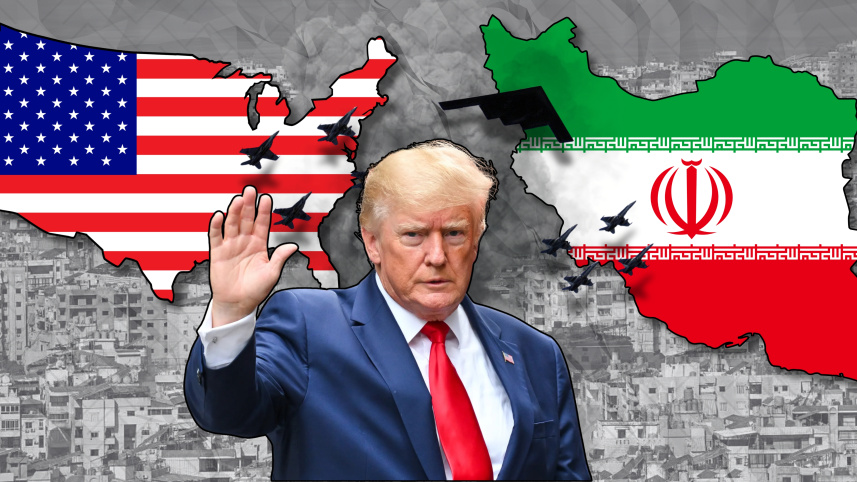
- Conflict escalation: Iran-US confrontation entered its ninth day with fresh strikes from both sides.
- US response: President Trump confirmed new American strikes targeting Iranian command centers, missile sites, and communications networks.
- Iranian attacks: IRGC claimed strikes on US bases in Syria’s Al-Tanf, aircraft in Jordan’s Aqaba, and radar/drone facilities in Kuwait.
- Regional impact: Air raid sirens sounded in Bahrain; Jordan intercepted missiles and lodged a protest; Kuwait reported attacks on desalination plants.
- Energy disruption: Oil prices rose above $90 as a ship caught fire near the Strait of Hormuz, a critical global energy route.
- Nuclear site targeted: US strikes hit Iran’s Darkhovin nuclear power plant construction site, though the IAEA confirmed no nuclear material was present.
- Israeli concerns: Israel warned of spillover fires from Iranian missiles aimed at Jordan; interceptors were launched in Eilat.
- Broader shift: Iran has increasingly focused attacks on US-allied Arab states rather than Israel, intensifying regional instability.
DUBAI, 20 July 2026 (Agencies) – Iran and the United States exchanged fresh attacks early Monday as their confrontation entered a ninth day, with Washington confirming new strikes inside Iran and Tehran claiming assaults on US assets in Syria, Jordan and Kuwait.
US President Donald Trump said American forces had “hit them very hard again tonight,” following the deaths of 17 US soldiers since hostilities began on Feb. 28.
Iran’s Islamic Revolutionary Guard Corps (IRGC) announced a “surprise attack” on a US special operations command center in Syria’s Al-Tanf region, describing it as retaliation for Iranian casualties in Iranshahr. The Guards also claimed strikes on US aircraft at Jordan’s Aqaba airport, while Jordan’s military reported intercepting several missiles without casualties.
Air raid sirens sounded twice in Bahrain, where the Interior Ministry urged residents to seek shelter. The US Embassy in Manama warned of possible Iranian targets in central Manama.
In Kuwait, Iranian drones reportedly destroyed a US radar system and damaged MQ-9 drones at Ali Al-Salem Air Base. Kuwait also reported repeated attacks on a desalination plant, though the power grid remained stable.
US Central Command (CENTCOM) confirmed its ninth consecutive night of strikes, targeting Iranian command centers, missile and drone launch sites, and communications networks. Footage released by the US military showed fighter jets and Tomahawk cruise missiles striking Iranian positions, including mountainous areas used for missile bases. Iranian state media reported explosions in southern and northwestern regions, without immediate casualty figures.
Oil prices surged above $90 a barrel as the British military reported a ship fire south of the Strait of Hormuz, a vital global energy route. Oman, often used as an alternative shipping corridor, reported the incident near its coastline. The IRGC later claimed attacks on tankers in the waterway.
Iran’s Atomic Energy Organization said US strikes hit the construction site of the Darkhovin nuclear power plant in the southwest. The International Atomic Energy Agency confirmed the site was in early construction stages and contained no nuclear material.
Israel warned that Iranian missiles aimed at Jordan could spark fires spilling into Israeli territory. Jordan summoned Iran’s chargé d’affaires to protest the attacks. In Eilat, Israeli forces launched interceptors to prevent debris from falling into populated areas.
The conflict, now in its ninth day, has increasingly shifted toward strikes on US-allied Arab states, intensifying regional instability and raising fears of broader escalation.