

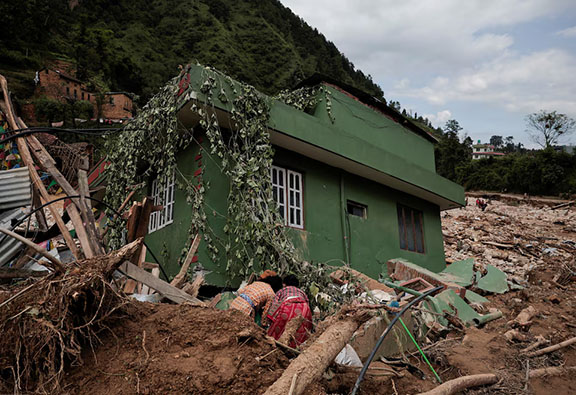
- Bhote Koshi surge destroys villages, hydropower plants and a key border crossing as Nepal and China launch joint search and rescue effort
- Location/time: Flash flood struck the Bhote Koshi River near the Nepal-Tibet border around 9 am local time, Wednesday, 26 August 2026; worst hit areas: Timure, Syabrubesi, Rasuwa district (Nepal) and Gyirong county (Tibet, China).
- Casualties: Death toll varies by source — 31 (Bagmati police), 22 (Al Jazeera), 19 and 9 (other wires) — with hundreds still missing. Figures were shifting rapidly through the day.
- Missing persons: 9 Nepal Armed Police Force personnel from the Timure border post; at least 1 Dutch national; hundreds of foreign tourists out of contact.
- China side: Mudslide hit Gyirong port, cutting roads, power and communications across the Shigatse region; China reported “major casualties.” Xi Jinping ordered an all-out search and called for better early-warning systems.
- Cause: Not officially confirmed — likely a glacial lake outburst flood (GLOF) from Tibet, possibly combined with an ice-rock avalanche that dammed the river before a sudden release. No rainfall was reported before the flood hit.
- Infrastructure damage: ~430 MW of hydropower capacity knocked out (12%+ of Nepal’s 3.2 GW national total). Affected plants: Rasuwagadhi (111 MW, worst-hit), Chilime, Trishuli 3A, Trishuli 3B Hub substation, Trishuli Hydropower Station, Devighat Hydropower Station. Timure customs yard and border trade infrastructure also badly damaged.
- Response: Nepal Army, Armed Police Force and Nepal Police deployed with helicopters and medical teams; helicopter access initially blocked by high water. PM Balendra Shah ordered evacuation of low-lying riverside areas.
- Pattern: Third major flood on this same river corridor in about 14 months (July 2025 flood killed 8, destroyed the Miteri Friendship Bridge; Sept 2024 monsoon floods killed ~200 nationwide) — recurring vulnerability worth flagging.
Caveat: Figures still unconfirmed — verify against AP/Reuters/AFP before publishing.
KATHMANDU 26 AUGUST 2026 (Agencies) – A massive flash flood tore through the Himalayan border region between Nepal and China’s Tibet on Wednesday morning, killing dozens of people and leaving hundreds more missing as rescue teams struggled to reach devastated villages cut off by mud and debris.

The flood surged through the Bhote Koshi River at around 9 am local time before advancing downstream into the Trishuli River toward Nuwakot district, with the worst destruction concentrated in northern Rasuwa, particularly the Timure market area, the Timure Customs Office and Syabrubesi. Officials said the district had been dry in the hours before the river rose abruptly, deepening suspicion that the flood originated from a glacial source rather than rainfall.
Death tolls varied sharply across sources as the situation unfolded through the day. Local police in Bagmati province put the figure at 31 dead with hundreds unaccounted for, while other reporting cited tolls of 22, 19 and nine, reflecting the fast-moving and still-unconfirmed nature of casualty counts. Nepal’s home ministry mobilized the Nepal Army, Armed Police Force and Nepal Police, backed by helicopters and medical teams, to conduct search and rescue operations, though rising water levels initially prevented helicopters from landing in the worst-hit areas of Syapru Besi and Timure, a district of roughly 50,000 people.
Nine Armed Police Force personnel stationed at the Timure border outpost on the China frontier were among those reported missing. At least one Dutch national was also reported missing, with authorities saying hundreds of foreign tourists remained out of contact hours after the disaster struck.
Across the border, Chinese authorities reported “major casualties” with people missing in Gyirong county after a mudslide struck a land crossing between the two countries. China’s official Xinhua news agency said the mudslide, which originated on the Nepali side, hit the Gyirong port and cut off roads, communications and power links across the wider Shigatse region. President Xi Jinping called for an all-out effort to locate the missing and urged stronger monitoring and early-warning systems to prevent further disasters.
The flood caused extensive damage to hydropower infrastructure built along the Bhote Koshi-Trishuli river cascade. Nepal’s energy ministry said around 430 megawatts of electricity supply had been affected, more than 12 percent of the country’s total national hydropower capacity of 3.2 gigawatts. Facilities knocked offline included the 111-megawatt Rasuwagadhi Hydropower Project, the Chilime plant, Trishuli 3A, the Trishuli 3B Hub 220 kV substation, the Trishuli Hydropower Station and the Devighat Hydropower Station. Rasuwagadhi, which sits closest to the border and was also severely damaged in a nearly identical flood in July 2025, appeared to be the worst affected, with its external infrastructure described by industry officials as extensively compromised.
Nepali Prime Minister Balendra Shah said police and military units were joining rescue and relief teams and that instructions had been issued to move residents in low-lying river areas to safer ground, urging those living along the rivers to exercise caution and remain alert.
The cause of the flood had not been officially confirmed by Wednesday, but experts and officials pointed to a likely glacial lake outburst flood originating in Tibet, possibly combined with an ice-rock avalanche that temporarily dammed the river before releasing a sudden surge downstream. A regional disaster risk reduction specialist noted that the same river system has now flooded twice in fourteen months. Nepal is particularly prone to such glacial lake outburst events, sometimes described as inland tsunamis, in which meltwater pools swollen by glacial retreat burst their banks and send water and debris cascading down steep mountain slopes. Scientists have said climate change is increasing the frequency and severity of such events across the Himalayan region.
Wednesday’s disaster follows a string of similar floods on the same border corridor in recent years, including a July 2025 flood that killed at least eight people, swept away the Miteri Friendship Bridge linking Nepal and China, and destroyed hundreds of vehicles at the Rasuwagadhi crossing, and a September 2024 monsoon disaster that killed around 200 people nationwide.
Editor’s note: This is a developing story with casualty figures, damage assessments and the cause of the flood still being confirmed by Nepali and Chinese authorities. Verify current death toll, missing-person counts and infrastructure damage figures against AP, Reuters and AFP wires before publication.