

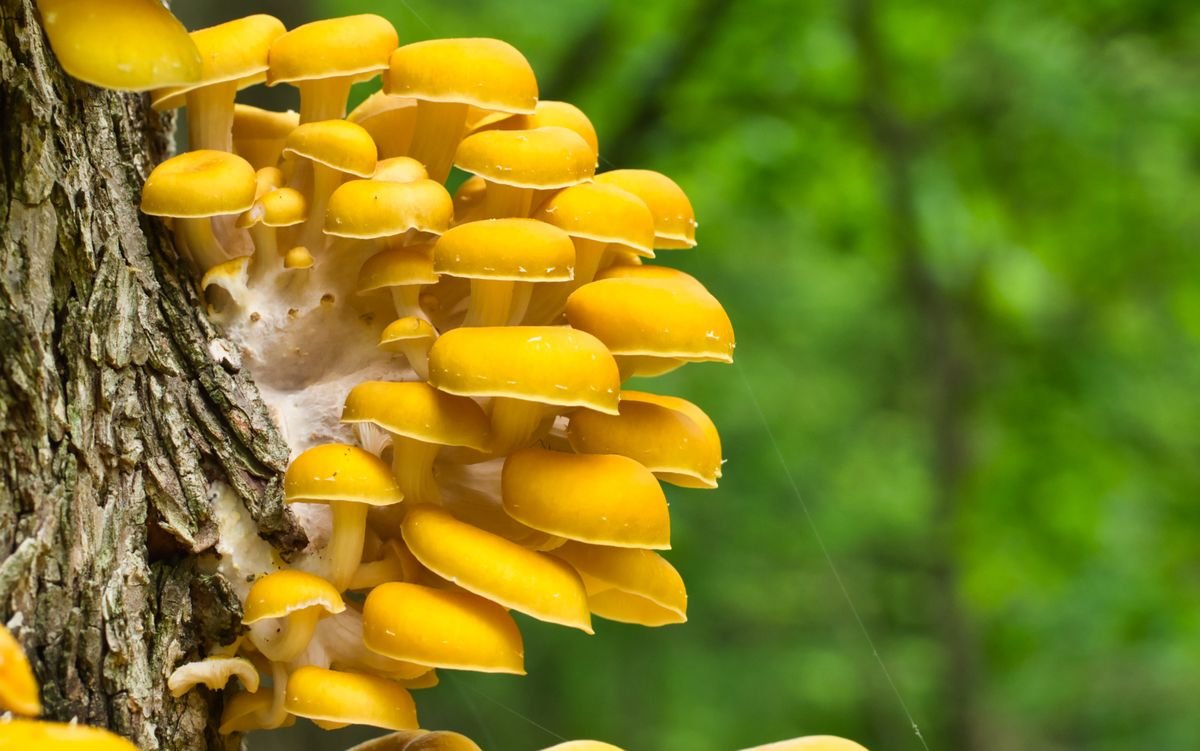
- The golden oyster mushroom’s march across the United States highlights a growing ecological challenge: how to balance human use of fungi with the need to safeguard native ecosystems.
Gainesville, United States, December 2 2025 (Agencies) – A vivid yellow edible mushroom once prized by gourmet chefs is now spreading unchecked across American forests, raising alarms among ecologists. The golden oyster mushroom (Pleurotus citrinopileatus), originally cultivated for its mild flavor and striking appearance, has escaped from farms and home-growing kits and is now documented in natural areas across more than 25 states, according to new research from the University of Florida.
Recent sightings confirm the fungus has expanded southward into Texas, Louisiana, and Florida, underscoring its rapid spread beyond its original cultivation zones. Scientists warn that once established on dead wood, golden oysters aggressively outcompete native fungi, drastically reducing biodiversity. In one study, elm logs colonized by the invader supported far fewer native fungal partners, many of which play critical roles in decomposition, nutrient cycling, and even medicinal applications.
The invasion is largely driven by human activity. Widely sold as easy-to-grow kits, gourmet delicacies, and “mushroom log” inoculants, golden oysters often end up outdoors—discarded after harvest, used to inoculate backyard stumps, or accidentally released with spent substrate. From there, spores travel on wind and animals, enabling the species to leapfrog across landscapes.
Unlike invasive plants, insects, or vertebrates, fungal invasions rarely trigger rapid response campaigns. By the time they are noticed, ecosystems may already be altered. Researchers emphasize that the golden oyster’s spread is a vivid reminder that even edible, attractive species can become disruptive when moved beyond their native range.
Scientists are now urging policymakers and conservationists to treat fungal biodiversity with the same urgency given to trees, birds, and pollinators. Protecting forests, they argue, means recognizing fungi as essential players in ecological health rather than overlooked background organisms.