

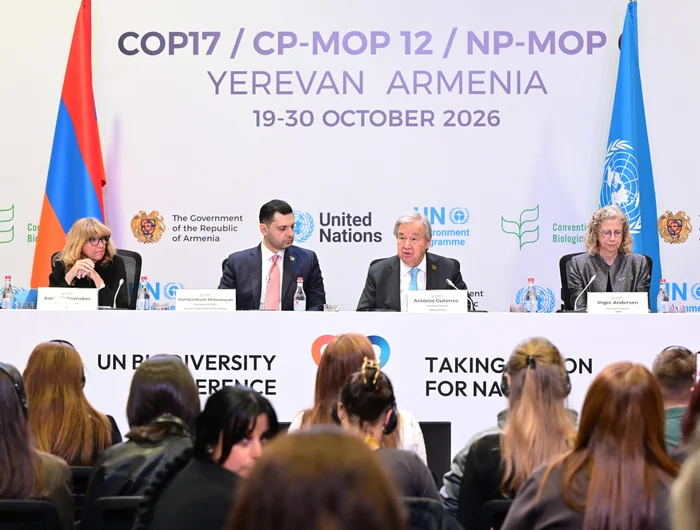
- Nearly 200 nations approve texts to get nature goals back on track after two weeks of tense talks in Yerevan, as a new coalition pushes reform of subsidies worth an estimated $2.4 trillion a year
YEREVAN 30 OCTOBER 2026 (Agencies) – Nearly 200 nations on Friday adopted hard-fought agreements at the UN biodiversity summit in Yerevan, aimed at putting the world back on course to halt the destruction of nature by 2030, though the language on subsidies that harm nature was described by campaigners as weak.
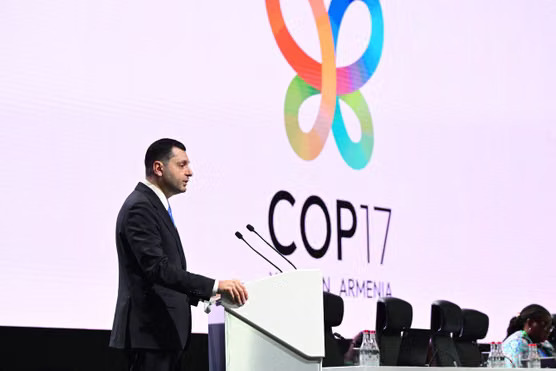
Delegates cheered as the texts were approved in overtime at the end of two weeks of tense negotiations at the 17th Conference of the Parties on Biodiversity. COP17 president Hambardzum Matevosyan, Armenia’s environment minister, brought down the gavel on the documents to applause, calling the outcome “Perfect”. The final versions of the texts were not immediately available. The conference had been due to end on Friday, with finance, harmful subsidies and a global review of progress toward the 2030 targets still unresolved that morning. Ecuador was named host of the next COP, according to a daily briefing on the closing plenary.
Subsidies were among the most contested issues. Countries wrangled over reforming subsidies and other incentives that encourage activities harmful to nature, such as fossil fuels, intensive agriculture and overfishing, with parties divided over language on reducing or phasing out such incentives, including agricultural subsidies. Governments pledged in the 2022 Global Biodiversity Framework signed in Montreal to cut such spending by at least 500 billion dollars a year by 2030 under Target 18, but have made little progress, with an estimated 2.4 trillion dollars still flowing each year to harmful subsidies, according to the UN Environment Programme. Target 18 has been described as one of the framework’s furthest-behind goals. An Lambrechts of Greenpeace International told AFP the agreed text expressed the issue “in weak terms”, but said COP17 had produced important political momentum on harmful financial incentives that was urgently needed.
Target 18 is one of 23 targets in the Kunming-Montreal framework. It calls on countries to identify subsidies and other incentives that harm biodiversity by 2025, then to eliminate, phase out or reform them, starting with the most harmful, while cutting them by at least 500 billion dollars a year by 2030 and scaling up incentives that support nature.
The figure is a target for reforming existing spending, not a new financial commitment, and the target is a global goal rather than a binding obligation on any country. The framework does not define precisely which subsidies count as harmful, which is one reason estimates of their scale differ so widely. Reforming them is also seen as a possible source of money for the framework’s separate goal of mobilising 200 billion dollars a year for nature from all sources by 2030.
The conference put the subject at the centre of its agenda on Monday, October 26, when the Armenian presidency launched the Yerevan Call on Incentives Positive to Biodiversity, the Friends of Target 18 coalition and the Yerevan Biodiversity Finance Challenge. The Friends of Target 18, a voluntary platform co-chaired by Colombia and Finland and convened by the International Institute for Sustainable Development, aims to share national experience and keep up political commitment beyond COP17, while the finance challenge is meant to carry out reforms in individual countries. About 15 ministers attended the launch, though only Malawi and France had formally joined the group at that stage, and the coalition has no formal enforcement mechanism. “Governments, of course, want to support economic sectors,” said Astrid Schomaker, executive secretary of the UN Convention on Biological Diversity, adding that the debate was about the results subsidies produce, not whether they are necessary.
France is among the leaders on the issue, having started to identify harmful spending in 2020 through its “green budget”. Estimates of the scale of the problem vary widely, a gap that reflects the difficulty of defining a harmful subsidy. In 2025, two French inspectorates identified 37 billion euros out of 92 billion euros in public aid as potentially harmful, while the country’s environmental planning secretariat put it at 10.8 billion euros, depending on whether indirect effects such as fuel subsidies are counted.
The summit’s wider negotiations were dominated by money. Matevosyan said the conference was enabling more than 1.8 billion dollars in total mobilisation from governments, philanthropic organisations and investors, but the gap between spending and what the 2030 targets require remained largely unchanged. The European Union led a push for wealthy emerging economies such as China to contribute to global conservation efforts, a contentious issue at the talks.