

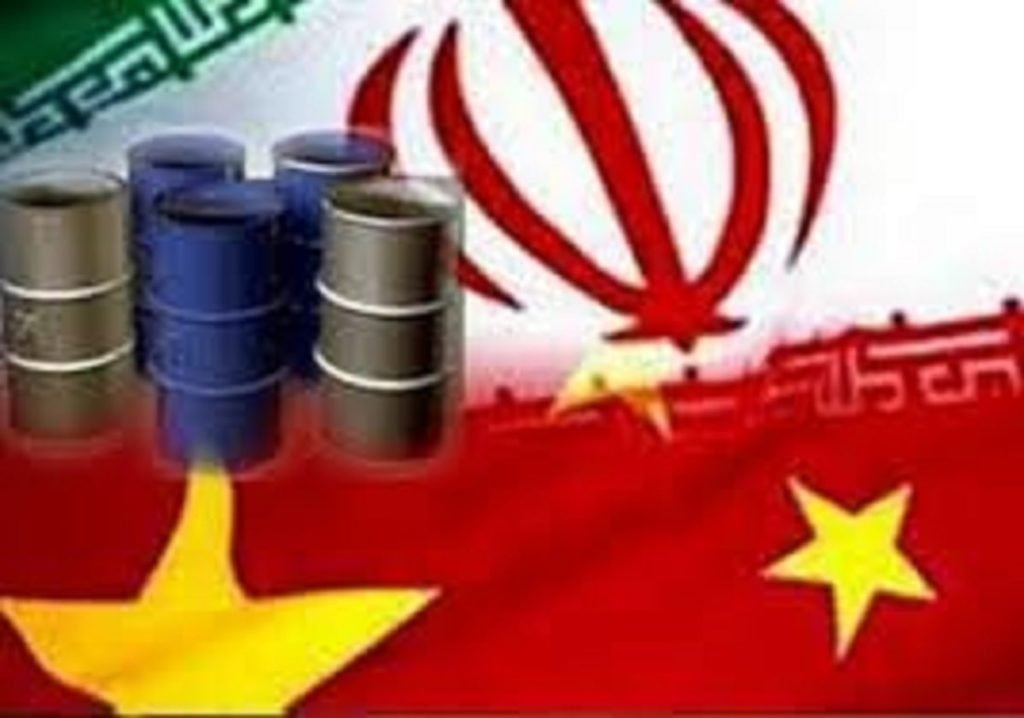
Beijing / Tehran, October 11, 2025 (Agencies): China and Iran have put in place a far-reaching oil-for-infrastructure barter scheme that enables both countries to deepen economic cooperation while bypassing U.S. financial systems and sanctions, according to multiple reports published this week. The arrangement has already prompted Washington to impose a fresh round of punitive measures on entities involved in the trade.
Under the deal, China imports an estimated 1.4 to 1.6 million barrels of Iranian crude oil per day. Instead of making cash payments through international banking channels, Beijing compensates Tehran by commissioning Chinese state-owned and private firms to build major infrastructure projects across Iran. These include railways, ports, industrial facilities, and power generation sites, forming part of what Iranian officials have called a “strategic economic corridor” linking the two nations.
Investigations by international media have revealed that the system relies on a network of opaque intermediaries, reflagged tankers, and ship-to-ship transfers to disguise the origin and destination of Iranian crude. Chinese state insurer Sinosure reportedly provides guarantees to Chinese contractors operating in Iran, while a little-known financial entity named Chuxin acts as a conduit to settle accounts without involving the U.S. dollar. This multi-layered structure allows transactions to occur beyond the immediate reach of American regulators.
The United States, however, maintains that such barter arrangements still violate Executive Order 13846, which classifies any “significant transaction” involving Iranian petroleum as sanctionable. In response, the U.S. Treasury on Thursday announced sanctions against around 100 individuals, entities, and vessels allegedly facilitating Iranian oil flows to China. The list includes Chinese refineries, port operators, and shipping firms that are believed to be part of a “shadow fleet” designed to mask Iranian exports.
Washington has long tolerated limited Iranian oil sales to China as a means of maintaining some leverage in nuclear negotiations. But officials say the scale and sophistication of the new barter system have prompted a tougher response. “This is not a loophole—it’s a deliberate attempt to undermine our sanctions,” a senior U.S. Treasury official said. “We will continue to target the full ecosystem enabling these transactions.”
Analysts say the deal reflects Tehran’s effort to secure stable revenues amid crippling sanctions, while Beijing gains access to discounted crude and strategic footholds in Iran’s infrastructure sector. It also highlights the broader trend of countries exploring alternative financial mechanisms to bypass U.S. dominance in global energy trade.
The escalation marks a new phase in the ongoing geopolitical contest, with the U.S. tightening enforcement while China and Iran expand their economic alignment. Observers warn that the growing complexity of such barter arrangements will make monitoring and enforcement increasingly difficult in the months ahead.