

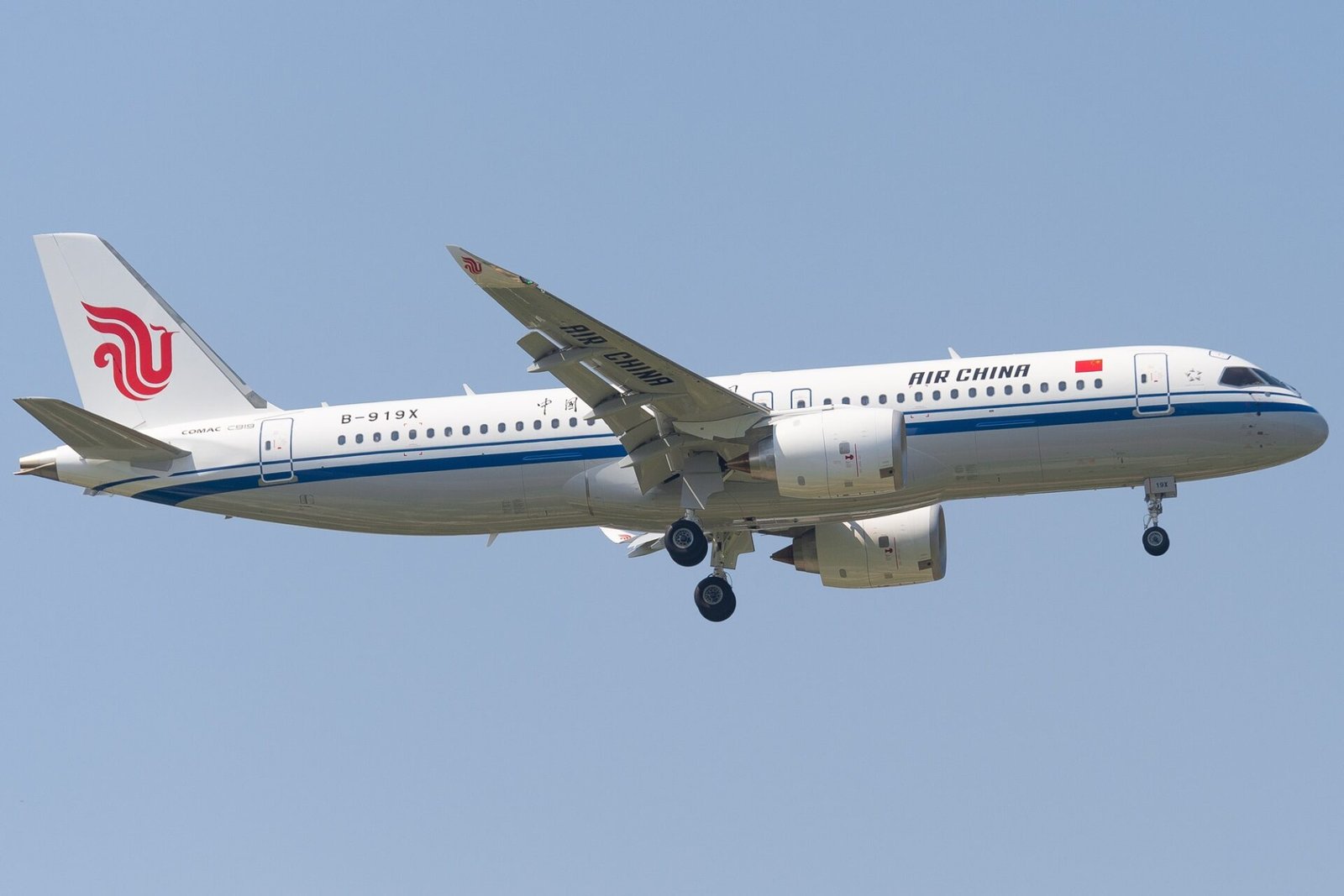
BEIJING, August 12, 2026 (Agencies) — China’s domestically developed C919 large passenger aircraft completed its first international commercial flight on Wednesday, landing safely in Mongolia’s capital Ulaanbaatar.
The C919 operated by Air China took off from Beijing Capital International Airport at 3 p.m. and arrived at Chinggis Khaan International Airport at 4:58 p.m. local time. The aircraft received a water cannon salute upon arrival, a traditional ceremonial welcome in international civil aviation.
Air China has launched regular C919 services on the Beijing-Ulaanbaatar route, operating under flight numbers CA723/724 at a frequency of seven round trips per week.
The maiden international commercial service marks a new step in the overseas operation of China’s homegrown passenger aircraft. The domestically developed C909 regional jet is already operating regular services on the Hohhot-Ulaanbaatar route.
With the C919’s arrival in Ulaanbaatar, both of China’s domestically produced passenger aircraft types are now operating at an overseas airport, People’s Daily reported.
Air China’s C919 fleet has expanded steadily since the carrier received its first aircraft in August 2024. The airline now operates 12 C919 aircraft, which have completed more than 12,000 safe flights and carried over 1.62 million passengers, according to the carrier.
Across Air China, China Eastern Airlines and China Southern Airlines, C919 aircraft have so far opened 58 routes, serving 26 cities and transporting more than 7.5 million passengers.
The C919 entered commercial service on May 28, 2023, marking a major milestone in China’s effort to develop a domestically produced narrow-body passenger aircraft capable of competing in the global commercial aviation market.
The aircraft has also appeared at international aviation events, including two Singapore Airshows and one Dubai Airshow, increasing its exposure to international airlines and aviation industry representatives.
The Ulaanbaatar service represents another step in the C919’s international expansion, although the aircraft’s certification and market access remain subject to the aviation regulations of individual countries.