

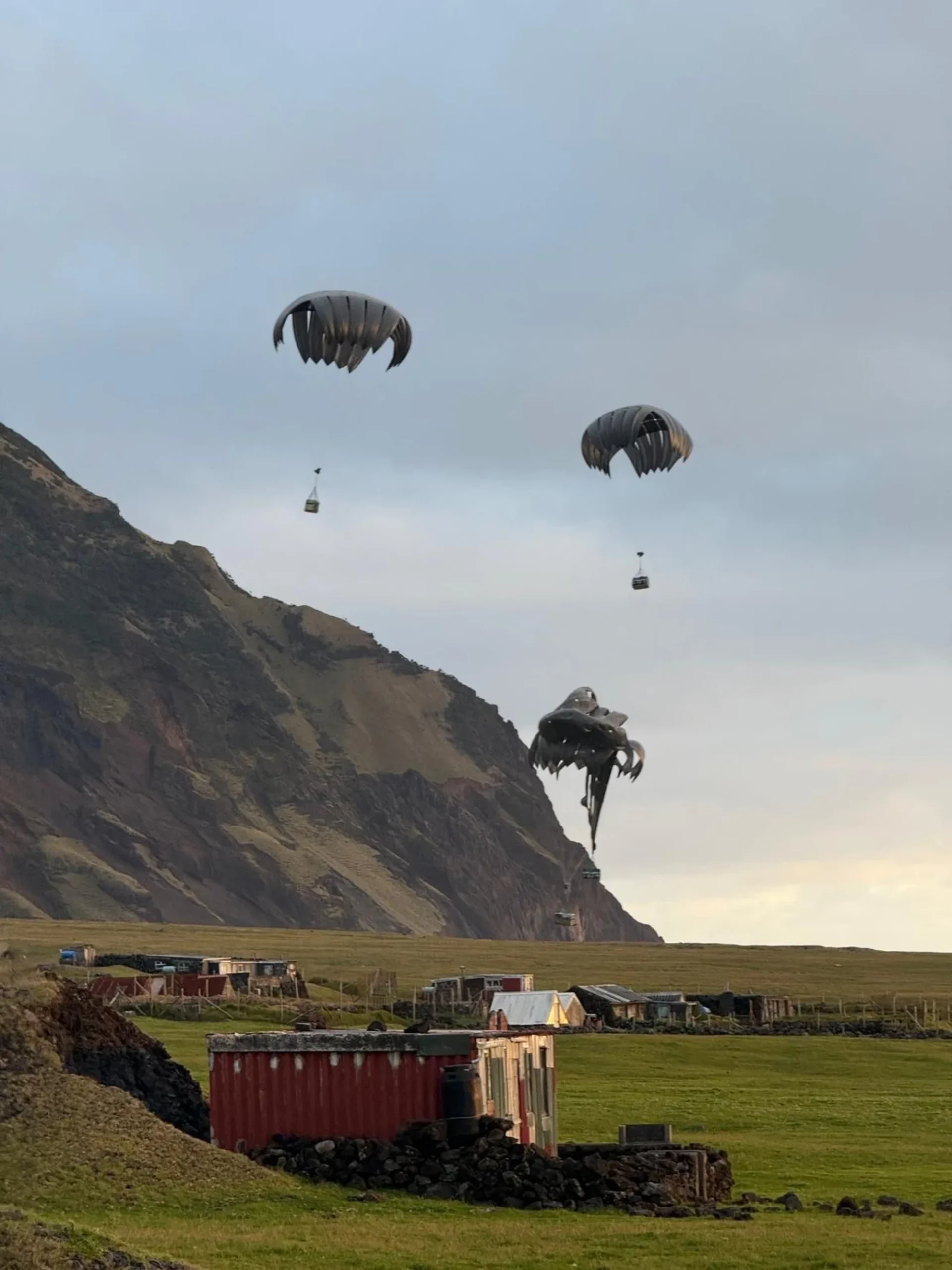
- British Army deployed medics by parachute to Tristan da Cunha
- British national on remote island suspected of hantavirus infection
- Oxygen and 3.3 tonnes of medical supplies air-dropped
- MV Hondius outbreak has caused six confirmed infections and three deaths
- First-ever UK military humanitarian medical parachute mission
London, May 11, 2026 (Agencies) – British Army medics have parachuted onto the remote South Atlantic island of Tristan da Cunha to assist a British national suspected of contracting hantavirus, following a deadly outbreak aboard the cruise ship MV Hondius.
The patient, a resident of Tristan da Cunha and former passenger of the affected vessel, disembarked on April 14 and began showing symptoms, including diarrhoea and fever, nearly two weeks later. He is currently reported to be in stable condition while in isolation on the island.
In a rare humanitarian military operation, six paratroopers and two critical care clinicians from the British Army’s 16 Air Assault Brigade were deployed to the island, alongside urgently needed oxygen and 3.3 tonnes of medical supplies delivered by RAF A400M aircraft. The Ministry of Defence said oxygen supplies on the island had reached critical levels.
Tristan da Cunha, home to just 221 residents and lacking an airstrip, is considered Britain’s most remote inhabited overseas territory. Due to the urgency of the situation and limited medical resources, military planners opted for a complex parachute mission rather than maritime evacuation.
Brigadier Ed Cartwright, commander of the 16 Air Assault Brigade, described the mission as highly technical due to strong Atlantic winds and the island’s isolated geography. He said the operation marked the first time the UK military had parachuted medical personnel into a humanitarian crisis zone.
The hantavirus outbreak linked to MV Hondius has so far resulted in six confirmed infections and three deaths, including two cases confirmed as the Andes strain, which can spread from person to person. The cruise ship has since arrived in Tenerife, where over 100 passengers are being repatriated.
British officials said the mission was designed not only to treat the infected patient but also to strengthen local healthcare capacity and protect island residents from further transmission.
Foreign Secretary Yvette Cooper praised the operation, calling it a demonstration of Britain’s commitment to safeguarding its citizens and overseas territories under extraordinary circumstances.