

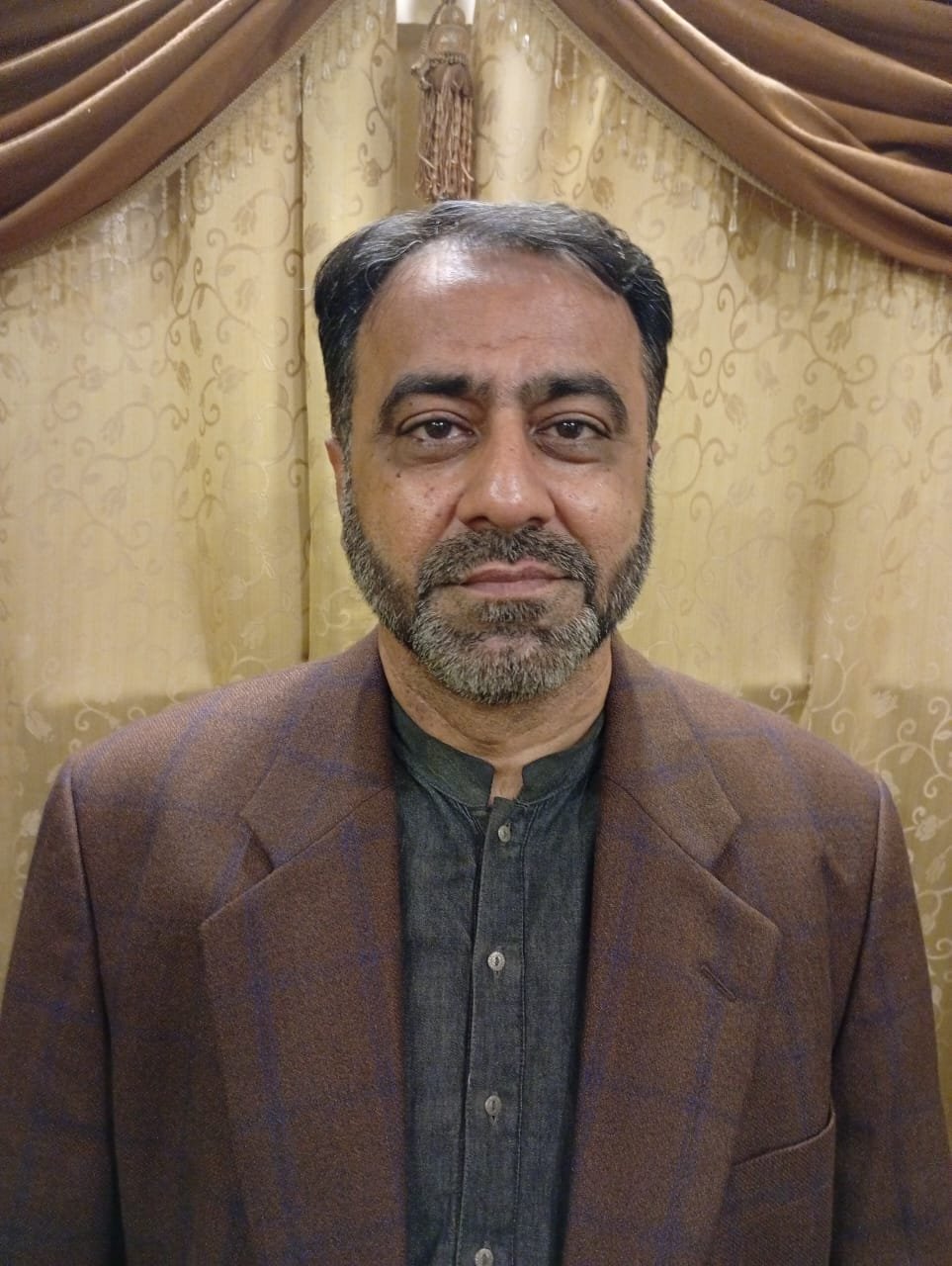
- By: Amir Muhammad Kalwar
- email:amirsessi2020@gmail.com
We Pakistanis are an innocent and simple-hearted people who often accept things without reflection or inquiry. We rarely pause to examine whether what we hear is factually correct or not. Yet, one of the fundamental principles of our faith teaches us not to be swept away by emotions but to hold fast to truth, contemplation, and verification.
In both Sahih Bukhari and Sahih Muslim, a narration from Hazrat Abu Huraira (RA) records the saying of the Holy Prophet (PBUH): “Whoever believes in Allah and the Last Day should speak what is good or remain silent. And whoever hears something evil should not spread it further.” Covering up falsehood and refraining from broadcasting it is what Allah Almighty loves. From this noble Hadith, we learn that one must never propagate hearsay or attractive claims without investigation, however appealing they may appear. This is the intellectual integrity befitting a believer.
Let us now turn to the central question: Was this really the 1500-year celebration of the blessed birth of the Holy Prophet (PBUH)? The answer, quite simply, is no. Reliable sources, such as Tareekh Ibn Kathir (Vol. 2, p. 261), Fath al-Bari (Vol. 6), and even secular references like Encyclopedia Britannica (Vol. 8, p. 36, 2010 edition), all attest that the birth of the Prophet Muhammad (PBUH) occurred on 22 April 570 CE. The Islamic calendar, however, begins not with the birth of the Prophet (PBUH) but with the Hijrah (migration) to Madinah in 622 CE. As of today, we are in 1447 AH. It is therefore historically and mathematically inaccurate to claim that we are marking the 1500th year since his birth. Let me explain this more clearly.
To grasp the matter, we must understand the difference between two calendars:
- The lunar (Hijri) calendar, based on the cycles of the moon, with each year consisting of 354 days.
- The solar (Gregorian) calendar, based on Earth’s orbit around the sun, with each year consisting of 365 days.
This difference of approximately 11 days per year means the lunar calendar steadily falls behind the solar one. That is why Ramadan and the two Eids shift earlier by about 10–11 days each year.
Now, when exactly will 1500 years of the Prophet’s birth be complete? This requires examining both solar and lunar reckonings.
- By the solar (Gregorian) calendar:
The Prophet Muhammad (PBUH) was born in 570 CE. Adding 1500 years gives us 2070 CE. Thus, the 1500th solar year of his blessed birth will be reached only around 2070 CE. As of 2024 CE, we still have nearly five decades to go. - By the lunar (Hijri) calendar:
The Hijri calendar starts with the Hijrah, not the birth. The Prophet (PBUH) was born 53 years before the Hijrah. Therefore, to calculate the number of lunar years since his birth, we must add those 53 pre-Hijrah years to the current Hijri year.
Thus:
1447 AH (current year) + 53 = 1500 lunar years since the birth of the Prophet (PBUH).
This shows that while we have not yet reached 1500 AH (which will begin around 2076 CE), we are indeed approaching 1500 lunar years since his blessed birth with only about two lunar years remaining.
So the conclusion is: neither have 1500 solar years been completed since his birth, nor have 1500 Hijri years since the Hijrah. What is accurate, however, is that we stand very close to 1500 lunar years since the birth of the Messenger of Allah (PBUH).
As true Muslims, our duty is to uphold accuracy and honesty, even if it tempers our emotions. Our beloved Prophet Muhammad (PBUH) is dearer to us than life itself, and true love demands that we speak about him with utmost integrity and precision. To misstate a number even with good intentions diminishes the grandeur of the occasion. Celebrating it in truth, with historical correctness, is more in harmony with the teachings of the Prophet (PBUH) than exaggeration.
Ultimately, we must remember that the highest expression of devotion is not in ceremonies or festivities, but in living by his teachings. To mold our lives according to the noble character and guidance of the Holy Prophet (PBUH) is the truest tribute we can offer. May Allah grant us steadfastness in truth and the blessing of genuine love and obedience to His Messenger (PBUH). Ameen.
- The views expressed in this article belong to the author and do not necessarily reflect the editorial policy.