

- By: Mujtaba Haris
- Sukkur IBA University, Sukkur
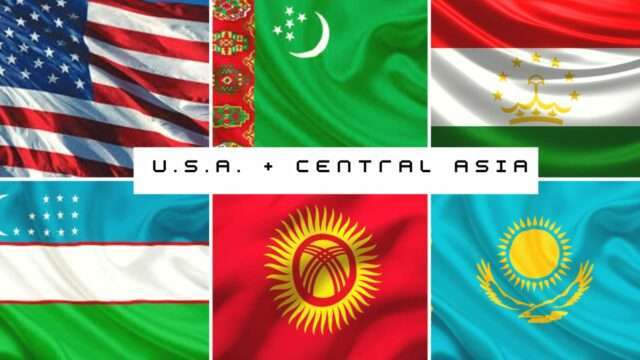
In international politics, some of the most important developments take place far from the world’s major conflict zones. Central Asia is one such region. For years, it received relatively little attention in American foreign policy, but this is gradually changing. The United States is now showing greater interest in strengthening its diplomatic, economic, and strategic relations with the five Central Asian countries: Kazakhstan, Uzbekistan, Kyrgyzstan, Tajikistan, and Turkmenistan.
The recent visit of US Secretary of State Marco Rubio to Uzbekistan on October 18, 2026, highlights this growing interest. Through the C5+1 diplomatic framework, which brings together the United States and these five countries, Washington is seeking stronger cooperation in trade, investment, security, and critical minerals. The visit also involved American business representatives, reflecting the importance of economic opportunities in the region.
In my opinion, the United States’ renewed engagement with Central Asia is a significant development in global geopolitics. The region is strategically located between Russia, China, and Iran, making it important for international trade, regional security, and economic cooperation. Its natural resources, including uranium, copper, lithium, and other critical minerals, are increasingly valuable to modern industries. As countries compete to secure supplies for technology, energy, and manufacturing, Central Asia has become an important part of the global economic picture.
Another major reason for American interest is the growing competition between Washington and Beijing. China has developed extensive economic connections across the region through trade, infrastructure investment, and its Belt and Road Initiative. Russia also maintains historical, economic, and security ties with several Central Asian countries. By strengthening its own partnerships, the United States hopes to expand its influence and create additional economic opportunities. However, this competition should not automatically be viewed as a struggle in which Central Asian countries must choose one side over another.
The most important question is whether this engagement will benefit the people of Central Asia. American investment could create jobs, improve infrastructure, support education, and introduce new technologies. Cooperation in mineral processing could also help regional countries move beyond exporting raw materials and develop stronger industrial economies. Nevertheless, these benefits will not appear automatically. They will depend on transparent agreements, responsible investment, environmental protection, and respect for national interests.
There are also challenges. Central Asian countries are landlocked, and their trade depends heavily on transport routes passing through neighbouring states. Political differences, investment risks, and competition among major powers may complicate cooperation. Furthermore, if foreign engagement focuses only on strategic influence and access to resources, local communities may receive fewer benefits than expected.
Ultimately, the United States’ growing engagement in Central Asia represents an opportunity for both sides. Washington can diversify its economic partnerships, while Central Asian countries can attract investment and expand their international options. However, lasting success will depend not on geopolitical competition alone, but on whether this partnership delivers practical benefits.
Central Asia should not be seen merely as a chessboard for powerful nations. It is a region of independent countries with their own ambitions and development priorities. The real measure of American engagement will be whether it strengthens their economic independence, respects their sovereignty, and contributes to long-term regional stability.