

- By: Ibn-e-Taha
- Khan_adnan040@yahoo.com
Tragic hero is a person whose downfall is caused by an error in judgment (hamartia), a mistake that leads to a reversal of fortune and evokes pity and fear in the audience.
- (Aristotle).
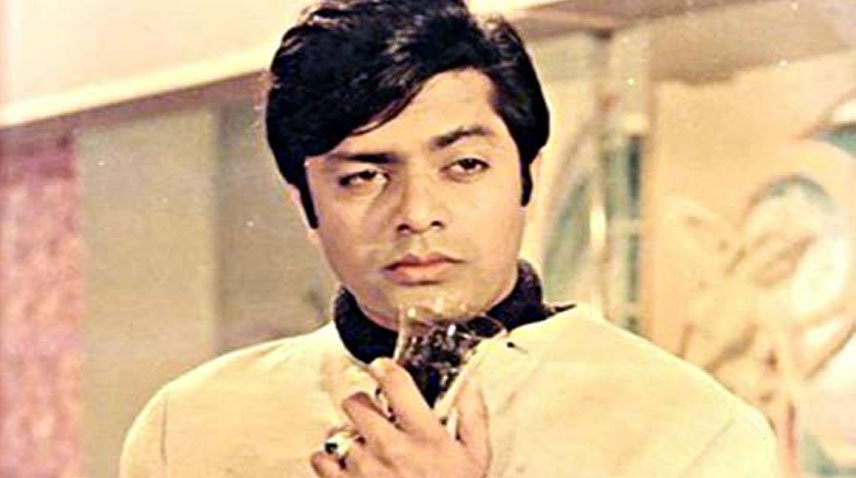
In the literal sense, every human being seems to be a tragic hero in himself; nonetheless, the term truly applies to the great film hero Waheed Murad, whose 42nd death anniversary falls on 23 November. Waheed was born on 2 October 1938 in Karachi to Nisar Murad, who hailed from Sialkot. Nisar Saheb was highly qualified and encouraged Waheed to pursue his education. Waheed was initially enrolled at Lawrence College, Murree, and was later transferred to Mary Collasso School in Karachi. He gained admission to the University of Los Angeles for studying filmmaking, but his parents did not allow him to go. He married Salma Maker, daughter of H. E. Maker, in September 1964. His two daughters, Aaliya and Saadia, were born in Karachi. Saadia passed away in infancy. Waheed moved to Lahore in 1973, and his son Adil was born there in 1976.
It was during his education in Karachi that film star Zeba Begum and director S. M. Yousuf approached him for an appearance in films. Waheed was a shy young man and reluctant to appear on the big screen. As luck would have it, S. M. Yousuf persuaded him and his father to let him act in the movie Aulad. He played the role of the son of Habib and Nayyar Sultana. Waheed continued his education in Karachi during the day while shooting in Lahore at night. He would travel between Lahore and Karachi on a daily basis. Aulad was released in 1962 and proved to be a success. It was a social-reform–themed film.
Waheed was immediately liked by audiences due to his accent and dialogue delivery. In 1963, he appeared in Daman alongside Santosh Kumar and Sabiha Khanum, with Rani Begum performing as Waheed’s heroine. The year 1964 earned him great fame when his movie Heera aur Pathar achieved golden-jubilee status. Zeba Begum was the heroine in this film. Another film released the same year was Mamta, starring Naghma Begum. In 1965, five of his films were released: Bahu Begum, Doctor, Saz-o-Aawaz, Eid Mubarak, and Kaneez.
Pakistan’s first platinum-jubilee movie, Armaan (1966), earned him the zenith of his career. His other movies released that year were Honahar, Josh, Jaag Utha Insan, and Bhayya.
His rise continued with five movies released in 1968: Rishta Hai Pyar Ka, Jan-e-Arzoo, Samundar, Dil Mera Dharkan Teri, and Jahan Tum Wahan Hum. The year 1969 earned him the title of the star of the Pakistani film industry through movies like Ishara, Tum Hi Ho Mehboob Meray, Laadla, Andaleeb, and Ik Nageena. In 1970, he visited Japan for the shooting of his movie Khamosh Nigahen. His journey of fame continued until 1976 with films such as Insaniyat, Deewar Bhabhi, Ehsaan, Doraha, and Phir Subah Hogi.
Waheed produced 11 films under his banner, Film Arts. He wrote four of them, and one was also directed by him. In total, he has 124 movies to his credit, two of which were released after his death. He was decorated with awards like Nigar, Graduate Awards, PIA Academy Awards, and was honoured with the Sitara-e-Imtiaz by the Government of Pakistan in 2011.
Waheed was 5 feet 8 inches tall, with dark brown eyes. He was fond of perfumes and liked Paco Rabanne and Pour Homme (by Jean Martel, 1973). During his 25-year film career, he worked with all the famous heroines of the time, including Zeba Begum, Rani Begum, Shabnam, Aaliya, Naghma Begum, Rozina, Saiqa, Shamim Ara, Sangeeta, Rukhsana, Babra Sharif, Bahar Begum, Deeba, and Neelo. Waheed introduced Shabnam to the film industry in 1968 through the movie Samundar.
Waheed Murad was fond of reading and was deeply impressed by James Joyce’s Ulysses. He also appreciated the literary works of storytellers such as Henry James, Virginia Woolf, and William Faulkner. His favourite book was The Turn of the Screw by Henry James. The theme of his movie Mehmaan was based on this novel, although Waheed himself did not appear in the film.
He was a stylish cricketer and played several matches for the film industry. During his time, the Film Stars Eleven often played friendly cricket matches against teams of TV actors or media personnel. He was a staunch follower of the saint Lal Shahbaz Qalandar and expressed a deep spiritual devotion to him. Waheed also developed an extraordinary fascination for Japan during his 1970 visit for the shooting of the movie Khamosh Nigahen.
Waheed suffered a major setback when his father passed away in 1982. He himself fell ill due to a severe ulcer problem. In January 1983, his ulcer burst, and part of his stomach had to be surgically removed. Later, in September, he met with an accident in Lahore. Meanwhile, the Pakistani film industry was also in decline, which further contributed to the downturn in Waheed Murad’s career. His deteriorating health ultimately led to his demise on 23 November 1983. Thus, an icon met his Creator.
Waheed undoubtedly gave new dimensions to film acting in Pakistan. His hairstyle, dialogue delivery, and picturization of songs remain unmatched even today. Indeed, he embodies all the traits of a tragic hero as defined by Aristotle.