

- By: Zahida Siyal
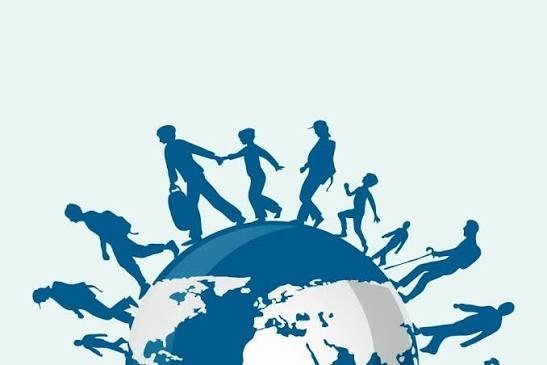
Humanity has always moved. From ancient trails and caravans to planes crossing oceans in hours, migration is among the most powerful forces that shape our societies. But as we stand at the cusp of the third decade of the 21st century, migration is not merely about people relocating, it is about how identities adapt, cultures merge, and the world remakes itself in surprising ways.
- Why Migration is Accelerating
Several trends suggest that global migration in the coming decades will escalate in pace and scope:
Climate change and environmental pressures will force millions from low?lying islands, drought?stricken lands, or disaster?prone regions to seek safer homes.
Economic inequalities remain stark, pushing people toward cities and toward countries where opportunities are perceived to be greater.
Political instability and conflict continue to displace populations, while weak governance or state breakdowns contribute to mass movements.
Technology and transport infrastructure make migration easier, and in many cases, safer or more achievable—information alone (via Internet, social media) can inform migration decisions long before journeys commence.
As these pressures mount, migration will not be a fringe phenomenon—it will be central to how societies evolve. Cultural Blending—A Double?Edge When people cross borders, they carry with them not just their luggage but their languages, rituals,
stories, cuisines. This inevitably leads to cultural blending—sometimes harmonious, sometimes fraught.
- On the positive side:
Hybrid identities will proliferate. Children of migrants or transnational families will inhabit in?between spaces—comfortable with more than one culture, often fluent in multiple worlds. This can foster creativity, innovation, empathy.
Urban centres will become even more cosmopolitan, turning into hubs of cultural cross?fertilization. The next big music genre, fashion trend or fusion cuisine might arise not in “traditional” cultural capitals but in the liminal spaces where migrants, locals, and newcomers intersect.
Shared global values—on human rights, gender equality, environmental stewardship—may find stronger traction, as migration spreads awareness of diverse perspectives.
- But the challenges are real:
Loss or weakening of cultural heritage. Some languages, customs, and social forms may fade, especially when younger generations, seeking acceptance, privilege the culture of the host society.
Social friction. Integration is not always smooth. Differences in values, norms, religion, expectations can lead to tensions.
Identity crises. Individuals, especially migrants’ descendants, may feel they belong neither here nor there, facing pressures of assimilation or alienation.
What the Future Could Look Like to imagine how migration + cultural blending might unfold, consider some plausible scenarios:
More people will live lives split across nations—family in one country, work in another,
- Transnational Citizens
emotions and loyalties in several. Dual, multiple citizenships, mobile work and study, digital affinity will redefine what it means to belong.
- Cities as Cultural Laboratories
Megacities will accelerate these changes. In cities of Asia, Africa, Latin America, the Middle East—as well as in Europe and North America—public space, art, food, religion, language will become more layered, more hybrid. Festivals will become cross?cultural; street art will mix styles; markets will sell fusion goods.
- Policy Wars & Cultural Politics
Some nations will move toward multicultural openness; others will close borders or promote assimilation. Education systems, immigration laws, public media will become battlegrounds over identity. Debates over what “local culture” means will intensify.
- Digital Culture & Virtual Belonging
Virtual communities will allow cultures to maintain ties across distance. Migrants will use technology to stay in touch, preserve cultural practices, consume media from home countries. At the same time, digital exposure accelerates adoption of global cultural norms, sometimes supplanting local ones.
What We Should Do: Balancing Change & Preservation
Without conscious effort, migration’s potential could be lost to discontent or loss of identity. Here are things societies might do:
Education that values multiple heritages: Schools and institutions should teach not just the dominant culture, but also minority cultures, histories, and languages.
Policies that protect cultural heritage: Laws, funding, support for arts, indigenous languages, traditional crafts.
Encouraging dialogue and empathy: Platforms for cross?cultural exchange; media that portrays “the migrant identity” as complex, not just in terms of problems.
Inclusive urban planning: Ensuring that cities are
designed to accommodate diversity—spaces for worship, for food markets, for cultural expressions
- Conclusion
Global migration will only grow more central to our shared future. In its wake follows cultural blending—in some cases glorious, in others painful. What will distinguish the societies that flourish from those that fracture will be how they respond: whether with walls of fear or bridges of understanding; whether by erasing difference or by embracing it. For in the weave of many threads lies the true tapestry of tomorrow.