

- By: Laiba Ali
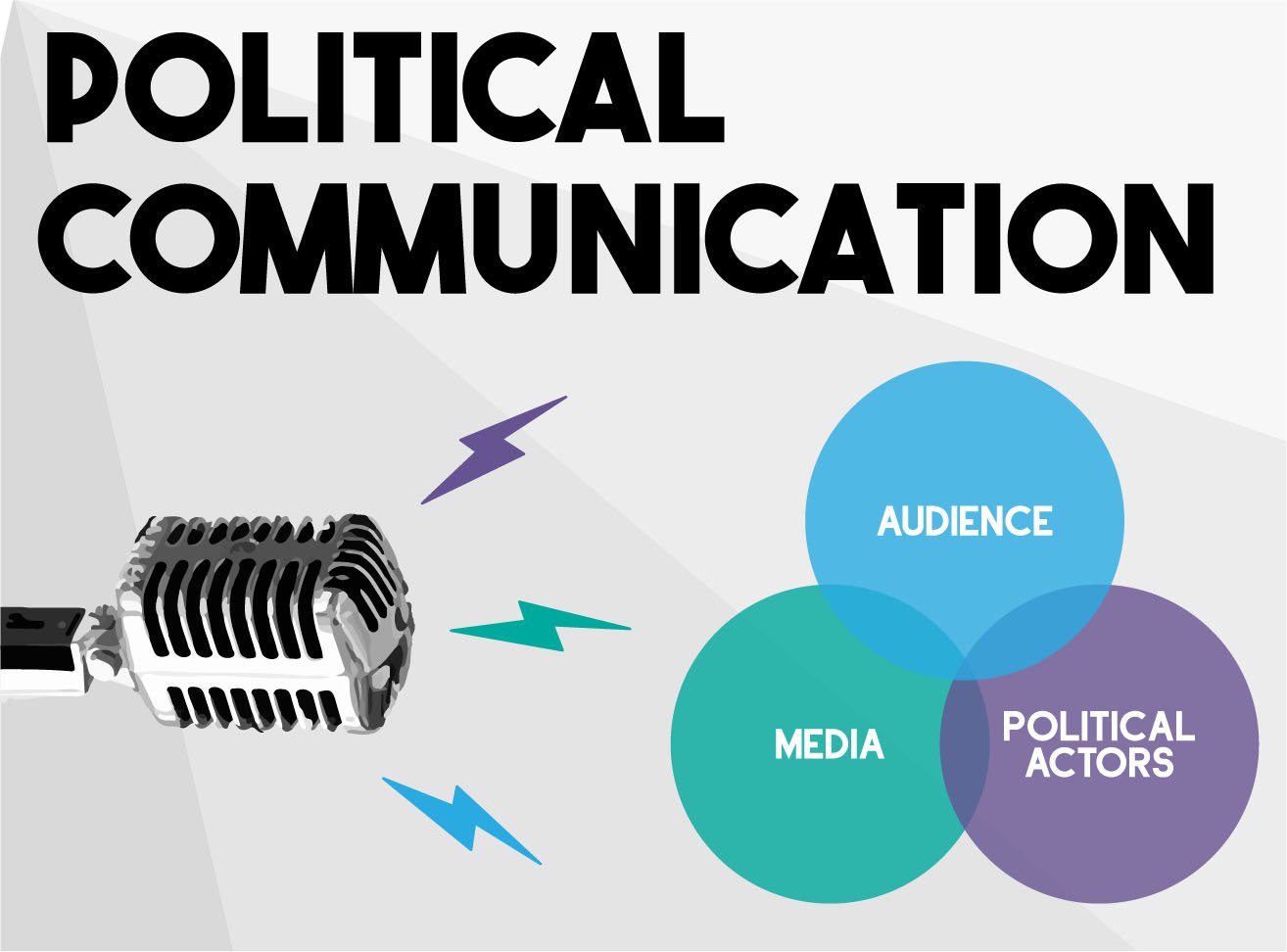
Pakistan’s political sphere is no stranger to the deployment of multiple tools to communicate with the masses. These tools are not simply channels; they are essential stepping stones in bridging political actors and the people, curated and carefully designed to ensure a smooth communicative process where messages are sent out, received, understood, and followed by some degree of action. This process is repeated in a constant cycle, refined accordingly with as per the requirements of the specific situation or time.
The process of political communication in Pakistan is heavily dependent on media coverage. Media plays a significant role in creating a pathway of interaction between political actors and target audiences, and as the labeled watchdog of the society, has the vital duty of ensuring accountability and transparency of the political processes taking place. This way, media becomes not just a messenger, but a political actor in itself, influencing policies, governments, and opinion leaders. Consequently, audiences and consumers also turn to media as their primary source of information and news regarding any political happening in Pakistan. The influence of media in a society, especially in a political landscape, is a long-standing and extensively studied phenomenon.
Media narratives dominate the sphere, and understandably so. Prime-time news and talk-shows in mainstream television are among the most prominent mediums, specifically for urban and sub-urban audiences in Pakistan. As the major deliverers of information and platforms of discussing and understanding political issues, these talk-shows primarily function on inviting relevant guests who provide a good balance of analysis, breakdown of certain issues of relevance, and sensationalism. Governance and politics in Pakistan are seldom brought to light through systematic debates. Instead, they find themselves inserted in a saturated and polarized arena of competing storylines, emotionally charged content, exaggerated confrontations, and dramatic exchanges.
This format is followed by nearly all political talk-shows, and while they do aid in providing audiences with interpretations and detailed insights into political activities, they do so with sensational sound-bites and selective quotes. Such content, gathering the attention of the general public, tends to successfully set the agenda not only for the people of Pakistan, but also the media landscape and its functions. While competing storylines and narratives increase engagement, they eventually lead to a decreased space for detailed, analytical discussions, which are essential to the promotion of an environment of political literacy and accountability. As a result, consumers and audiences view politics as an episodic phenomenon, rather than a continuous democratic process.
In addition to talk-shows as an extremely influential medium, political agendas are also being observed shifting towards the digital sphere, targeting the young people of Pakistan. Social media in specific has opened up the pathways of increased democratic participation and opportunities to raise opinions, without the direct influence of editorial policies, regulation or censorship, and gatekeepers. Political leaders can also directly interact with the masses on a greater level, fostering better relationships with the public. However, with the lack of regulation also comes a free flow of misinformation, disinformation, quicker spread of fake news, and a growing influx of ‘trendy’ content. As these spheres allow greater levels of independence and ‘citizen journalism’, concerns are raised over what the limit of this independence is, and who gets to decide that.
Use of memes, short-form content, emotional language and messages, and digital populism are all trademarks of social media’s political communication sphere. Although it might seem harmless on the surface, but these very traits slowly translate into trendy content-engagement rather than policy engagement, trivializing the gravity of politics and democracy. This fosters a deeply polarized society, built on fake news or half-truths to travel much faster than factual corrections, becoming the perfect breeding ground for populist messaging.
The competition and trivialization of politics is a point of concern Pakistan should manage in its true severity. There falls a collective responsibility on all of us to free ourselves of the tedious cycle of rebranded narratives, and futile modes of ‘normality’. The communicative process taking place in this dynamic includes an active participant, and that is the role we play. We are active participants in the democratic exercise, and disengagement too is a decision with consequences.
Mindlessly engaging with content that is not tailored to our best interest results in a culture of our interests being sidelined, and its normalization leads to dead ends in all possible scenarios. Whom does it benefit, and who takes the brunt of it? What is the end goal of treating serious things without any integrity? Why does the divide in Pakistan seem to grow endlessly? We must ask these questions, from ourselves and those in power. It is imperative that with asking such questions, we pay heed to our surroundings, and be mindful of every step we take, for it leaves a print, albeit a small one, in the bigger picture.
Pakistan must begin to truly contemplate the significance of political communication within bounds of its media, and reconsider its ways. It is the only way forward.