

- By: Barrister Usman Ali – Ph.D.
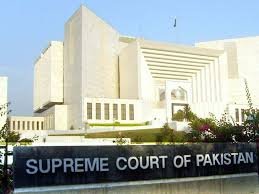
The Supreme Court of Pakistan recently upheld a decision by the Peshawar High Court denying reserved seats to the Sunni Ittehad Council, effectively stripping PTI of those seats. The ruling, unsurprisingly, split public opinion. Supporters celebrated it as a triumph for the Constitution and legal clarity. Opponents called it unjust, politically motivated, and damaging to the court’s credibility, yet another decision deepening the country’s institutional divide.
This isn’t a new story. Pakistan’s political and judicial history is littered with rulings that seem less rooted in constitutional clarity and more in the power dynamics of the moment. Again and again, one party is treated as a “favored child,” while another is cast aside. Rarely has the judiciary been viewed as consistently impartial. Its major verdicts often reflect not just legal reasoning, but institutional pressure, personal bias, or political alignment.
The pattern was set early. In 1954, Chief Justice Muhammad Munir upheld the dismissal of the Constituent Assembly, legitimizing executive overreach through the infamous “doctrine of necessity.” That ruling paved the way for military interventions for decades. The issue has never been limited to pressure from above; many verdicts have been shaped by judges’ political preferences, rivalries, or loyalties.
Perhaps no case better illustrates this than the 1979 execution of former Prime Minister Zulfiqar Ali Bhutto. Justice Maulvi Mushtaq Hussain, who had a known personal grudge against Bhutto, presided over a trial that many believe was tainted with bias. The Supreme Court upheld the verdict, later revealed to have been influenced by General Zia-ul-Haq’s pressure on the judiciary. Decades later, the court acknowledged Bhutto had been denied a fair trial.
In 1999, General Pervez Musharraf seized power in a military coup. The court not only endorsed this unconstitutional takeover in 2000 but went so far as to grant him authority to amend the Constitution, an extraordinary breach of democratic norms. When Musharraf dismissed Chief Justice Iftikhar Chaudhry in 2007, the lawyers’ movement arose to defend judicial independence. The judiciary regained public trust, briefly. But overuse of suo motu powers and growing ties with the media soon eroded that perception.
In recent years, several judges have shown clear sympathies with political narratives, particularly those aligned with former Prime Minister Imran Khan. Courtroom remarks and judgments suggested an unusual proximity to his cause. In some cases, political affiliations within judges’ families also raised concerns about partiality. One landmark case was the presidential reference filed against Justice Qazi Faez Isa. Widely viewed as an executive attempt to undermine an independent judge, the reference was eventually dismissed. While the ruling upheld judicial independence, it also exposed how vulnerable the judiciary is to institutional interference. Justice Isa’s dissents later became symbols of resistance to internal pressure and partisan influence.
The 2017 Panama Papers case that led to Nawaz Sharif’s disqualification reinforced the cycle. PTI declared it a victory for justice; the PML-N called it a “judicial coup.” Years later, when rulings began going against PTI and Imran Khan, the same party turned on the judiciary, branding it biased and compromised.
Recent Supreme Court decisions in 2023 and 2024, on election dates, assembly dissolution, and reserved seats, are not outliers but part of this ongoing saga. One political faction prays in gratitude; another takes to the streets. One distributes sweets; another accuses the courts of facilitating “regime change.” Principles are sidelined. What matters is who benefits.
This cycle will continue until the environment that shapes judicial decisions is fundamentally changed. The real issue is not isolated rulings but the broader structure in which they are made. As long as judicial appointments are made behind closed doors, influenced by politics rather than merit and transparency, the problem will persist. As long as judges seek headlines, act on emotion, or allow ideological sympathies to shape verdicts, trust in the judiciary will remain fragile.
Institutional reforms are long overdue. Judges should be appointed through transparent processes based on professional qualifications, not proximity to power. Annual asset disclosures of judges should be accessible to the public. Retired judges should be barred from taking political or government posts . Judicial decisions should be presented in accessible language for public understanding. Most importantly, the Supreme Judicial Council must be reformed into an active, independent body that can investigate misconduct without fear or favor.
Democracy is more than casting votes. It is a system of checks, balances, and institutional integrity. If Pakistan is to become a stable and just state, all stakeholders, including the judiciary, must rise above political loyalties and align themselves with the Constitution alone.
Until then, judges will continue to call some litigants “good to see you” and dismiss others as “Sicilian mafia,” . Time will move on. Chairs will change. Verdicts will flip. But the public will keep watching the same performance, just with new faces on an old stage.