

- By: Dr. Muhammad Tayyab Khan Singhanvi (Ph.D)

In the spiritual and literary history of the Indian subcontinent, some luminous figures shine forth who not only spread the message of Sufi thought but also immortalized the ideals of humanity, love, and tolerance through their verses. Among these radiant souls, the exalted name of Shah Abdul Latif Bhittai stands preeminent. He is often referred to as the soul, the heartbeat, and the voice of Sindh. More than a poet, he was a mystic visionary who, through his thought and art, initiated a profound intellectual and spiritual tradition that continues to illuminate the cultural and philosophical landscape of Sindh and the subcontinent to this day.
Shah Abdul Latif Bhittai was born in the 17th century into a noble, religious, and scholarly family. He was born in 1689 in the village of Bhit, near Hala in Sindh’s Hyderabad district hence the epithet “Bhittai.” His father, Shah Habib, was a pious and learned man who gave special attention to his son’s spiritual and intellectual upbringing. From a young age, Shah Latif displayed extraordinary sensitivity, curiosity, and intelligence. He was deeply drawn to the Qur’an, Hadith, Islamic jurisprudence, Persian literature, Arabic language, and the mysteries of Sufism.
What truly distinguishes Shah Latif is the elevation of his spiritual insight and the depth of his thought. He did not merely acquire knowledge; he absorbed the experiences of life the suffering and joys of humanity and distilled them into poetic expression. His magnum opus, Shah Jo Risalo, is considered a timeless masterpiece of Sindhi literature and a rare treasure of Sufi poetry. This compilation contains over seventeen “Surs” (chapters), which portray legendary folk tales such as Sassui-Punhun, Umar-Marvi, Momal-Rano, Leela-Chanesar, Noori-Jam Tamachi, and Sorath-Rai. Through these characters, Shah Latif interprets eternal truths of love, sacrifice, loyalty, trust, endurance, and spiritual transcendence.
His Sufi worldview was deeply rooted in Islamic teachings, yet he expressed these truths not through the rhetoric of clerics, but through the soft language of love and longing. His message reflects the doctrine of Wahdat al-Wujood (Unity of Being), which holds that the entire universe is a manifestation of one divine reality. He invites the seeker to discover “True Love,” which lies beyond the veils of the world and is reflected only in the mirror of the heart. In his vision, love is not merely a destination but the path itself, and the true seeker is the one who purifies the self in the fire of divine longing.
One of Shah Latif’s greatest contributions was his transformation of the Sindhi language and literature. He infused it with a new color, a new expanse, and profound meaning. Not only did he bring spiritual themes to the common people in simple, accessible language, but he also celebrated rural life, feminine emotions, and the subtle beauties of nature with remarkable grace. His poetry is rich with melody, emotional intensity, and lyrical flow. It is not just read, but sung even today in Sufi gatherings, shrines, and cultural festivals across Sindh, accompanied by traditional instruments like the damburo and tanburo, turning his message into a living spiritual experience.
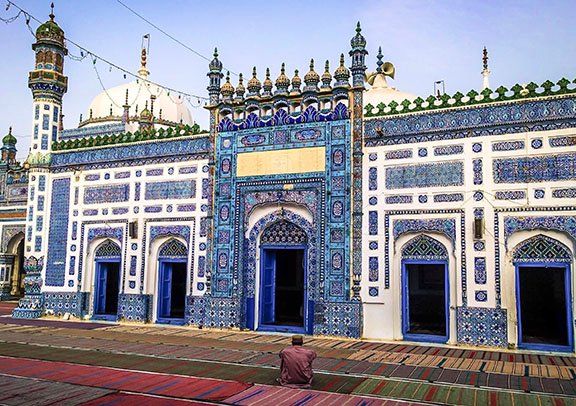
His life was the very embodiment of the values he preached. Shah Latif lived with simplicity, humility, and a deep sense of compassion. He rejected religious fanaticism, sectarian hatred, and class discrimination, raising a quiet but powerful voice of reform through his conduct. There was no bitterness or violence in his resistance only the fragrance of truth, patience, and unwavering love. His shrine at Bhit Shah remains a significant spiritual center, attracting countless devotees every year.
Shah Latif’s portrayal of women in his poetry is especially remarkable. In an age when women were viewed through narrow societal lenses, he presented them as courageous, dignified, and resilient figures. The heroines of his legendary tales are not passive subjects but active seekers of truth symbols of steadfastness, self-respect, and moral integrity. This perspective not only restores the rightful place of women in society but also reflects the highest spiritual virtues that anyone man or woman can strive for.
Shah Latif’s message transcends time and geography. It speaks of universal human unity, interfaith harmony, and spiritual awakening. Speaking to his people, his land, and his era, he created an intellectual legacy that serves as a beacon for all times and all cultures. He stands among the great Sufi masters of the subcontinent who merged language, culture, and spirituality into a harmonious whole a message that still lights up human hearts today.
Modern scholars and intellectuals continue to explore and translate his works. His poetry has been rendered into English, Urdu, Punjabi, Hindi, Persian, and other languages. Yet the emotional depth, symbolic richness, and soulful resonance of his original Sindhi verses remain unmatched an enduring miracle of poetic art that continues to stir hearts with sincerity, truth, and spiritual warmth, centuries after it was first composed.
In conclusion, Shah Abdul Latif Bhittai was not merely a poet or mystic he was the embodiment of an entire spiritual philosophy. He was a voice that still echoes through the chaos of time, a lamp that continues to shine in every age of darkness. His teachings, his poetry, and his life offer us a lasting lesson: that love, humanity, tolerance, knowledge, and self-realization are the truest paths to divine truth.
Shah Latif chose not the path of wealth or fame, but the humble road of the faqir and through that path, he illuminated not just Sindh but all of humanity. He remains not only worthy of our reverence but of our emulation in spirit, in thought, and in life.