

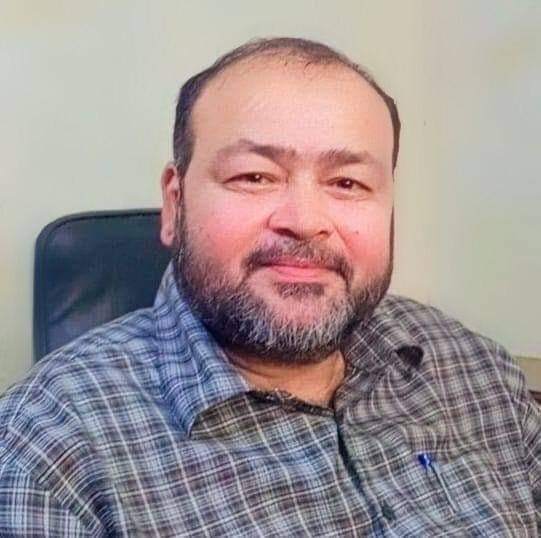
- By: Dr. Muhammad Tayyab Khan Singhanvi (Ph.D)
Islam is a religion that emphasizes not only individual reformation but also clearly delineates principles for social and international relations. The principles of war and peace in Islam are grounded not only in divine revelation but were also practically demonstrated during the life of the Prophet Muhammad (PBUH) and the era of the Rightly Guided Caliphs. In Islam, war is not a beloved or preferred act; rather, it is permitted only as a last resort when oppression exceeds its limits, the voice of truth is suppressed, or the weak are deprived of their fundamental rights. Consequently, in today’s world afflicted by various wars, conflicts, and political strife, Islamic law regarding war and peace emerges as a balanced, just, and humanitarian system.
A study of the noble life (Seerah) of the Prophet Muhammad (PBUH) reveals that after establishing the Islamic state in Madinah, he fought several wars that were essentially defensive in nature. The objective of these wars was never the acquisition of power, land, or wealth, but rather the liberation of believers from oppression, the preservation of their faith, and the upholding of human dignity. Historical events such as the Battles of Badr, Uhud, Khandaq, Khaybar and the Conquest of Makkah bear witness that the Prophet (PBUH) always prioritized peace, resorting to war only as an ultimate measure. For instance, the Treaty of Hudaybiyyah appeared superficially as a disadvantageous agreement for the Muslims, but subsequent events revealed it to be a decision rooted in foresight, which opened the doors for the Islamic message.
Although the Holy Quran explicitly instructs Muslims to maintain military preparedness at all times, its purpose is not aggression but defense, deterrence, and restraining the enemy.
- Quranic Injunction (Surah Al-Anfal 8:60):
Translation: “And prepare against them whatever you are able of power and of steeds of war by which you may terrify the enemy of Allah and your enemy…”
- Key Points:
- The command for preparedness is perpetual, whether war is imminent or not.
- The purpose of strength is solely defense and deterrence, not aggression.
- “Ribat al-Khayl” (steeds of war) symbolizes the primary means of warfare of that era (in contemporary terms: modern weaponry, defense systems, etc.).
In light of the Quran, it is incumbent upon Muslims to remain vigilant, organized, and prepared at all times, so that no enemy dares aggression and peace prevails. This command aims not to terrorize but to maintain a balance of power.
- A Brief Overview of the Prophet’s Swords:
A concise and coherent examination of the Prophet’s (PBUH) weaponry, particularly his swords, reveals that he possessed nine famous swords used on various occasions, their names preserved in historical and biographical works and Turkish museum records. Some were inherited, others received as gifts, and some acquired as spoils of war.
- Al-Ma’thur: His first sword, inherited from his father, Abdullah. It had a simple steel blade. Later adorned with gold and precious stones during the Ottoman era, it is preserved today in Istanbul’s Topkapi Palace Museum.
- Al-‘Adhb: Gifted by the companion Sa’d bin ‘Ubadah before the Battle of Badr. A simple, curved sword used by the Prophet (PBUH) at Badr and Uhud, sometimes entrusted to Abu Dujana. This is the only sword housed in the Al-Hussein Mosque, Cairo, Egypt.
- Dhul-Faqar: Acquired as spoils after the Battle of Badr and later bestowed upon Ali (RA). Its name remains a symbol of bravery and truth in Islamic history. The famous phrase “La Saifa illa Dhu’l-Faqar…” is associated with it, though its exact shape (notably the double-pointed tip) is debated.
- Al-Battar: Acquired from the Jewish tribe Banu Qaynuqa’. It bears inscriptions of the names of various prophets and a depiction of David (AS) slaying Goliath.
- Al-Hatif: Similar to Al-Battar but larger and heavier. Reportedly also used by Ali (RA).
- Al-Qal’i: Unique for its wavy, flame-like blade. Inscribed: “This is the sword of the household of Muhammad, the Prophet of Allah.”
- Al-Rasub: A long, straight sword with golden calligraphy and inscriptions, including the name of Ja’far al-Sadiq.
- Al-Makhdam: Acquired during an expedition in Syria and brought to the Prophet (PBUH) by Ali (RA).
- Al-Qadib: A light, symbolic sword carried during travel or as a general emblem, not primarily for combat. The Prophet (PBUH) carried it during the Conquest of Makkah to signify it was a day of mercy and forgiveness, not vengeance.
Most of these swords are preserved today in the Topkapi Palace Museum in Istanbul, serving as living references to Islamic history.
- The Prophet’s Expeditions (Ghazwat):
The Prophet (PBUH) personally participated in 27 military expeditions (Ghazwat). Actual combat occurred in only about 9 of these; in the others, either no fighting took place, or the enemy fled beforehand. Additionally, he dispatched numerous Saraya (raiding parties led by companions without his personal participation).
Casualties in Major Expeditions (Based on Classical Sources like Ibn Hisham, Ibn Sa’d, Al-Waqidi, Al-Tabari):
- Badr (2 AH):* 14 Muslim martyrs; approx. 70 Quraysh killed, 70 captured.
- Uhud (3 AH):* 70 Muslim martyrs; approx. 22-30 non-Muslims killed. Despite tactical withdrawal, Muslims held the field.
- Khandaq (Ahzab) (5 AH):* 5-6 Muslim martyrs; approx. 10-15 Quraysh/Allies killed. Enemy withdrew after siege.
- Banu Qurayzah (5 AH):* 600-900 male combatants of Banu Qurayzah executed (verdict of Sa’d ibn Mu’adh).
- Khaybar (7 AH):* 15-20 Muslim martyrs; 90-100 enemies killed. Victory after fierce resistance.
- Hunayn (8 AH):* 4-12 Muslim martyrs; 70-100 enemies killed. Initial setback, decisive victory.
- Ta’if (8 AH):* 12 Muslim martyrs; 10-20 enemies killed. Prolonged siege, fortress not captured.
- Banu al-Mustaliq (5 AH):* 1 Muslim martyr; 10-20 enemies killed, many captured.
- Estimated Total Casualties (27 Ghazwat):
- Muslim Martyrs: Approximately 250
- Enemy Combatants Killed: Between 1,000 – 1,500
- (Note: Including tribal betrayals, some Saraya, and events like Banu Qurayzah increases enemy casualties).
- Key Observations:
- Muslims were often outnumbered but compensated by faith, discipline, and the Prophet’s leadership.
- The Prophet (PBUH) never initiated aggressive warfare; all expeditions were defensive or reactive.
- Humane treatment of prisoners, prohibition against killing non-combatants, and defense of the oppressed were integral to Islamic military ethics.
- Reflect: the world’s most successful revolution, achieved under the supreme leadership of the Prophet of Islam (PBUH), occurred at the cost of remarkably few human lives!
- Foundational Principles of Islamic Law of War:
Islam permits war under specific conditions. The Quran states: “Fight in the way of Allah those who fight you but do not transgress. Indeed, Allah does not like transgressors” (Al-Baqarah 2:190). This verse establishes the basis of Islamic jus in bello: Muslims may fight only those who wage war against them, and even then, moderation and ethical boundaries must be observed. Islam strictly prohibits harming women, children, the elderly, places of worship, trees, and animals. The Prophet (PBUH) even instructed his armies not to damage non-Muslims’ places of worship or destroy crops.
- Jurisprudential Development:
Classical Islamic jurists (Imam Abu Hanifah, Imam Malik, Imam Al-Shafi’i, Imam Ahmad ibn Hanbal) elaborated on these principles. They held that an Islamic state must prioritize peace, avoid compulsion in religion, and resort to war only when defense becomes necessary. Extending offers of peace and adhering to treaties are considered virtues of an Islamic state. The Quran states: “And if they incline to peace, then incline to it [also] and rely upon Allah…” (Al-Anfal 8:61).
- Exemplary Conduct in War:
The Prophet’s (PBUH) conduct during conflicts exemplifies the spirit of Islamic warfare ethics. The Conquest of Makkah stands as a magnificent example, where he granted general amnesty even to his staunchest enemies like Abu Sufyan. This reflects Islam’s emphasis on winning hearts rather than waging war. The Prophet (PBUH) said: “The best among you are those who are best to others.”
- The Era of the Rightly Guided Caliphs:
The era of the Rashidun Caliphs also embodies the Islamic law of war and peace. The instructions given by Caliph Abu Bakr (RA) to his armies surpass modern international humanitarian law in their ethical standards: “Do not kill women or children; do not harm date palms; do not destroy places of worship; do not molest those who do not fight you.” Caliph Umar (RA) strictly upheld military principles and treaties, guaranteeing religious freedom to non-Muslim subjects (Dhimmis), protecting their places of worship, and undertaking their defense in exchange for Jizyah.
- Contemporary Relevance:
In the modern era, where the use of force globally is often driven by political interests, resource exploitation, and racist agendas, Islamic law offers a model system that is exemplary, just, and sustainable. The plight of oppressed nations in Palestine, Lebanon, Kashmir, Afghanistan, Syria, Yemen, Iraq, and elsewhere challenges the world’s conscience. The principles of Islam aiding the oppressed, resisting the oppressor, and establishing peace are critically needed here.
The ethical spirit of modern international laws like the Geneva Conventions, Hague Treaties, and the UN Charter was introduced by Islam fourteen centuries ago. For example, while the Geneva Convention addresses prisoners’ rights, the Prophet (PBUH) treated prisoners of war with exemplary kindness, ensuring their food and clothing, and often releasing them without ransom. The Quran instructs kindness to captives: “And they give food in spite of love for it to the needy, the orphan, and the captive” (Al-Insan 76:8).
- Clarifying Jihad:
Islamic law of war is linked to the concept of “Jihad.” It is crucial to clarify that Jihad in no way equates to terrorism, killing civilians, or spreading fear. Jihad is a comprehensive concept encompassing struggle with the pen, tongue, self-purification, propagation of faith, defense, and establishing justice. The Prophet (PBUH) said: “The best Jihad is when one strives against one’s own self (nafs).” This underscores that in Islam, Jihad primarily means self-reformation; defensive warfare is permitted only subsequently. There is no sanction in Islam for suicide bombings, targeting civilians, or spreading chaos in the name of religion. The Quran explicitly states: “And cause not corruption upon the earth after its reformation…” (Al-A’raf 7:56).
- A Framework for Global Justice:
The conduct of powerful nations towards the weak today stands condemned by Islamic principles. Were global powers to adopt Islamic law regarding war and peace, it could foster global peace, justice, and human dignity. The silence, double standards, and unilateralism of the UN and powerful nations have fueled global resentment and rebellion. Islam provides a framework based on justice, advocating for the redressal of the oppressed and the restraint of the oppressor.
- Islamic Law of Peace:
Islamic law regarding peace is equally balanced and exemplary. Whether the Treaty of Hudaybiyyah, the pact with the Christians of Najran, or the Covenant of Madinah with Jewish tribes, the Prophet Muhammad (PBUH) consistently demonstrated tolerance, equality, mutual respect, and fidelity to agreements. Even against treaty-breakers, only necessary measures were taken, devoid of vengeance or aggression. In an era where international treaties are sacrificed for expediency, Islam’s principle must be remembered: “Breaking a promise is a sign of hypocrisy.”
In conclusion, Islamic law regarding war and peace constitutes a complete, comprehensive, ethical, humanitarian, and sustainable system, clearly evidenced in the Seerah of the Prophet (PBUH), the history of the Rashidun Caliphs, and Islamic jurisprudence. This system serves not only as a guiding light for Muslims but also offers an alternative framework for all humanity. It combats oppression, injustice, and terrorism while promoting peace, compassion, justice, and tolerance.
In the contemporary global context, it is imperative that the Islamic law of war and peace be understood in its true essence. Muslims themselves must formulate policies based on knowledge and wisdom rather than emotion, and demonstrate to the world that Islam is a religion of peace and the guarantor of humanity’s salvation and well-being.
If the world were to adopt the principles taught by the Prophet Muhammad (PBUH), it could attain a system ensuring genuine justice, peace, and security not only for Muslims but for all nations.