


- By Zoona Javed
- MS Journalism and Mass Communication
PESHAWAR – Once celebrated as the “City of Flowers,” Peshawar today is struggling to live up to its name. Streets, bazaars, and residential colonies across the city are increasingly buried under heaps of garbage, dusty roads, and foul-smelling drains—turning daily life into a battle against filth.
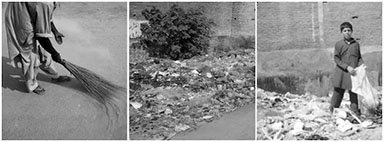
From University Road to the inner city, waste piles up on corners while residents burn trash in open spaces, causing thick smoke and choking air. The absence of proper waste bins, irregular collection, and limited sanitation staff have made matters worse.
“It feels like garbage heaps are alive in every neighborhood,” said Malik Kashif Bangash, a resident of Gulbahar. “The piles keep growing, and no one bothers to remove them on time.”
Shopkeepers in Saddar and Qissa Khwani complain that the poor hygiene directly impacts their businesses. “Customers avoid sitting at my tea stall because of the stinking garbage nearby,” said Akhtar Ali, a vendor. “We need dustbins in every market, but the government doesn’t seem serious.”
The health risks are another growing concern. Doctors at Lady Reading Hospital report increasing cases of seasonal flu, allergies, and infections linked to unhygienic surroundings. “Children and elderly people are the most vulnerable,” warned Dr. Samman, a general physician.
City officials, however, say they are aware of the issue. The Director of Administration, Water and Sanitation Services Peshawar (WSSP), admitted challenges but highlighted ongoing initiatives. “We are running cleanliness campaigns and working on expanding garbage collection, but the shortage of sanitation workers and lack of public cooperation remain hurdles,” he said.
Meanwhile, sanitation staff themselves feel neglected. “We work hard but our wages are too low, and we don’t even get protective gear,” said one janitor in Hashtnagri. “People blame us, but cleaning a city this big with so few hands is impossible.”
Experts suggest that Peshawar needs a comprehensive waste management strategy—with more staff, better wages, protective equipment, and dedicated garbage bins across the city. They also stress public responsibility.
“If every citizen stops throwing trash on the streets, half the problem will be solved,” said Professor Abdul Rahman, a civic rights activist. “A clean city is everyone’s duty, not just the government’s.”
Until then, the City of Flowers risks becoming known instead as a city of garbage, with its beauty and health overshadowed by neglect.