

- By: Dr. Muhammad Tayyab Khan Singhani, Ph.D

During the recent tensions between Pakistan and India, Pakistan claimed to have shot down India’s modern Rafale aircraft, drawing global attention. Additionally, a comparison of the military capabilities of both countries and the current status of the ceasefire is noteworthy.
- How Did Pakistan Shoot Down Rafale Aircraft?
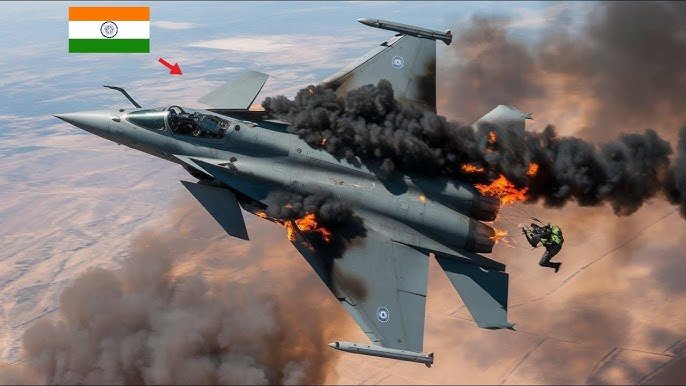
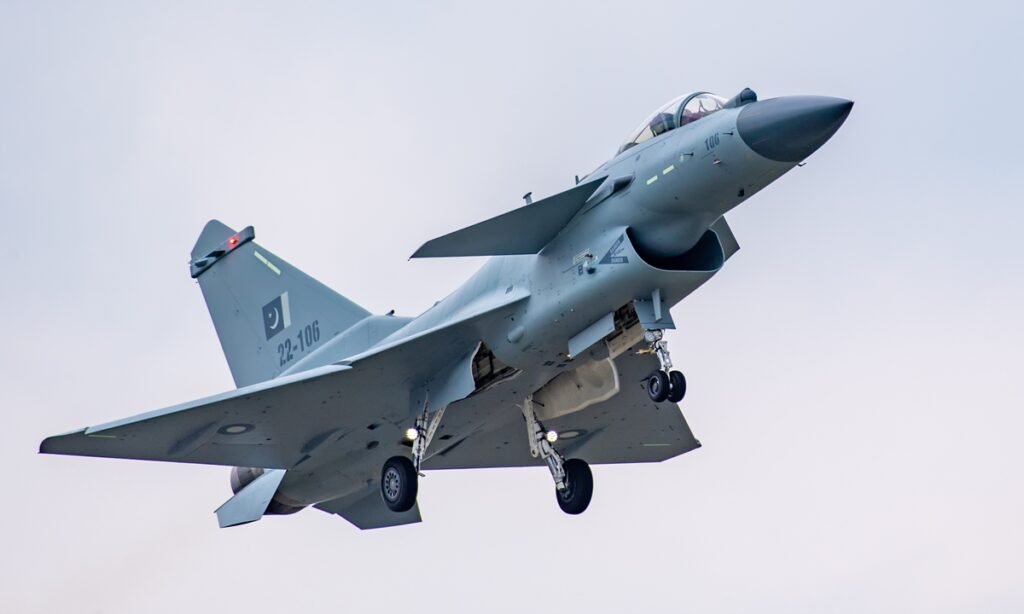
In a series of aerial skirmishes that occurred in May 2025, the Pakistan Air Force (PAF) claimed to have shot down three Indian Rafale aircraft. This event took place on May 7, when nearly 125 fighter jets from both nations faced each other for over an hour. Pakistani JF-17 Thunder and Chinese-made J-10C aircraft confronted India’s Rafale, MiG-29, and Su-30MKI aircraft. This marked the first time a modern aircraft like the Rafale was shot down in combat, raising questions about the vulnerabilities of the Indian Air Force.
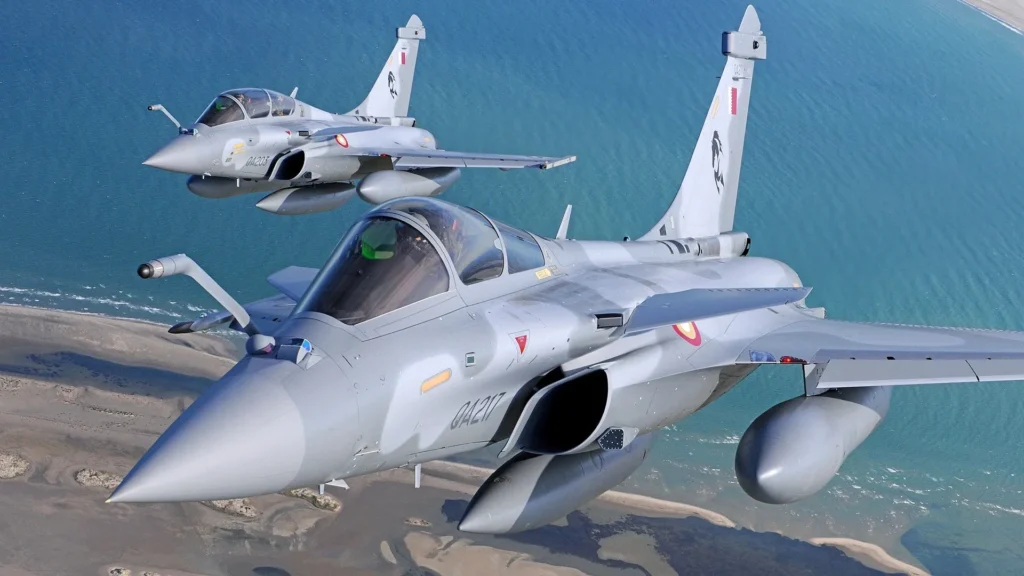
In these recent India-Pakistan aerial conflicts, Pakistan claimed to have downed five Indian fighter jets, including three French-made Rafale aircraft. These skirmishes occurred under “Operation Sundar” during May 6-7, 2025, when India attacked alleged terrorist centers in Pakistan and Pakistan-administered Kashmir. The Pakistan Air Force targeted Indian Rafale aircraft using J-10C fighter jets. Some international sources have corroborated this claim. For instance, a French intelligence official confirmed to CNN that at least one Indian Rafale aircraft was indeed shot down, while U.S. officials verified the downing of at least two Indian aircraft, one of which was a Rafale.
However, the Indian government has denied these claims, asserting that all of their aircraft returned safely. The Indian Ministry of Information and Broadcasting’s Press Information Bureau (PIB) labeled reports of the Rafale aircraft being shot down as “false and misleading.” Evidence from the conflict zone, including images of parts of the Rafale aircraft, circulated on social media, but independent verification is still pending. Thus, while Pakistan claims to have shot down three Rafale aircraft, there are conflicting views on this internationally, and India firmly denies it. In the current situation, independent and impartial verification of both countries’ claims is essential to determine the truth.
- Current Status of the Ceasefire:
Following the recent tensions, a meeting between the Directors General of Military Operations (DGMO) from both India and Pakistan took place on May 12, 2025, during which they agreed on a complete ceasefire along the Line of Control (LoC). Both sides emphasized that no firing or provocative actions would be taken. This ceasefire was made possible due to U.S. diplomatic efforts aimed at reducing tensions in the region.
“Military and Defense Capabilities” is a composite term that encompasses two main aspects:
- Offensive Capabilities: This reflects all military forces, weapons, strategies, and combat plans a country possesses to attack an enemy or effectively respond to an enemy’s attack. This includes:
- Fighter jets
- Tanks and armored vehicles
- Missile systems (Ballistic & Cruise Missiles)
- Special forces operations
- Warships and submarines
- Drone strike capabilities
- Defensive Capabilities: These are the capabilities utilized by a country to protect itself from enemy attacks, defend its critical assets, and safeguard its citizens. This includes:
- Air defense systems (such as S-400, HQ-9)
- Missile shield systems
- Radar and intelligence networks
- Cyber defense
- Civil defense and emergency response capabilities
Therefore, “military and defense capabilities” represents a comprehensive power of any country, encompassing military strength, weapon modernization, command and control systems, trained personnel, military alliances, and strategies that not only deter enemies but also possess the capacity to respond effectively when necessary.
- Comparison of Military and Defense Capabilities of India and Pakistan:
Below is a summary of the defense strengths of both countries based on the latest credible sources:
- Defense Budget:
- India: $74.4 billion (2024)
- Pakistan: $10 billion (2024)
- Military Personnel:
- India: 1.4 million active personnel, 1.15 million reserves
- Pakistan: Approximately 700,000 active personnel, 550,000 reserves
- Ground Forces:
- India: 3,740 tanks, 9,743 artillery pieces
- Pakistan: 2,537 tanks, 4,619 artillery pieces
- Air Power:
- India: 730 fighter aircraft
- Pakistan: 452 fighter aircraft
- Naval Power:
- India: 2 aircraft carriers, 16 submarines, 11 destroyers, 16 frigates
- Pakistan: 0 aircraft carriers, 8 submarines, 10 frigates
- Nuclear Weapons:
- India: Approximately 172 warheads
- Pakistan: Approximately 170 warheads
India holds advantages over Pakistan in terms of defense budget, military personnel, and weaponry. However, both countries have nearly equal nuclear capabilities, which maintains a balance in any potential conflict. Despite the military superiority of India overall, especially in naval and air sectors, Pakistan has effectively utilized advanced drones and Chinese-made aircraft during recent confrontations. The presence of nearly equal nuclear capabilities in both countries maintains the balance of power in the region.
The current status of the ceasefire represents a positive step for both nations, but continuous diplomatic efforts and confidence-building measures are essential for sustainable peace in the future.
If we were to comprehensively describe the military and defense capabilities of India and Pakistan, it could be summarized as follows:
- Pakistan’s military and defense capabilities are robust, dynamic, and based on a deterrent balance. Pakistan has built its military strength on nuclear deterrence, highly trained ground, naval, and air forces, and locally produced modern weaponry (such as JF-17 Thunder, Shaheen and Ghauri missiles, NASR tactical nuclear missiles). The capabilities of the Pakistani forces are notable for showing effective performance with limited resources, unconventional warfare, and rapid defensive response. Drone technology, cyber defense, and advanced defense systems have further stabilized this capability.
- India’s military and defense capabilities are based on resource abundance, defense budget, and numerical superiority. India boasts a larger number of forces, advanced Rafale aircraft, Sukhoi jets, aircraft carriers, and missile shield systems (S-400) among others. India’s defense structure is extensively organized, prepared for both conventional and unconventional warfare, and strengthened by multiple international defense agreements. Its space, cyber, and technological capabilities are also prominent.
- Pakistan: Defense capability-driven, quick response, technical self-reliance, and the power of nuclear balance.
- India: Numerical superiority, vast resources, technical diversity, and efforts to stabilize its strategic position in the region.
- Destruction of Israeli Herons Drones:
During the May 2025 skirmishes, Pakistan also targeted Indian surveillance drones imported from Israel, the Heron TP (sometimes referred to as Herops). According to defense sources, at least two Heron TP drones operating under Israeli technology were shot down near the Line of Control. The Pakistani military released images of the wreckage of these drones, clearly showing Israeli-manufactured components. This incident not only reflects Pakistan’s drone defense capabilities but also raises global questions about Israeli-Indian defense cooperation.
- International Reactions and Media Coverage:
Throughout these tensions, global media has focused significantly on the aerial clashes between Pakistan and India. Some French defense observers expressed concern regarding the loss of Rafale aircraft, while Israeli officials insisted on maintaining secrecy regarding their defense collaboration with Indian forces. The U.S. State Department urged restraint and a ceasefire, while China supported Pakistan’s sovereignty, asserting that every country has the right to defense.
India claims that they have won the war: Israeli Heron drones were downed, French Rafale aircraft were destroyed, Russian Su-30MKIs were shot down, British UAVs LTD were targeted, and Russian defense systems S-400 were neutralized. India’s major business event, IPL, was postponed, and they had to close 36 major airports. India’s stock market crashed, leading to an estimated $83 billion loss for its economy. Indian airlines faced losses due to the closure of Pakistani airspace. Ten significant military installations in India were destroyed. For four hours, Pakistani drones operated freely in Delhi’s airspace, while more than 100 Indian drones were shot down. The “BrahMos missile depot” was annihilated, India’s satellite system failed, and Pakistani hackers, through a cyber attack, stole sensitive Indian defense information to sell on the dark internet. In Kashmir, Pakistan seized control of more than ten checkpoints, unveiling the lies and fraud of the Indian government across global media, leading to diplomatic embarrassment for India.
Regardless, if Indian spokespersons continue to lie, it is clear they are completely shattered by their defeat and will face internal turmoil and political instability. The truth cannot be hidden forever; the world will condemn them. India has lost; their spokespersons’ expressions of shame and body language clearly reveal their defeat.
At this moment, Pakistan has a prime opportunity for an effective and sustainable resolution of the “Indus Waters Treaty” alongside the “Kashmir issue.” Allah has granted Pakistan a significant victory, Alhamdulillah, Pakistan Zindabad, Long live the Pakistan Army!