

- By: Barrister Usman Ali (Ph.D.)
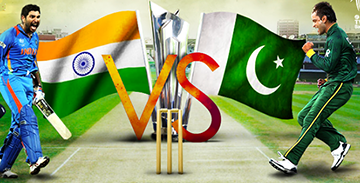
National leaders hold a unique power: they can unify societies or fracture them. When exercised responsibly, leadership fosters trust, harmony, and goodwill with neighbors. But when power is used to inflame divisions along ideology, religion, or identity, the effects spill far beyond domestic politics , even into sport. The Asia Cup cricket final between India and Pakistan on September 28, 2025, made this painfully clear. Indian players refused customary handshakes, declined the trophy presentation, and injected politics into a game long seen as a bridge across borders. Such incidents should alarm anyone who values democracy, peace, and the integrity of public life.
Since Narendra Modi’s rise, accusations of advancing Hindu majoritarian nationalism have come not just from foreign observers but from within India itself. His tenure as Gujarat Chief Minister was overshadowed by allegations of complicity in the 2002 anti-Muslim riots, earning him the label “the Butcher of Gujarat” among detractors. As Prime Minister, his rhetoric and policies often echo the very divisions he is accused of exploiting. Hindu nationalist slogans, polarizing identity politics, and selective appeals to majoritarian sentiment have deepened communal distrust. At the same time, India’s foreign policy posture toward Pakistan has hardened, with symbolic gestures and military maneuvers reinforcing domestic narratives. The fusion of domestic politics and foreign policy is a hallmark of strongman national leaders, who silence dissent and mobilize hostility under the banner of embodying the “people’s will.”
In this climate, nationalism has become less a genuine expression of collective identity than a veneer to consolidate power. Cricket, long imbued with symbolic weight between India and Pakistan, once offered opportunities for “cricket diplomacy.” Matches were occasions for gestures of goodwill between adversaries. That tradition is eroding, with the game increasingly reduced to a proxy battlefield.
The Asia Cup 2025 will be remembered less for India’s victory than for the controversies that overshadowed it. From the group stage, political undertones were unmistakable. Indian players refused the customary pre- and post-match handshakes , a gesture that for decades symbolized respect regardless of the result. Pakistani players and officials voiced disappointment, noting this was the first time such traditions were openly abandoned. For generations, handshakes reassured fans that however fierce the rivalry, respect endured. Their absence this year cast a shadow over every encounter.
The controversy peaked in the final. India emerged champions, but the trophy ceremony collapsed into dispute. The team declined to accept the Asia Cup and medals from Mohsin Naqvi, President of the Asian Cricket Council and Pakistan’s Interior Minister. Reports described delays, and the trophy was ultimately removed. India’s captain claimed his team had been “denied” the opportunity to celebrate, while Pakistan’s captain condemned the refusal as disrespectful and damaging to the game’s image.
Such actions represent a breach of the unwritten contract that separates sport from politics. Cricket in South Asia has long carried symbolic weight, but it has also acted as a bridge in times of tension. In 1987, an Indian Prime Minister even invited his Pakistani counterpart to a match in Jaipur, helping defuse military friction. In 2004, India’s tour of Pakistan was remembered for both the cricket and the hospitality exchanged between fans. Even matches in neutral venues like Dubai often brought supporters together. This year, goodwill was replaced by animosity, and even basic respect was absent.
Observers warn that refusing handshakes or declining trophies risks normalizing hostility. It teaches young fans that animosity is acceptable and recasts opponents as enemies rather than competitors. Cricket, instead of softening divisions, becomes another battlefield. This is especially troubling in South Asia, where millions view cricket as a shared cultural institution with immense symbolic power.
The broader issue is the politicization of sport. Cricket’s gentlemanly traditions make this corrosion particularly damaging. The Asia Cup showed how quickly political agendas can overshadow the essence of the game when players , under pressure from national leaders , allow politics to dictate conduct.
In Pakistan, some argue that refusing to play India until sportsmanship is restored is the only way forward. Others caution that such a boycott would harm Pakistan’s global cricket standing and deprive fans of one of the sport’s greatest spectacles. A middle path would be conditional engagement: Pakistan could insist on strict protocols, mandatory handshakes, impartial trophy ceremonies, and a ban on political post-match statements. If violated again, withdrawal would carry greater legitimacy in the eyes of the cricketing world.
Governing bodies also bear responsibility. The International Cricket Council and Asian Cricket Council must act to protect the game’s integrity. Codifying and enforcing sportsmanship standards , including ceremonial protocols ,would help preserve cricket’s traditions regardless of political circumstances. Silence from administrators only deepens politicization and unfairly burdens players caught between sporting duty and political pressure.
The Asia Cup 2025 was more than a tournament; it was a mirror of the region’s political climate. What should have been a unifying spectacle became a symbol of division. The refusal to honor traditions of respect damaged not only cricket’s image but also the trust of millions who hoped to see sport rise above politics. National leaders and players alike must remember that even the smallest gestures , a handshake, the lifting of a trophy , carry immense symbolic weight. They can deepen divisions, or they can remind people of their shared humanity.
If cricket is to remain a unifying force, the lessons of this Asia Cup cannot be ignored. Politics will always shape relations between India and Pakistan, but the cricket field should remain a space where rivalry ends with respect. Otherwise, one of the world’s greatest sporting traditions risks becoming another casualty of political rivalry , and the idea of cricket as a bridge between divided peoples may be lost to history.