

- By: Soha Ramzan
- Abstract
The protection of national interests is the main concern of every state’s foreign policy and so it has been with Pakistan. From the last seventy years, national security of the country was the top priority of Pakistan’s foreign policy, but with the establishment of CPEC project a strategic shift has been seen in our foreign policy, and today the top priority of our foreign policy is the economic development and marinating regional peace.
The purpose of this study was to explore and examine Pakistan and China’s relation in today’s global setting. This study also seeks to inquire China’s influence through CPEC on Pakistan foreign policy and to analyze the role of CPEC and Pakistan’s changing relationship with the international world. Apart from the latest literature available related to this topic, expert interviews have been conducted, in which experts shared details of CPEC in relation with Pakistan’s foreign policy.
Key Words: Foreign policy, CPEC, national interest, economy, security, development.
- Introduction
Foreign programs are designed to help and cover the country’s testament, security, profitable substance, and public interest. Its purpose is to promote the development in the country and maintain the balance of power among nations and to work with their abettors to make peace in the world where the first precedence is their public interest. While International Relations have developed since the Westphalia Treaty, foreign policy conduct, strategies and compass have also shifted. In the age of Globalization, more and more areas of global, indigenous and bilateral relations moment fall within the dimension of foreign policy.
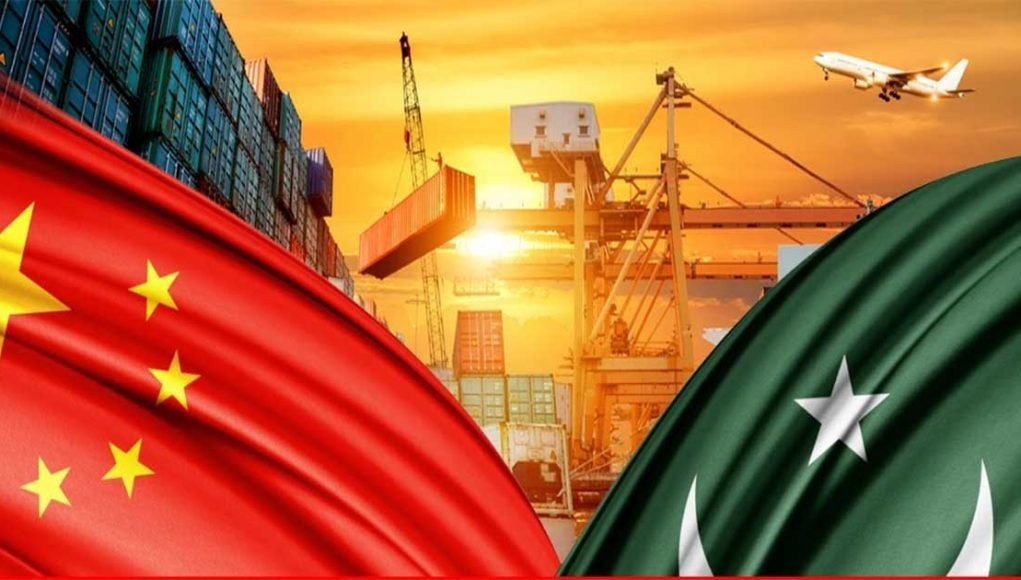
Pakistan’s foreign policy is grounded on the vision and principles of the country’s launching father, Muhammad Ali Jinnah who emphasized on the friendly relationship between nations of the world. Fellowship with China has always been top precedence of our foreign policy. China and Pakistan are all rainfall strategic mates and the profitable action of CPEC between both the countries is the illustration of their tremendous fellowship. China Pakistan Economic corridor is a bilateral design which aims to ameliorate Pakistan’s structure and strengthen its frugality by the construction of ultramodern transportation network beach special profitable zones. This adventure was launched on April 20, 2015, by both governments of China and Pakistan.
It began with the signing of 51 agreements and memorandums which bring$ 46 billion. CPEC is a 3218 km long corridor which interfaces China’s fiefdom Xinjiang to Gwadar harborage via Gilgit Baltistan, furnishing the shortest and most effective routes and access to countries like Afghanistan, Kazakhstan, Kyrgyzstan, Tajikistan, Russia, Mongolia, India, and other countries that are in central Asia. CPEC is a part of one belt one road design of China to ameliorate the connectivity, communication, cooperation and trade between countries that are located in Eurasia. China Pakistan Economic Corridor has been compared with the George Marshall’s plan who proposed the idea of the recovery of Europe post world War-II, indeed though equating CPEC and Marshall’s plan doesn’t make any sense, because Marshall’s plan was a philanthropic trouble by the United States of America to ameliorate the frugality of Europe, whereas CPEC is a collaborative trouble by both China and Pakistan to bring profitable substance in their separate countries (Rauf, 2017)
In 1951, Pakistan and China established their politic relations. Pakistan was also the first country to honored China as an independent country. The bond between China and Pakistan is 65 times long, and it’s been veritably famously said that the friend of both China and Pakistan is deeper than ocean and sweeter than honey. Pakistan has always supported China on the issues of Xinjiang and Taiwan and other affiliated issues while China also supported Pakistan’s Independence and shielded its territorial integrity (Notezai, 2018) Since 2015 the profitable cooperation between both countries has increased to a literal extent. China is now Pakistan’s second largest trading mate, whereas Pakistan has come China’s largest investment station in south Asia, and with the construction of$46 billion projects of China Pakistan Economic corridor, it’s estimated that they will contribute 3.5 to Pakistan’s GDP once the systems are completely delivered.( Siddiqui, 2019) Pakistan has kept its foreign policy veritably friendly against China, also many events in history have reshaped the cooperation and relations between the two countries. China has also played a veritably important part in the1965 war and named India’s acts as “naked aggression” and issued a strong warning to India to avoid using China- India border as a military installation point and if they don’t stop, they will have to face severe consequences. Considering the power of China, India didn’t further escalate but Pakistan faced huge loses which were compensated by China in the form of$60 million aid. Events like the 1965 war, boundary agreement in 1963, Kissinger’s secret visit to China which was arranged by Pakistan they all played a veritably vital part in the cling between both the countries. China has always considered Pakistan as it’ important supporter in the region because Pakistan could give them access to The Persian Gulf and the Middle east and it’s veritably famously said by their chairman Hui Jintao that China can give up gold, but not its fellowship with Pakistan (Hafeez, 2018) Not only our relationship with China is changing but our relationship with USA has also changed. Although, some US policymakers originally considered CPEC to be a positive sign that could help stabilize Pakistan, the growing compass of the design and central significance to the larger BRI eased similar enthusiasm. Last time, clerk of state, Alice wells reflected against CPEC and called it a debt trap for Pakistan which will also increase corruption in Pakistan. The commentary of Alice Well was the first direct comment of USA against CPEC. The United States has been generally critical of the BRI systems of chairman Xi Jinping and now CPEC has come gulfed in the US- CHIN A rivalry. At this point, Pakistan cannot incense USA because it needs support for its ailing frugality from IMF. Relations between both these countries have suffered in recent times, but changes have taken place after Prime Minister Imran Khan visited white house in July 2019.
The U.S. government said Pakistan would be more helpful in the Afghan peace process. More lately, the United States has approved Pakistan’s participation in the International Military Training and Education Program. It shows that, with his interests in Afghanistan, the U.S. has mended ties with Islamabad (Adnan, 2020)
Also, the CPEC offers Pakistan a chance not only to make good ties with foreign countries, but also with European countries that have shown interest in the CPEC. Pakistan might seize the occasion to make better bilateral and multinational ties with Europe and the European Union. In the history, Pakistan’s foreign policy was Indian-centered and US- centered beyond. The defense for this was to ameliorate its security in order to fight the Indian trouble in the region, but in recent times the US has shifted from being a strategic supporter to a defaulting supporter, while India has continued to insulate Pakistan in the region.
The 21st century has seen indigenous and transnational cooperation between countries. States moment have readdressed their interests, and now are shaping their programs towards structure development programs and presently fastening on their frugality (Abid, 2018)
Pakistan has followed anon-alignment strategy for the first half decade after it was established. Nonetheless, the country’s foreign policy chart remained unchanged in malignancy of a variety of security and profitable enterprises. In 1953 Pakistan came part of the Western bloc ten times latterly. Pakistan has pursued a policy of nonalignment and bilateralism in the wake of the Sino- Indian and Indo- Pak wars and the performing Shimla agreement in 1972. 1979 Soviet irruption of Afghanistan, pushed Pakistan back to US alliances, but Pakistan’s foreign policy faced colorful obstacles after the pull-out of Soviet Union in the post cold war period. Pakistan has faced colorful domestic and foreign security pitfalls throughout history and has deteriorated further in the post 9/11 period.
Sorely, thousands of civilians and security workers have failed due to ongoing violence and, as a result, the country’s overall progress towards substance has halted. Still, after the launch of CPEC a broader shift in Pakistan’s foreign policy has been noted. CPEC is not a bilateral design between China and Pakistan, but it’ll have a positive impact on the whole region. Rapid progress on CPEC gambles has changed the scale of Pakistan’s foreign policy with its neighboring countries and other countries in the region. As a result of CPEC, Pakistan’s advanced security situation made it an enticing foreign direct investment (FDI) destination. Tajikistan, Iran, the UK and numerous other countries have expressed their amenability to join CPEC. In the meantime, Turkey, Saudi Arabia and Russia have been invited by Pakistan to join the CPEC. It has been the first time in Pakistan’s history that design perpetration has remained safe despite political developments and changes in the governance. also, Pakistan has an independent foreign policy to promote indigenous integration and stability. In the history, Pakistan’s foreign policy was driven by profitable reliance on the United States which generated Pakistan’s foreign policy. still, subscribing up to CPEC with the world’s alternate- largest frugality has raised Pakistan’s status in the global world order. Due to CPEC and the strategic position of Pakistan in the region, strategic cooperation and interdependence among China and Pakistan have increased significantly in the post 9/11 period, and that cooperation will continue to increase in unborn times.
CPEC is not just a name of structure, roads or any road system but a golden occasion for Pakistan which would not only profit certain businesses of Pakistan, but it’ll bring substance in every fiefdom of Pakistan. Pakistan’s political leadership considers the CPEC a” part shifter,” which would revitalize a floundering frugality and bring substance. Its service, which tends to dominate foreign, security, and military policy, sees CPEC as an occasion that can drop the pressure between the USA and Pakistan and can ameliorate Pakistan’s relationship with other important countries (Jamal Dini, 2018)
- Problem statement
It was normal in the history to know that Pakistan’s foreign policy was decided by the US. But, due to its reduced fiscal and military backing, the United States has no farther power in Pakistan. China is now sluggishly replacing USA, and with similar huge investments in the name of CPEC, China has now a veritably large say in Pakistan’s foreign policy. Therefore, this study seeks to interrogate the quantum of control China has on Pakistan transnational affair, and to what extent, Pakistan’s foreign policy is dependent on China. Thus, it’s necessary to study the impact of profitable corridor on Pakistan’s foreign policy.
- Hypothesis
CPEC has led to a significant realignment of Pakistan’s foreign policy precedence, performing in a stronger strategic cooperation with China and a relative shift down from traditional alliances, while contemporaneously creating new challenges in its connections with other indigenous and global powers.
- Research questions
1 What’s the impact of the China- Pakistan Economic Corridor (CPEC) on Pakistan’s foreign policy decision- timber and strategic alignments?
2 What are the possible unborn strategies of Pakistan and Afghanistan trade relations due to CPEC?
3 What are the implicit threat and security challenges of CPEC?
- Objective
- To dissect the profitable and strategic confines of CPEC and their influence on Pakistan’s foreign policy.
- To examine the impact of CPEC on Pakistan’s connections with crucial indigenous actors, including India, Afghanistan, and Iran.
- To assess the counteraccusations of CPEC for Pakistan’s relationship with the United States and other Western powers.
- To estimate the extent to which CPEC has enhanced or constrained Pakistan’s strategic autonomy.
- To identify the challenges and openings presented by CPEC for Pakistan’s unborn foreign policy direction.
- Compass of study
This study will concentrate on the impact of CPEC on Pakistan’s foreign policy from its commencement in 2013 to the present day. It’ll encompass an analysis of
The profitable and infrastructural factors of CPEC and their strategic counteraccusations.
Pakistan’s politic engagements and policy pronouncements related to CPEC.
The perspectives of crucial indigenous and global powers on CPEC and their relations with Pakistan.
The internal debates and policy conversations within Pakistan regarding CPEC.
The study will primarily use qualitative exploration styles, including document analysis, policy analysis, and scholarly exploration. It’ll also take into account applicable quantitative data related to profitable investment and trade.
The study will aim to give a comprehensive analysis of CPEC’s goods on Pakistan’s foreign policy, while admitting the dynamic and evolving nature of the geopolitical geography.
- Literature Review
Muhammad Akbar Notezai and Pary(2019) said that in his composition “demitasse Pakistan Economic corridor” China is the biggest profitable power in the world moment. There are numerous systems started by China to strengthen its frugality. The belt road action by China is one of its biggest systems that connect south East Asia, with Eurasia, south Asia and Africa. According to Shanghai banking pot, there are 63 countries that are involved in the Belt Road action design which comprises 29 of the total Gross domestic products of the world. The China Pakistan profitable corridor is land grounded part of a belt road design. Gwadar harborage is located at a strategic position and because of it CPEC is regarded as a crucial design of Belt and road action. According to transnational judges, China Pakistan profitable corridor is a game changer design for the region. CPEC is the energy and an infrastructure design that connects China’s independent region Xinjiang to the Arabian coast of Pakistan’s Baluchistan fiefdom. China Pakistan profitable corridor is a design aiming to ameliorate profitable ties between Beijing and Pakistan.
Mehmood Hussain (2018) said that in his composition “A new great game in south Asia” said that during the 1950s the relation between China and Pakistan wasn’t so good, because of Pakistan’s alignment with the west during the cold war. Still, Pakistan was a first Muslim country to fete China as a sanctioned country. The wars which passed in 1962 between China and India and the war which happed in 1965 between India and Pakistan changed the dynamics of the relation of China and Pakistan which increased the cooperation between both the countries and after six decades both Beijing and Islamabad partaken establishment strategic cooperation. Preliminarily, China Pakistan relationship concentrated on security cooperation but with time a significant shift has passed in the policy because both the countries are now fastening on profitable cooperation. Moment China Pakistan relationship is enhancing whereas U.S engagement in the region is snaking from Pakistan to India. China Pakistan profitable corridor is a part of the Belt and road action which aims to complete in 2030, this design has raised stopgap of profitable cooperation among countries that are located in this region.
Noor Fatima (2019) said that in her composition “A strategic shift in the foreign policy of Pakistan under CPEC” said that after the incident of 9/11 Pakistan has faced a lot of problems which created insecurity in the country and caused numerous security related issues. Due to security enterprises in Pakistan, transnational media concentrated the country a lot substantially showing the negative image of the country, but after signing of China Pakistan profitable corridor there was major shift seen in the foreign policy of Pakistan. After subscribing the CPEC agreement Pakistan made many changes in its foreign policy and made friendly relations with all countries especially bordering countries its top precedence other than this country has now made security and geostrategic interest an important part of its foreign policy. CPEC isn’t just a bilateral design between China and Pakistan but it includes the important regions of the country which will have a positive impact on Pakistan’s image both locally and encyclopedically. Quick development has altered Pakistan’s foreign relationship with neighboring countries and other countries in the region with respect to CPEC gambles. Following the CPEC, Pakistan’s strengthened security situation has made it an enticing foreign direct investment destination (FDI). Still, Pakistan’s foreign policy was principally revolved around profitable dependence on the USA and other security related issues which affected our foreign policy, if we look at our history. Still, after subscribing CPEC with the rising frugality like China, Pakistan’s status in the world raised which created a positive image of Pakistan in front of the whole world.
Arham a Siddiqui (2019) said that in his composition “CPEC probably contribute 3.5 to Pakistan GDP” said that Pakistan has always been veritably neutral when it comes to Saudi Arabia and Iran and to show Pakistan’s image as a peaceful country Pakistan offered both Saudi Arabia and Iran to come a part of CPEC. Saudi Arabia wants to make a Gwadar Port oil painting refinery. Iran has meanwhile blazoned that its own Chabahar harborage isn’t Gwadar’s contender. These moves towards lesser indigenous interest have been ate by Pakistan, which can help alleviate indigenous conflict. Indeed however, Pakistan tried its stylish to resolve the controversies between Saudi Arabia and Iran but Pakistan wasn’t suitable to bring peace between both the countries and because of heavy pressure from both the Saudi Arabia and USA Pakistan didn’t include Iran in the design indeed though the country originally offered. After subscribing CPEC, a major shift has also been seen in the Saudi Arabia’s foreign policy, preliminarily Saudi Arabia used to help Pakistan in terms of aids but through CPEC it was the first time Saudi Arabia has made similar huge investment in Pakistan. Saudi Arabia’s presence will significantly ameliorate the character of the megaproject, helping increase the legality of the CPEC and presenting Gwadar as a secure destination for foreign investment but in unborn Pakistan should be ready for the consequences. With similarly high rates of trade and investment imminent, the Saudis come a major player in Pakistani affairs and will make lesser use of Pakistani military backing if ever necessary indeed though Pakistan denied the request of Saudi Arabia back in 2015 during Yemen war but this time Pakistan should be ready to face every problem which Saudi’s will throw on them.
Muhammad Latif said that in his composition (2019) “No Room for Iran in demitasse Pakistan profitable cooperation” said that Pakistan has always remained veritably moderate when it comes to Iran but we cannot deny the fact that due to pressure from important countries like USA and Saudi Arabia, Pakistan wasn’t suitable to achieve its foreign policy pretensions. Indeed, though Iran showed interest to join CPEC but after looking at the current situation it seems insolvable for Iran to be a part of China Pakistan profitable corridor because of constant pressure from important countries. In June, 2018 Pakistan was put into the Grey list of FATF, and it wasn’t supported by its abettors like China and Saudi Arabia which created problems for Pakistan. Besides this Pakistan has also been under strict surveillance of global terror backing watch canine and at this point Pakistan cannot go to make any parlous move which can beget problem in future.
Junaid Ashraf(2017) said that in his composition “India CPEC paramania” said that after, Iran, next comes India the fastest developing country in south Asia. Our foreign policy has always remained militaristic and hostile and after the development of China Pakistan profitable corridor the relations have turned more hostile. India from the morning has opposed the design of CPEC by claiming the route of CPEC as the part of their country i.e., Gilgit Baltistan indeed though Pakistan has rejected all similar claims of India but India with its abettors like USA has trying other styles to sabotage the design. Other than territorial claims, India has some strategic concern they argued that China is financing the construction/ elevation of these anchorages, maybe indeed authorizing them in future to make bases, with the thing of carrying access to nonmilitary installations. The strategy will allow China to have endless access to the Indian Ocean, from which essential transport routes from the Persian Gulf are given for China’s oil painting significances. The opposition of India has increased the hostility between both countries and after the election in India aggression from their side has doubled and to show its contest against Pakistan, India is heavily investing in Iran’s Chahbahar harborage against Gwadar harborage of Pakistan.
As Mehmood Hussain(2017) said that in his composition “Russia perspective on CPEC” said that the other important crucial play in CPEC will be Russia, the relationship between Pakistan and Russia has seen its ups and down throughout the history. From 1947 to 1950 both the countries enjoyed veritably friendly relations when it was in mercenary control but after the achievement relationship started deteriorating. Still, situation got worse when Pakistan supported Afghan Mujahideen during Afghan- Soviet war. Pakistan played an important part in defeating Soviet Union in Afghanistan and like other countries of the world Pakistan transacted summer Olympics which were listed in Moscow. After a long time, the relationship between both the countries started getting better and after the induction of China Pakistan Corridor Russia showed an interest to join the design. With regard to Russia’s offer to join the CPEC, it’s egregious that Russia, the main munitions provider to India for decades, will depend on the CPEC and the triangle of China- Pakistan and Russia will be pacing in near future. The CPEC design has the implicit to launch a strong alliance between China, Pakistan and India. lately, it has been reported that Russia’s intelligence and Pakistani officers have lately been allowing about perfecting their bilateral security and military relations and both the countries have also carried out their first military common exercise indeed though India pressurized Russia not to attend after Uri attack but despite the Indian pressure Russia conducted the exertion and besides this both the countries are also working for North- South gas channel. The geopolitical interests of Russia as well as of Pakistan have been expressed by the Russian as they want to fix the extremity in Afghanistan because they believe that terrorism will unmask off their vicinity in Central Asia from Afghanistan. Whereas, Pakistan’s precedence begins at the onset; by partnering with an alternate nuclear force, it wants to ameliorate its position in the region. Second, Pakistan intends to address Afghanistan peacefully. Thirdly, Pakistan aims to give Russia with access to Gwadar’s deep- ocean harbourage and eventual objectification of Russia into OBOR.
Muhammad MEhrin and Muhammad Iqbal(2018) said that in his composition “Through the lens of Pakistan foreign policy” said that the CPEC has handed the occasion to Pakistan to establish good ties not only with China but with the other indigenous countries, and also other European countries which have shown interest in CPEC design. It’s the stylish time for Pakistan to seize the occasion and establish better bilateral and multinational ties with the European countries and more specifically European Union. Prior to CPEC Pakistan’s foreign policy was further India Centric and besides India it was also USA centric. The top precedence of our foreign policy was to maximize the security so we can fight Indian aggression or trouble and for USA it was most likely about aids but in once many times The US has moved from being a protective mate to a defaulting bone
Against Pakistan, while India’s attempts to insulate Pakistan in the region have continued. CPEC has surfaced as an incitement for Pakistan to ameliorate its profitable and foreign relations with other countries.
SHI ZHIQIN (2016) in his composition “The benefits and threat of demitasse Pakistan profitable corridor” said that the traditionally, at the profitable and political situations, China and Pakistan have worked nearly together. Now both nations are also making profitable sweats to expand their bilateral cooperation. The Chinese- Pakistan Economic Corridor structure is a corner that marks this change. The CPEC is at its heart a large- scale design for constructing power, trace, and harborage installations to consolidate China- Pakistan profitable ties. Although this program has been well entered in both countries, it is not without its problems. There are numerous challenges in this design the first one is India’s hostility towards Pakistan. India was the first country that opposed the design of China Pakistan profitable cooperation because it claimed Gilgit Baltistan as its legal home. The other concern of India is a military presence of Chinese army in the Indian Ocean which is dangerous for India. India is using both ultramodern Andon-traditional styles to sabotage the policy at the moment. This is clear from the arrest of Indian asset Malthusian Yadav that India supports and funds conduct aimed at sabotaging the China Pakistan Economic Project. Another major challenge to CPEC is the Baloch rebellion within the boundaries of Pakistan. Insecurity in Baluchistan will be disastrous for CPEC gambles. Nonetheless, both China and Pakistan consider CPEC as s implicit sources of development between both the countries.
Sajid Hader (2018) in his composition “CPEC the game changer of Pakistan” said that the CPEC isn’t only helping Pakistan but it’s also advancing the countries that are associated with this design. The main purpose of erecting this harborage was cater to the requirements of China and more specifically countries located in central Asea. The China Pakistan profitable corridor provides immense openings for all central Asian countries to expand their trade with China and Pakistan. Central Asian countries have frequently wanted exposure to indigenous requests, like Pakistan, India, China, and Western Asian countries. In such a reference, CPEC could give Turkmenistan, Tajikistan, Kyrgyzstan, and Kazakhstan with a profitable occasion to transport and vend their products more commercially on indigenous and transnational requests. Pakistan also wants access to Central Asia’s rich wealth through Kabul to fulfill its energy conditions, and also transportation of products to Central Asia. At this point it becomes applicable to state that the China-Pakistan Economic Corridor does have tremendous eventuality to be a gate to Asia and give the region the important- demanded profitable fermentation. Through linking Central Asian countries with CPEC, China hopes to make new requests with significant growth openings in the region and establish relations with neighboring countries it would be a natural extension of this policy (Hashmi, 2019) Since numerous times Pakistan was heavily dependent on western aid more specifically the United States of America, but with the design of China Pakistan profitable corridor effects have changed for Pakistan. During December 2018, New York time published news that China has installed military within the oil of CPEC but latterly it was proved to be a false allegation against Pakistan and China by United States of America. Pakistan and China, through their immense strategic intellect, have frequently understood and dealt with the covetousness of US- India and worried terrain in Afghanistan veritably effectively. The CPEC supports every country and a day is coming when both Pakistan and China will be leading countries in the developing world
Maoz Awan (2019) in his composition “All is well A disproof to Alice wall on CPEC When we talk about development model moment the belt road action stands out because it’s grounded on the principles of winning, participating and erecting together. CPEC is an important part of belt road action but since this model isn’t led by West it has been going through the lens of reservations. In 2019, at a discussion led by Wilson centre, the US clerk of state Alice Wells participated her studies regarding CPEC and BRI. Originally, she raised questions about the translucency of the design and the prepayment of the loan which Islamabad has taken from Beijing. She started with the review on China’s pledge about job creation in Pakistan and claimed the CPEC wasn’t successful in creating jobs but it isn’t true because CPEC has formerly handed more than 75000 jobs in Pakistan and in near future the quantum will increase. She also claimed the investment of CPEC as a debt trap for Pakistan still lately Assad Umar the country’s planning and development minister said that debts which have been incurred by CPEC are lower than one- tenth of Pakistan’s total debt. Indeed, after similar statements Pakistan has still open its door for US to be part of profitable design, so if USA wants to develop Pakistan so it should engage with our sweats for profitable development rather than engaging in useless review.
Arham Notezia (2018) in his composition “demitasse Pakistan relations” said that the China Pakistan Economic corridor has entered immense review from western world indeed from policy makers and intelligencer from Pakistan, because they believe that China has its motive and Pakistan is just a pathway for China to pierce central Asian and the Middle East states. The Chinese side also had reservation against Pakistan particularly regarding corruption in CPEC systems. With the adding dependence on China, Pakistan has sluggishly drifted down from United States of America, and India has taken occasion of this event. Both the USA and India are getting close to each other. Pakistan is torn between two divergent husbandries. For Pakistan, both the USA and China are important and it can’t incense the USA at the expenditure of China.
Muhammad Ishtiaq (2018) said that in his composition “demitasse Pakistan profitable corridor” said that the review from Pakistan is no less against China Pakistan profitable corridor, the design of CPEC will connect Xinjiang with Gwadar harborage, which is the deepest harborage in the world, but the people of Gwadar aren’t happy with this investment. The Gwadar harborage is located in Baluchistan, the least advanced fiefdom of Pakistan. Recently erected Gwadar harborage has faced a lot of challenges since the launch of this design, because the people of Baluchistan believe that all their coffers won’t be taken down from them. Historically, during 2000 when General Musharraf was ruling Pakistan, he started numerous development systems without the concurrence of Balochi people due to which they sweat that all their coffers will be depleted and there will be anon-Balochi, Baluchistan in Pakistan. likewise, after the assassination of NawabAkbar Bugti situation came worse. Indeed, though Baluchistan is one of the richest Province of Pakistan in terms of natural coffers, but due to mismanagement of coffers and lack of trust among people against Pakistan’s government has made situation veritably tough. Gwadar is veritably important to Pakistan, it’s a mecca of business, but unfortunately, the people of Gwadar face more problems as compared to other citizens of Pakistan. CPEC is a growing design which has the implicit to annihilate numerous problems of Gwadar. All the problems of the citizens of Gwadar are taken into consideration after the launch of the design and according to all party conference 2016 the people of Baluchistan will be given their due rights. It’s reported that people of Baluchistan, more specifically Gwadar will be given free education and health installation under the design of CPEC, and fisher will also be handed with other alternate income styles beside fishing. The response of CPEC is mixed by people of Gwadar, some people believe that this time they will get their share, while other suppose that it’s all lying by the government of Pakistan.
China Pakistan profitable corridor is a blessing for the both the nations. Both China and Pakistan participated good political relations with each other. CPEC has the capacity to boost the frugality of both the countries. China has done a lot of donations in the development of Gwadar Port which also seized the transnational attention. The development of Gwadar harborage was the significant content of China Pakistan profitable corridor. Before the launch of this design, the situation of Pakistan was not veritably well, the security and structure had been veritably poor. The exports are always considered as the major index in the development of any country, but despite of every trouble Pakistan didn’t gain any instigation on that front. The energy extremity was the main reason behind the slow development in Pakistan numerous investors pull their coffers and diligence from Pakistan because of the query in the terrain. After the induction of CPEC design the situation of Pakistan started perfecting. Energy sector also endured enhancement after entering 1300MW electricity in the public grid which answered the important problem of the Pakistan. The structure of the country also bettered which answered the connectivity problem. The industrialization programs were also revised in which great impulses were offered to International alinvestors, which bettered our foreign direct investment. Other than that, nine special profitable zones were established in the country for the relocation of Chinese enterprise in Pakistan. The frugality of Pakistan has increased up to 5 since the launch of this design, the performance of Pakistan is relatively satisfactory, but still, it needs a lot of enhancement. The artificial development is still veritably slow because we failed to develop a labor ferocious assiduity which redounded in the rise of severance. CPEC has the implicit to change the faith of Pakistan, but it can be done when there’s no corruption by the government and no mismanagement of the coffers, because if we do anything wrong it’ll affect our image encyclopedically.
- Literature gap
Despite the growing interest in CPEC and its counteraccusations for Pakistan’s foreign policy, there’s a significant gap in the being literature. Utmost studies have concentrated on the profitable benefits of CPEC, while neglecting its impact on Pakistan’s foreign policy. Likewise, there’s a lack of qualitative exploration that provides in- depth perceptivity into the perspectives of policymakers and experts on the content. This study aims to fill this literature gap by furnishing a comprehensive analysis of the influence of CPEC on Pakistan’s foreign policy, using both primary and secondary sources.
While there’s an arising body of literature girding the China- Pakistan Economic Corridor (CPEC) and its profitable counteraccusations, several critical areas remain under- explored, especially regarding the broader political, politic, and security impacts on Pakistan’s foreign policy. The crucial literature gaps linked in the current body of exploration are as follows
- Limited Focus on Foreign Policy Dynamics
While a substantial quantum of exploration has been conducted on CPEC’s profitable and infrastructural aspects, smaller studies have concentrated on its direct counteraccusations for Pakistan’s foreign policy. The relationship between CPEC and Pakistan’s politic engagement with crucial global and indigenous powers, similar as the United States, India, Afghanistan, and Iran, remains deficiently explored. - Impact of CPEC on Regional Power Relations
Being literature frequently focuses on bilateral relations between China and Pakistan or Pakistan’s internal profitable challenges, but little has been done to understand how CPEC reshapes Pakistan’s relations with other indigenous players similar as India and Afghanistan, particularly in the environment of security and territorial controversies. The part of CPEC in impacting South Asian indigenous security structures is a gap that this exploration intends to address. - Geopolitical and Strategic Counteraccusations
There’s a significant gap in understanding how CPEC influences Pakistan’s strategic alignment within a broader geopolitical frame. CPEC’s integration into the Belt and Road Initiative (BRI) implies not just profitable interdependence, but also broader political alliances. The strategic realignment performing from CPEC vis- à- vis global powers like the United States and Russia is an underexplored area in the being literature. - Security enterprises and Policy responses
While the security pitfalls girding CPEC, especially in Baluchistan and other restive regions are bandied, there’s a need for deeper analysis on how these security enterprises impact Pakistan’s foreign policy opinions. Specifically, how Pakistan manages the binary challenge of fostering transnational cooperation while icing internal security in the environment of a massive foreign investment like CPEC is rightly addressed. - CPEC’s Long- Term Impact on Pakistan’s Foreign Policy
Important of the being exploration on CPEC examines the short- term profitable and infrastructural issues. still, the long- term consequences of CPEC for Pakistan’s foreign policy and its part in the global geopolitical geography remain academic and need empirical disquisition.
By addressing these gaps, this exploration will contribute to a deeper understanding of how a mega-project like CPEC can alter the politic strategies of a country like Pakistan. It’ll give new perceptivity into the crossroad of structure development and foreign policy, especially in the environment of a multipolar world.
- Theoretical frame
To dissect the impact of CPEC on Pakistan’s foreign policy, this study will borrow a-theoretical approach, incorporating aspects of Dependency Theory
These fabrics will help assess the strategic, profitable, and political dynamics at play in shaping Pakistan’s foreign policy in response to CPEC.
reliance proposition suggests that countries in the Global South are frequently dependent on further advanced countries in the Global North for profitable and political stability, which can immortalize a cycle of underdevelopment. This proposition is particularly applicable to understanding the implicit pitfalls of Pakistan getting economically dependent on China through CPEC.
- Operation to CPEC
Dependency Theory will help explore whether CPEC contributes to Pakistan’s adding reliance on China and how this affects its foreign policy opinions. It’ll be important to understand whether Pakistan’s growing ties with China could dwindle its politic influence with other powers like the United States or India. likewise, it’ll give a frame to dissect whether the profitable benefits of CPEC overweigh the political and strategic costs associated with potentially increased Chinese influence in Pakistan. Dependency Theory” will critically assess the potential drawbacks of relying heavily on Chinese investment and infrastructure projects for economic growth and the long-term implications of this dependency on Pakistan’s foreign policy.
These theoretical perspectives will be used together to give a comprehensive analysis of the multidimensional impact of CPEC on Pakistan’s foreign policy. The integration of these fabrics allows for a nuanced understanding of the geopolitical, profitable, and security dynamics that shape Pakistan’s foreign policy strategies in the environment of CPEC.
- Methodology
To study the influence of CPEC on Pakistan’s foreign policy a qualitative and detailed analysis was needed in which both primary and secondary coffers are used. The approach that has been used in this exploration is inductive because the conclusion will be grounded on thesis. The exploration is intended to take over expansive primary exploration, and the system that has been used to do this primary exploration was canvassing experts. The opinions and the knowledge of the experts have been used to understand this content more intensely. Alongside primary exploration, secondary exploration is also used in this paper, in which exemplifications from the history has been taken to further estimate the Pakistan’s dynamic relations with China and how this multi Billion bones design CPEC is affecting Pakistan’s foreign policy. The secondary data is collected from different policy papers, books, journals, and mass media affair which are applicable to this content.
To gain the better understanding of the content four experts from foreign office of Pakistan were canvassed for this exploration. A set of seven comprehensive questions were answered in which they participated their expansive knowledge related to the content. The thesis of this exploration was objectively estimated in order to be accepted or rejected on the base of data that has been accumulated for this exploration. Also, the literature review of this exploration paper estimated the exploration questions considerably which helped in drawing the conclusion more directly.
What’s the impact of the China- Pakistan Economic Corridor (CPEC) on Pakistan’s foreign policy decision- timber and strategic alignment?
Pakistan’s intricate geopolitical situation is exemplified by its strategic alignments in the continuing power struggle between the United States and China.
Pakistan, a longtime ally of the United States and a South Asian nation surrounded by both China and India, finds itself at the crossroads of conflicting international agendas. Its historical connections, economic reliance, and changing security concerns all have a significant impact on this delicate balancing act.
The ramifications for Pakistan’s foreign policy are significant, requiring Islamabad to protect its sovereignty and national interests while adjusting to the changing global power dynamics.
Strategic relationships have always been at the heart of Pakistan’s foreign strategy, especially with the US. Pakistan joined the Western bloc, which was led by the United States, during the Cold War and was given substantial financial and military support in return for backing American regional goals. During the 1980s Afghan War, when Pakistan was a key frontline state against Soviet assault, this alliance was further cemented.
China hopes to strengthen its global trade network and offset U.S. dominance in the region by securing vital trade routes and access to the Arabian Sea through CPEC. This collaboration has given Pakistan a much-needed economic lifeline, assisting in the resolution of its ongoing energy problems and inadequate infrastructure.
But it has also sparked worries about Pakistan’s increasing economic reliance on China and the possibility of a neo-colonial dynamic in which Beijing has undue influence over Islamabad’s policy. China and Pakistan have a solid economic partnership, as seen by the consistent rise from $14.5 billion in 2018 to $20.5 billion in 2023 through programs like CPEC.
Pakistan is in a risky position because of the competition between the United States and China. The United States has deepened its strategic alliances with India, Pakistan’s fiercest adversary, in an effort to thwart China’s growth. As a result, Pakistan now faces a triangular situation where it must carefully manage its security concerns with India while navigating its relationships with both countries.
These rivalries are intricately linked, as evidenced by China’s support for Pakistan on divisive topics like Kashmir and the United States’ expanding military and economic assistance for India. In order to maximize gains from both powers while avoiding overt involvement in their larger wars, Pakistan has been obliged to adopt a more pragmatic and sophisticated foreign strategy as a result of this alignment.
Pakistan’s domestic issues make its balancing role much more difficult. Its capacity to present a cogent foreign policy has been hampered by political unpredictability, economic instability, and the ongoing threat of terrorism. Divergent approaches to foreign affairs have also frequently resulted from the conflicting objectives within Pakistan’s military and civil establishments.
The military, which has substantial influence over foreign policy, frequently places a greater emphasis on security concerns and strategic alignments than the civilian government, which may place a higher priority on diplomatic engagement and economic development. Pakistan’s approach to its international partnerships has occasionally been inconsistent as a result of this dichotomy.
What are the possible unborn strategies of Pakistan and Afghanistan trade relations due to CPEC?
With China’s assistance, Pakistan and Afghanistan have decided to expand their commerce and bring the China-Pakistan Economic Corridor (CPEC) to Afghanistan, marking the start of a new chapter in their relationship. Better political relations and a notable increase in border trade have resulted from this diplomatic achievement.
- Trade Advancements and Enhancements at the Border
Afghan transit commerce and other freight vehicles are now entering Afghanistan without significant obstacles as a result of the deal. To promote easier trade, Pakistani officials have put new policies into place at strategic border stations like Torkham and other crossing locations.
Freight vehicles are now able to travel freely between Pakistan and Afghanistan, and drivers are receiving special permits to guarantee a seamless and unimpeded transit, according to government sources.
Monitoring by Diplomatic Efforts and Positive Impact Experts Pakistan-Afghan relations emphasize the recent visit of Foreign Minister Ishaq Dar and Pakistan’s Special Representative for Afghanistan, Mohammad Sadiq Khan, which has helped to rebuild trust between the two countries. China’s participation has been essential in fostering commercial relations and helping both nations realize their shared objective of growing regional trade.
The three nations have decided to extend the CPEC route into Afghanistan in order to improve trade and give access to Central Asian States.
A Center of New Trade Activity There has been noticeable advancements in trade at the Khyber Pakhtunkhwa border of Torkham. According to government officials, the removal of barriers to freight transit has increased daily trade. Today, more than 300 freight trucks enter Afghanistan every day, and an equal number of them depart for Pakistan. These consist of imports, empty cars, and Afghan Transit Trade containers.
With the potential to improve connectivity and spur economic growth in Central Asia, the developing commercial alliance between China, Pakistan, and Afghanistan represents a turn toward regional cooperation.
- What are the implicit threat and security challenges of CPEC?
Long seen as a crucial project, the China-Pakistan Economic Corridor (CPEC) promises substantial economic gains and closer relations between China and Pakistan. Serious concerns have been raised, meanwhile, by recent increases in violence against Chinese people and projects. The devastating Khyber Pakhtunkhwa suicide bombing and the foiled Gwadar Port attack highlight the pressing security issues that jeopardize not only the CPEC but also Pakistan’s larger economic goals.
Organizations that see CPEC as a sign of foreign exploitation, such as the Baloch Liberation Army (BLA), have increased their efforts to undermine it. An all-encompassing security plan that will reassure Chinese investors and safeguard Pakistan’s interests is desperately needed in light of the rising violence. An urgent dilemma arises as attacks on Chinese engineers increase in frequency: how can Pakistan effectively counter these threats without jeopardizing its sovereignty?
A crisis of perception is at the heart of these problems. Chinese officials expressed concerns about the worsening security situation during the recent Pakistan-China Joint Consultative Mechanism meeting, highlighting its effect on investor confidence. Pakistani officials share this opinion, acknowledging that one of the biggest challenges to the success of CPEC is security risks. In a setting where trust is crucial, persistent violence not only puts lives in peril but also puts the multibillion-dollar investments that are necessary for Pakistan’s economic development at risk.
Pakistan needs to use a diversified approach in order to overcome these obstacles. By implementing programs like the Special Security Division (SSD), which sends out hundreds of armed soldiers to guard CPEC installations, the government has made significant strides in improving security for Chinese citizens. The sense of risk is still strong in spite of these efforts. “Azm-e-Istehkam,” Pakistan’s new counterterrorism strategy, is a significant step toward enhancing national security. Although its full effects are still unknown, there is optimism that it will combat misinformation and restore public confidence in the government’s attempts to make the world a safer and more stable place for all.
The dissemination of false information is a significant problem impacting the CPEC program. Fake news can be just as harmful as actual threats, as noted by Mushahid Hussain Sayed, chairman of the Pakistan-China Institute. Sustaining investor and public confidence requires the establishment of a quick response information system to combat misinformation. For the CPEC narrative to be good, cooperation between the two governments is essential on both the military and communications fronts.
Furthermore, a thorough security plan is essential. This approach should take into account the larger geopolitical environment in addition to internal concerns posed by organizations such as the BLA. The security environment is complicated by outside parties who have an interest in destabilizing Pakistan. While effective cooperation between Pakistani and Chinese security services is essential, it must be a component of a larger plan that takes regional dynamics into account.
- References.
-Abi-Habib, M. (2020). As Foreigners Flee China, Pakistan Tells Its Citizens to Stay.
-Adnan, A. (2020). Pakistan and CPEC Are Drawn into the U.S.-China Rivalry. Amir, A. (2020). India’s opposition to CPEC on shaky ground.
-Amir, A. (n.d.). Pakistan and CPEC Are Drawn into the U.S.-China Rivalry. 17 Jan, 2020.
-Ashraf, J. (2017). India’s CPEC paranoia.
-Awan, M. (2019). All is well: A rebuttal to Alice Wells on CPEC.
-Bajoria, J. A. (2010). China-Pakistan Relations.
-BASU, N. (2019). Pakistan struggles under the weight of CPEC but puts on brave face against US criticism.
-Batos, M. (2018). PAKISTAN’S FOREIGN POLICY ECONOMIC ENGAGEMENT: ASSESSING THE COSTS FOR SUB – NATIONALITIE.
-Fatima, A. (2019). A strategic shift in the foreign policy of Pakistan under CPEC.
-Hafeez, Q. A. (2018). China’s Role in 1965 Indo-Pak War.
-Haider, S. (2018). CPEC: The game changer for Pakistan.
-Hashmi, S. D. (2019). China and Central Asian Republics’ Connectivity Through CPEC.
-Hussain, M. (2018). A new great game in South Asia.
-Iqbal, M. M. (2018). CPEC: Through the Lens of Pakistan’s Foreign Policy.
-Jamaldini, D. K. (2018). CPEC: Challenges and opportunities for pakistan.
-Khan, M. M. (2020). From the Afghan Peace Deal, a Weak and Pliable Neighbor for Pakistan.
-Khan, M. N. (2019). Pakistan and Central Asia Relations: An Analysis.
-Koundouno, T. F. (2020). Pakistan, China Determined to Uphold ‘Special Relationship’ Despite Growing Criticism.
-Latif, A. (2019). No room for Iran in China-Pakistan economic cooperation.
-Mahbubani, R. (2020). Pakistani leader Imran Khan admitted he refuses to criticize China’s treatment of its Uighur minority because they ‘helped us when we were at rock bottom.
-Maqsood, A. (2017). Russia’s perspective on CPEC.
-Masood, T. (n.d.). Balancing relations with China and US. 2020.
-Mourdoukoutas, P. (2018). What Is China Doing to Pakistan? The Same Thing It Did to Sri Lanka.
-Notezai. (2018). Has the China-Pakistan Economic Corridor Stalled.
-Notezai, A. (2018). China-Pakistan relations.
-O. Wolf, S. (2016). China-Pakistan Economic Corridor (CPEC).
-Pandit, R. (2018). India expresses strong opposition to ChinaPakistan Economic Corridor, says challenges Indian sovereignty.
-Parry, A. W. (2019). CHINA-PAKISTAN ECONOMIC CORRIDOR.
-Rubin, M. (2020). Pakistan’s Silence on China’s Uighur Muslims Is Betraying Its National Character.
-Shakeel, S. (2019). Pak-China Government School: A New Hope for the Girls of Gwadar.
-SHI ZHIQIN, L. Y. (2016). The Benefits and Risks of the China-Pakistan Economic Corridor.
-Siddique, A. (2019). SAUDI ARABIA’S INVESTMENT IN PAKISTAN: NO STRINGS ATTACHED?
-Siddiqui, S. (2019). CPEC likely to contribute 3.5% to Pakistan’s GDP.
-Stokes, J., & Staats, J. (2019). India-Pakistan Tensions Test China’s Relationships, Crisis Management Role.
-stone, R. (2019). Don’t underestimate Pakistan’s relationship with Iran.
-Tanchum, M. (2019). Pakistan’s balancing act between Iran and Saudi Arabia teeters as tensions simmer.
-Zia, M. (2018). THE IMPACT OF CPEC & RELATED.
-https://www.wgi.world/implications-for-pakistans-foreign-policy-of-its-strategic-alignments-in-the-china-us-power-struggle
-https://en.dailyqudrat.pk/pakistan-and-afghanistan-enter-new-era-of-trade-with-chinas-support-for-cpec-extension/
-https://moderndiplomacy.eu/2024/10/03/navigating-the-storm-security-challenges-facing-cpec/