

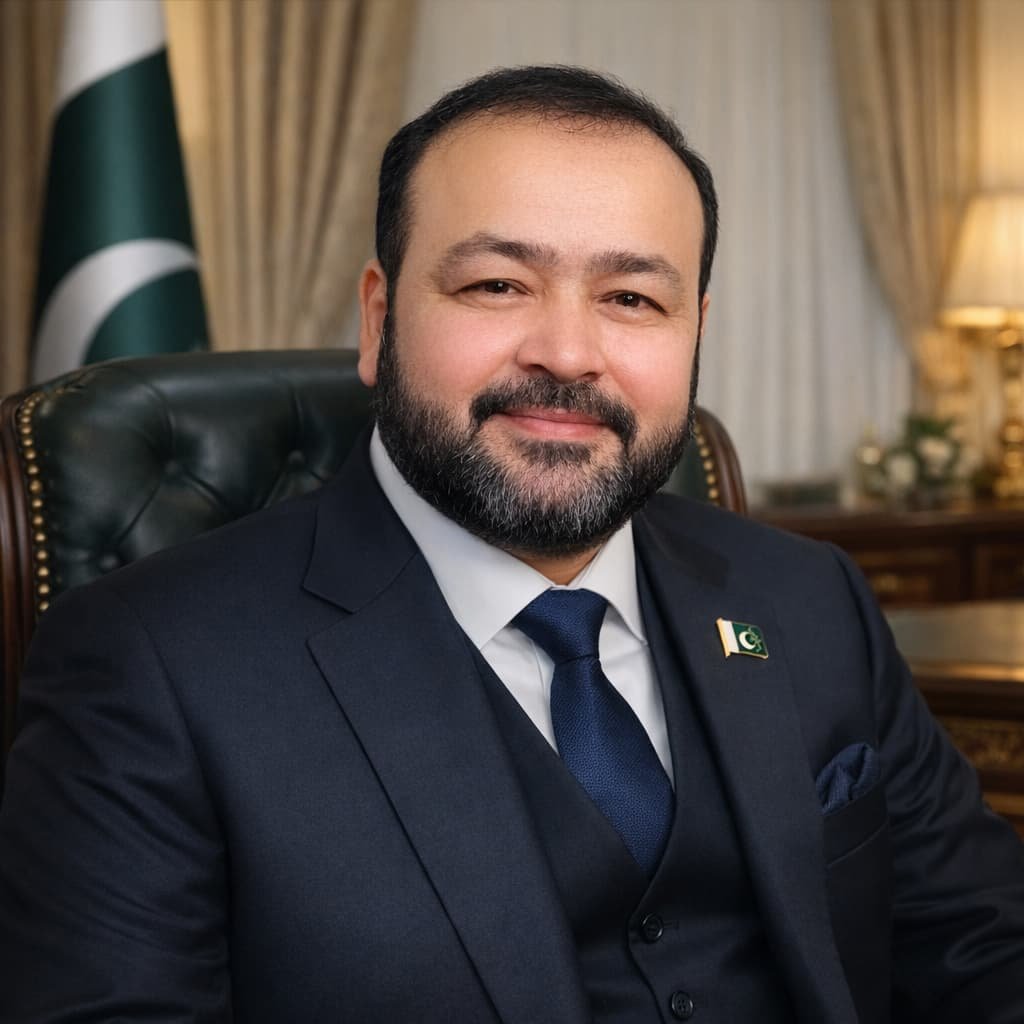
- By Dr. Muhammad Tayyab Khan Singhanvi, Ph.D
At the present juncture, Azad Jammu and Kashmir finds itself enveloped within a complex vortex of political and societal turbulence whose reverberations extend far beyond the confines of a single geographical territory. The implications of the prevailing situation possess the potential to influence not merely the internal dynamics of the region but also the broader dimensions of the Kashmir dispute and the wider contours of Pakistan’s domestic and external strategic calculus. In every mature and democratic polity, dissent, protest, and the articulation of public demands are rightly regarded as manifestations of collective consciousness and political maturation. Yet when political contestation becomes subsumed by emotional agitation, competing narratives, and a disregard for historical context, the matter transcends the realm of routine administration or partisan politics and assumes the character of a profound test of national wisdom, statecraft, and collective prudence.
Amid the contemporary unrest in Azad Kashmir, the question of representation accorded to the refugees of Jammu and Kashmir has emerged as an issue of exceptional significance. Certain quarters contend that the seats reserved for refugee communities have outlived both their historical rationale and practical utility, and that their continued existence is little more than an artifact of political expediency. At first glance, such an argument may appear to constitute a conventional political demand. A more penetrating examination, however, reveals that the matter is inseparably intertwined with historical realities, constitutional considerations, and national implications of remarkable depth and enduring consequence. The essential question is not whether one endorses or rejects a particular viewpoint; rather, it is whether issues of such sensitivity and complexity can legitimately be divorced from the historical circumstances that gave rise to them.
The political history of Jammu and Kashmir bears unequivocal witness to the fact that the migrant Kashmiri population constitutes far more than a demographic category. They embody a living testament to the Kashmir cause and serve as custodians of its historical continuity. The upheavals accompanying the partition of the Indian subcontinent and the political and military developments that followed compelled innumerable Kashmiri families to abandon ancestral homelands, properties, relationships, and cherished memories. Their political representation is, therefore, not merely an administrative arrangement but an acknowledgment that the Kashmir question transcends territorial claims and encompasses issues of identity, self-determination, historical justice, and human experience. It is for this reason that refugee representation, in one form or another, remained embedded within the institutional architecture of Azad Kashmir from its earliest governmental structures through successive stages of constitutional evolution.
Historical evidence further demonstrates that refugee Kashmiris were afforded meaningful participation within the earliest administrations and political institutions of Azad Kashmir. Subsequently, as the constitutional order evolved from a presidential framework toward a parliamentary system, the nature and proportionality of representation underwent modification. Nevertheless, the political status of the refugee community was never entirely repudiated. Consequently, proposals advocating the abolition of refugee seats cannot be regarded merely as questions of electoral reform or administrative reorganization; rather, they implicate the foundational elements of Kashmir’s historical identity, collective memory, and political narrative.
It would likewise be imprudent to disregard the possibility that certain demands emerging within the contemporary discourse may be influenced by intellectual or political tendencies seeking to reinterpret the Kashmir issue outside its traditional national framework. For this reason, some observers express concern that the acceptance of one particular demand may eventually precipitate further claims of a more fundamental character. Even so, such apprehensions ought not to provoke emotional reactions or inflexible political responses. On the contrary, circumstances of this nature call for judicious reflection, magnanimous engagement, and sustained dialogue. The most effective means of discerning the true character of any movement or demand lies in maintaining open channels of communication and enabling the public to evaluate competing claims through reasoned observation and informed analysis.
Regrettably, periods of heightened sensitivity and political uncertainty often provide opportunities for individuals who possess only a limited understanding of local social psychology, historical complexities, and cultural nuances to assume disproportionate influence. Yet effective statecraft cannot be secured through administrative decrees, displays of coercive authority, or uncompromising measures alone. Durable and successful governance demands a profound comprehension of local realities, public sentiments, and historical consciousness. It is only those leaders who genuinely understand the aspirations, frustrations, expectations, and psychological motivations of the populace who possess the capacity to transform crises into opportunities for reconciliation and stability.
Another dimension of considerable importance is the apparent interest of certain regional and international actors in exploiting the prevailing tensions for purposes aligned with their own political objectives. Under such circumstances, it becomes imperative to maintain a clear and unmistakable distinction between the legitimate grievances of the Kashmiri people and the designs of external interests. Should this distinction become obscured, the adverse consequences may extend beyond Azad Kashmir itself and adversely affect the broader Kashmir cause.
The political history of Kashmir further illustrates a fundamental distinction between those who pursue power as an end in itself and those whose actions are guided by ideological conviction and enduring principles. It is this distinction that consigns some individuals to the status of transient political actors while elevating others into enduring symbols of history. Within this context, the figure of Maqbool Bhat occupies a position of singular significance. Throughout his political career, he consistently accorded primacy to ideals, objectives, and collective aspirations over personal advancement, office, or privilege. Numerous opportunities arose before him, yet he repeatedly chose to subordinate individual interests to what he perceived as a greater national purpose. It is for this reason that substantial segments of Kashmiri society continue to regard him as a symbol of resistance, steadfastness, and ideological commitment.
An equally noteworthy aspect of Maqbool Bhat’s legacy resides in his capacity to distinguish between governing structures and the broader populace, even in the face of perceived injustices, imprisonment, and adversity. Rather than embracing collective animosity or emotional vengeance, he emphasized political consciousness, intellectual commitment, and principled perseverance. This quality elevated him beyond the confines of ordinary political activism and secured for him a lasting place within the historical imagination of many Kashmiris.
As Azad Kashmir confronts yet another critical political trial, the need of the hour is not inflammatory rhetoric, mutual recrimination, or deepening hostility, but rather a steadfast commitment to reason, historical understanding, and wisdom. Sustainable solutions do not emerge from confrontation, coercion, or the indiscriminate exercise of force; they are cultivated through dialogue, constitutional processes, and the restoration of public confidence. If political leaders, state institutions, and the citizenry alike demonstrate restraint, responsibility, and discernment within their respective spheres, the present crisis may become the foundation not of renewed conflict but of a more balanced, stable, and constructive political future.
Ultimately, the destiny of Azad Kashmir will not be determined solely by administrative decisions, temporary measures, or short-term political calculations. Its future depends upon the collective wisdom capable of perceiving disagreement not as enmity, protest not as rebellion, and criticism not as treachery, but as opportunities for national refinement, democratic maturation, and political progress. Such an approach alone possesses the capacity to guide the region from uncertainty toward stability, from fragmentation toward trust, and from crisis toward enduring development and renewal.
- “The writer is a recipient of the Sanad-e-Imtiaz, and a distinguished senior analyst, scholar, and PhD holder.
- He can be reached at +92 333 2103855.
- muhammadtayyabk773@gmail.com”