

- By: Dr. Muhammad Tayyab Khan Singhanvi (Ph.D)
Whenever the chronicles of tyranny and oppression are written in the annals of human history, the plight of the Kashmiri people features as a recurring tragedy. August 5, 2019, marks one of the darkest chapters in Kashmir’s modern history a day when the Modi-led Indian government unilaterally and unlawfully abrogated Articles 370 and 35A of the Indian Constitution, stripping the region of its special constitutional status. This action not only dismantled Kashmir’s identity but also blatantly violated United Nations resolutions, international laws, and bilateral agreements.
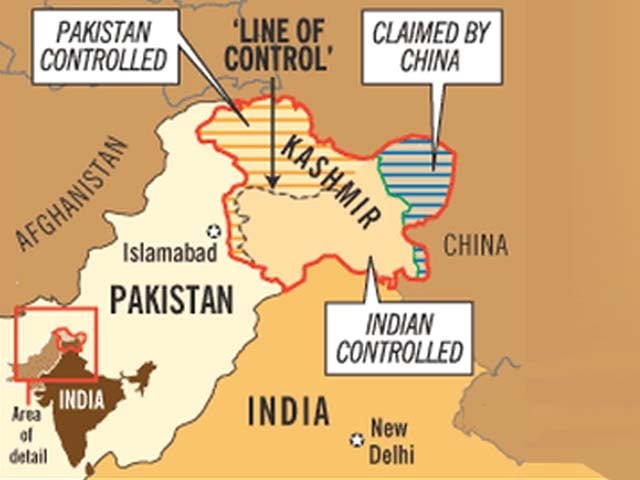
Article 370 was the constitutional arrangement promised by India at the time of Jammu and Kashmir’s conditional accession in 1947. It guaranteed the region internal autonomy, a separate constitution, local citizenship, and exclusive rights over land and legislation. Article 35A legally restricted non-Kashmiris from purchasing land or holding government jobs in the state a crucial safeguard for preserving its Muslim-majority identity. However, on August 5, through a presidential order, these provisions were revoked, and the state was split into two union territories placed under direct central control. This act was not just a constitutional maneuver, but a deliberate attempt to erase the collective identity of an entire nation.
Even before the formal announcement, Kashmir had already been turned into a heavily militarized prison. Tens of thousands of additional troops were deployed; internet, phone, and mobile networks were suspended; and the region’s political leadership was either placed under house arrest or imprisoned. The local population was alienated in their own homeland. Journalists were silenced, human rights activists suppressed, and thousands of youth detained without trial, creating an atmosphere of fear and subjugation. With international media barred and a full digital blackout imposed, Kashmir was cut off from the outside world.
Life in Kashmir became a collective punishment. Education collapsed, healthcare systems deteriorated, businesses crumbled, and society fell into a deep state of stagnation and despair. Women, children, and the elderly all suffered under the shadow of relentless state oppression. Their tongues were silenced, yet their eyes screamed. Their bodies remained motionless, but their hearts carried storms. The world, which claims to uphold human rights and modern values, responded with mere concern no action. Institutions like the UN, Amnesty International, and Human Rights Watch issued reports condemning India’s actions, but the global conscience remained dormant beneath the weight of economic and strategic interests.
Pakistan has consistently extended its political, diplomatic, and moral support to the Kashmiri people. At the United Nations, Pakistan laid bare the Modi government’s fascist agenda and Hindutva ideology. Efforts were made on diplomatic fronts to awaken the world to the grim reality of Kashmir the world listened, but did not heed. The Organization of Islamic Cooperation (OIC) released traditional statements of support, yet failed to deliver any concrete backing. The Kashmiris were left alone as oppressed nations so often are in the pages of history.
Five years have now passed. It is 2025, and the situation in Kashmir remains unchanged. India has embarked on a campaign of demographic engineering, redrawing electoral boundaries to weaken Muslim representation. Millions of non-Kashmiris have been granted domicile certificates, lands are being allotted, jobs distributed all part of a long-term strategy to turn Kashmiris into a minority in their own homeland. This is nothing short of demographic aggression a gross violation of international law and UN resolutions, which recognize Kashmir as a disputed territory whose fate must be decided through a plebiscite.
Today, Kashmir is still a prison. Its people may be muzzled, but their spirit endures. Their hopes, though wounded, are not extinguished. They understand that the sun of tyranny cannot shine forever. History bears witness that oppressors perish, but the voice of freedom can never be silenced.
The 5th of August serves as a stark reminder that the price of freedom is not paid by blood alone, but also through patience, sacrifice, and unwavering resolve. The Kashmiris are walking that path even now. The time has come for the international community, the Muslim world, and every person of conscience to raise their voice before history aligns us with the perpetrators of injustice. Silence in the face of tyranny amounts to complicity. If we continue to ignore the cries of Kashmiris, history will not forgive us.
This column is not just a commemoration of a day; it is a wake-up call to every living conscience. August 5 is a wound that only justice can heal. Otherwise, it will continue to fester across generations, staining the pages of history with unanswered cries.