

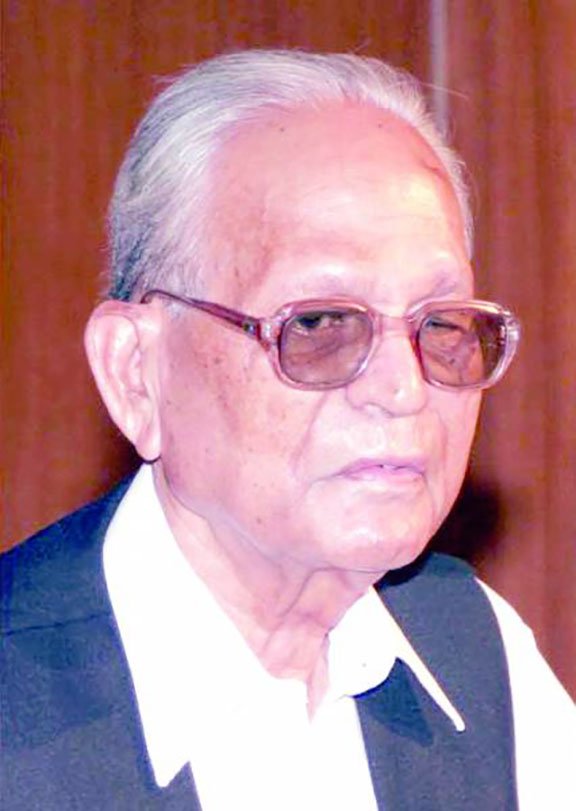
- By: Ibn-e-Taha
- Khan_adnan040@yahoo.com
323, PAF College!!! These were the words uttered by the PA to the Principal of PAF College Peshawar when answering the telephone. The caller would immediately know that he had contacted the correct telephone extension—No. 323 of PAF College Peshawar.
The PA would then either connect the caller to the Principal or provide guidance and assistance regarding admissions, fee bills, syllabus, timings, uniforms, messages for faculty/non-faculty members and students, administrative staff, or other administrative queries. Those were the days when there was only one contact number for PAF College, located on Rafiqi Road, Peshawar.
Lt. Col. Faizullah was appointed as the first Principal of the newly established “Peshawar Model School” in April 1960. Mr. S. Moinuddin, the second Principal, succeeded in recruiting outstanding teachers from all over Pakistan in 1967.
The diverse faculty included natives of Peshawar and adjoining areas, immigrants to Peshawar, staff & teachers from Bahawalpur, Layyah, Lahore, Kashmir, Gujrat, Nowshera, and even Karachi. They were men and women, Muslims and non-Muslims, PAF officers and their wives, and people from different social backgrounds.
One of the teachers was Mr. Taha Khan, a migrant from Lucknow, who was already teaching Urdu at the famous “Edwards College” in Peshawar. A true Lakhnavi soul, accustomed to protocol and etiquette, may have been surprised to find the local Pashtoon culture intermingling with a flow of people from diverse cultural backgrounds. These cultural interludes included the Pashtoon gatekeeper’s greeting, “Yara Sir Jee, Salam Alaikum…”, and Pashtoon colleagues’ prayer, “Khudai de obakhe…”, blending naturally with the English expression, “May God bless you.”
Nonetheless, he adjusted well to this diverse universe of dedicated professionals and became an integral part of the newly formed culture of PAF College. The welcoming attitude of his colleagues also helped him settle into the new environment. Among these friendly figures were the Principal, Mr Moinuddin, and colleagues such as Mr Yaseen Butt, Mr Nafees, Mr Safdar, Mr Kareem Bux, Miss Memoona, Mrs Jennis Durrani, Mrs Williams, Mrs Jonathan, Mrs Andrews, Mrs Khursheed Aziz, Mr Bashir and Mrs Ahmed.
The school was initially divided into junior and senior sections. It was upgraded to intermediate level in June 1967 and to a degree college in March 1981.
Mr Taha was also joined by colleagues such as Mr Hafiz Hashmat Ali Shad, Mr Zafar Muhammad, Mrs Rizvi, Mrs Tamkeen Umeed, Miss Nasrin Taj, Mrs Rashida Aslam, Miss Musarrat, Mr Sadburg, Mrs Naseem, Mrs Shahida Makki, Mrs Sabiha Shah, Mrs Fehmida Shams, and Mrs Naheed Ikram. In the later part of his service, he also welcomed Miss Zohra, Mr Imran Shah, Mr Bashir Uddin, Mrs Shaheena Kazmi, Miss Dilshad, Mr James, Miss Aqeela, Mrs Parwaz Rizvi and Mr Faqir Muhammad.
Mr Taha Khan would always reach the college on time to attend the morning assembly, which will commence with the recitation of the Holy Quran. He followed this routine for 31 years, in both winter and summer, without a break. He used to say, “When there is an appointment, there shouldn’t be a disappointment.”
The biggest challenge he faced was teaching the dialect, including singular and plural forms, masculine and feminine genders, and the construction of grammatically correct sentences. He overcame these challenges through his friendly and light-hearted nature.
Students did not consider him merely a teacher; they regarded him as a mentor. They would discuss even their personal issues with him privately. Parents, too, became close to him and would frequently discuss matters concerning their wards. Thus, he unofficially established a career-counselling bridge between parents and their children. Mr Taha Khan would offer his sincere advice, which was mostly accepted by both the parents and their children at the college.
His motorcycle was also freely available to the students. They would often enjoy a free ride around the Peshawar Cantonment area and return during the break without even refilling the fuel tank.
Mr Taha believed in hard work and total commitment to the cause. To add strength to his lectures, he would recite extempore humorous poetry in class making the class lighter and participative. While discussing the Generation “Zee” of his time, he comically narrated:
    “Na murghi hay baqi, na hay Bawarchi Khana
    Kitchen main tumharay chicken puk raha hay”
He would also comment on Qawwali nights sung by ignorant singers:
“Avoid name-calling of arrogant Qawwal;
Astounded, listen misconceived Iqbal.”
Mr Taha Khan created a charged atmosphere of healthy competition, and even a mediocre student of Urdu would develop a liking for poetry, prose, linguistics, and grammar and would achieve good scores at the board level. During board examinations, Mr Taha Khan would arrange extra classes for his students and maintained an impressive record of 100% pass results. Because of his outstanding results at the board level, he received several commendation certificates and accolades from the Chief of the Air Staff, PAF.
He encouraged students in the art of public speaking, stage performances, and inter-collegiate Urdu debates. His students earned laurels throughout Khyber Pakhtunkhwa, winning numerous debates and declamation contests. They also excelled in inter-collegiate competitions outside Peshawar, where they won prizes and trophies in Urdu debates and speech competitions.
He would also take students to Radio Pakistan for auditions and prepare them to speak confidently on live broadcasts.
Mr Taha Khan was also fortunate to work under principals appointed by the PAF on the basis of their individual credentials and professional accomplishments. PAF had been cautious in selecting outstanding professionals to contribute to the character-building and education of generations of students at this college. The outstanding principles included Lt Col Faizullah, Mr S Moinuddin, Sqn Ldr M Asghar Baig, Group Captain P M Akram, Wg Cdr C M Lateef, Wg Cdr Shams-ur-Rehman, Wg Cdr Shajar Hussain Shah, Gp Capt Athar Ansari, Gp Capt Farooq Kiani, Gp Capt Rahber, Gp Capt S U Khalid, Mr Nusrat Kazmi, Sqn Ldr Zafar Waheed Durrani, Gp Capt Shams-ur-Rehman, Air Cdre Shakeel Pervez, Gp Capt Tariq Waheed, Air Cdre Khaleeq-uz-Zaman and Major Tahir. These stalwarts worked tirelessly, burning the midnight oil to keep the performance of the institution at its peak.
Mr Taha shared the same literary interests as Gp. Capt P M Akram, who was himself a poet and had published a collection of his poetry. Wing Commander Chaudhry Latif was a thorough educationist and a fine human being. The active sportsman, Gp Capt Shamim, once arranged a hockey match between the students and faculty and himself led the faculty hockey team. Mr Taha Khan was also included in the team.
The college regularly held Founders’ Day, Iqbal Day, Quaid-e-Azam Day, and Rabi-ul-Awwal Milad. Mr Taha Khan was made in charge of Bazm-e-Adab and actively participated in organising these events. Parents greatly enjoyed the poetic dialogues, literary exchanges, and clever wordplay in Urdu written by Mr Taha Khan.
Those days, PAF Air Headquarters was located right opposite the college, and the Chief of the Air Staff, PAF, would give preference to the college when admitting his children. This tradition was followed by other senior Principal Staff Officers of the PAF, senior Army officers, Base Commanders of PAF Base Peshawar and members of the local elite class of Peshawar and Khyber Pakhtunkhwa.
Mr Taha Khan also enjoyed the confidence of the Chiefs of the Air Staff, who would request him to provide extra coaching to their sons and daughters after college hours. Mr Taha Khan proudly regarded these sons and daughters as part of his professional credentials. Air Chiefs such as ACM Noor Khan, ACM Zulfiqar Ali Khan, ACM Anwar Shamim, and ACM Hakimullah developed a personal bond with Mr Taha Khan through the education of their children.
Mr Taha Khan also remained a member of the selection board responsible for selecting new students. The candidates were assessed after due consideration of their family backgrounds, ensuring that the boys and girls admitted to the college possessed the character, integrity, and sense of honour expected of students of the institution. The honest opinions and assessments of the board members contributed to the college maintaining an impressive record, with nearly 90% of its students gaining admission to professional colleges and universities after completing FSc.
His students rose to the highest levels of society. The college has created a Wall of Fame, where one can see photographs of its former students who went on to become senators, doctors, MNAs, politicians, Air Marshals, Army Generals, Inspectors General of Police, bureaucrats, lawyers, businessmen, industrialists, journalists, philanthropists, fine-arts experts, poets, and thousands of expatriates serving abroad.
Mr Taha Khan never sought personal favours from any of his former students. On the contrary, he would politely decline any such offers.
He earned fame as a poet, writer, researcher, historian, and literary critic. He was invited to local, national, and international poetic gatherings. He was also invited by Radio Pakistan and PTV to recite his poetry. He compiled his poetry in a book titled “Gulpash.” His daily couplet is still published in a local Urdu daily newspaper to this day.
He also wrote 12 other books on Urdu grammar, poetry, the principles of writing, and translation. He had the distinction of being the only PAF teacher to be decorated with the Pride of Performance by the Government of Pakistan for translating the poetry of Rehman Baba from Pushto to Urdu. He also translated Khushal Khan Khattak’s poetry from Pashto into Urdu. These translations retained the original rhyme, rhythm, and thought conceived by these great Pashtoon literary figures and were verified by prominent Pashtoon poets such as Ajmal Khattak.
In 1988, tragedy struck when he suddenly lost his eyesight while delivering a lecture at the college. The class was stunned, and one of the students began to weep. At that time, his employment was also non-pensionable, which meant that the college could not provide him with adequate support after retirement.
Mr Taha Khan faced this difficult trial from the Almighty with remarkable courage and maturity. On learning of the incident, Air Chief Marshal (ACM) Hakimullah came to the rescue of the teacher and mentor, who had educated his children at the college. Mr Taha Khan was allowed to continue serving as a visually impaired teacher under the 1% quota for persons with disabilities for another ten years.
ACM Hakimullah also initiated an amendment to the policies, making the services of all teaching staff pensionable throughout PAF bases and units. The brave teacher did not let his mentors down and continued to produce excellent results at the board level for the next ten consecutive years. He remained a living example of dedication, motivation, and commitment to his professional duties. He would often teach his students, “One should be honest to his bread and butter.”
He also continued writing poetry and newspaper articles, appearing on television as an educationist, and serving as a guest lecturer at the University of Peshawar.
In recognition of Mr Taha Khan’s services to the college, a section of the library has been dedicated to him and named the “Taha Khan Corner.” Perhaps this is the most appropriate way of remembering and honouring the stalwarts who devoted their lives to the growth and success of an institution.