

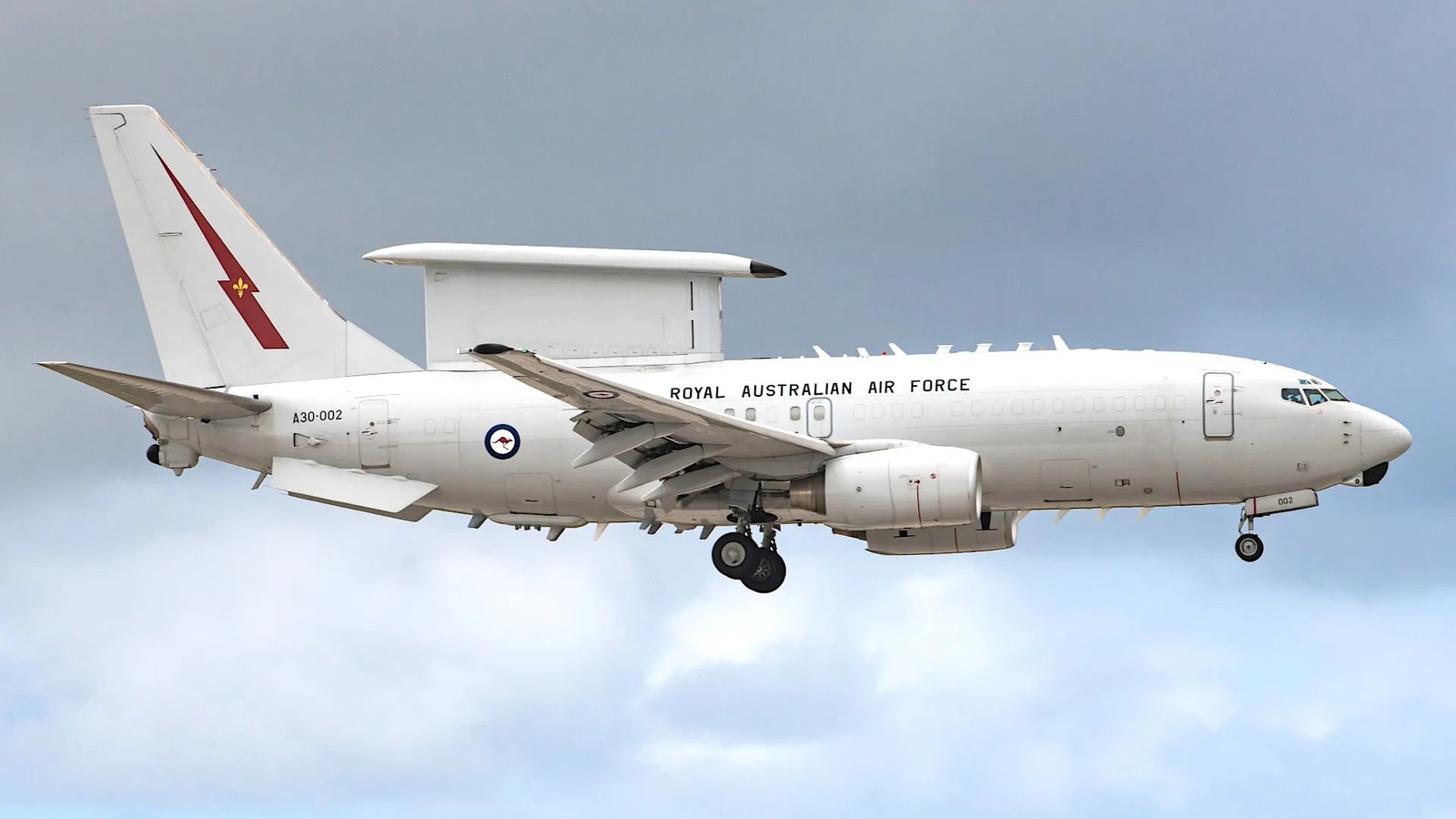
Canberra, March 10, 2026 (Agencies) — The Royal Australian Air Force (RAAF) will deploy a Boeing E-7A Wedgetail airborne early warning and control (AEW&C) aircraft to the Gulf region, departing Australia on Tuesday, in response to escalating Iranian attacks across the Middle East.
Prime Minister Anthony Albanese, Deputy Prime Minister and Defence Minister Richard Marles, and Foreign Minister Penny Wong said in a joint statement that the deployment is intended to help the United Arab Emirates (UAE) and other Gulf nations defend themselves against Iranian missile and drone strikes.
Albanese stressed that Australia is not a “protagonist” in the conflict but warned that Iran’s growing wave of attacks “puts civilian lives at risk, including Australian lives.” The government said the deployment was made following requests and will “help protect and defend Australians and other civilians.”
According to US Central Command (CENTCOM), Iran had launched 500 missiles and 2,000 UAVs at regional targets as of March 4. By March 9, the UAE Ministry of Defence reported it had faced 1,400 Iranian UAVs/loitering munitions, eight cruise missiles, and 253 ballistic missiles. Of these, 81 UAVs and two ballistic missiles struck land targets, while 18 ballistic missiles impacted at sea.
The Boeing E-7A Wedgetail is a highly advanced AEW&C aircraft based on the Boeing 737-700 platform. Operated by the RAAF since 2012, the fleet reached full operational capability in 2015. Australia currently operates six Wedgetail aircraft, all assigned to No. 2 Squadron at RAAF Base Williamtown.
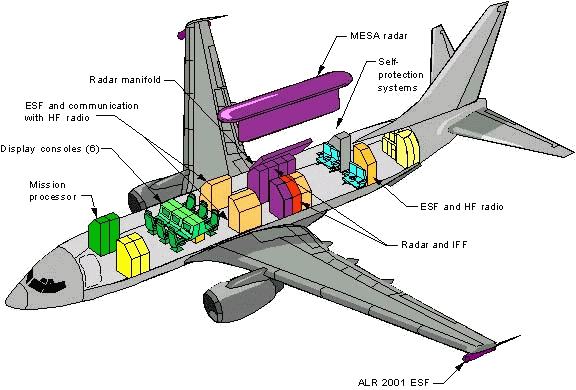
Equipped with the Northrop Grumman Multi-role Electronically Scanned Array (MESA) radar, the Wedgetail can track hundreds of airborne and maritime targets simultaneously, direct fighter aircraft in combat, and provide real-time intelligence to allied forces. With a range of more than 6,000 km and endurance of around 10 hours, the aircraft is considered one of the most advanced airborne command-and-control platforms in the world.
The Wedgetail has previously supported coalition operations in the Middle East and participated in major international exercises. Its deployment to the Gulf in March 2026 is expected to significantly enhance regional air defense by improving early detection of Iranian missile and drone launches.