

- By: Rahil Siddiqui
A few weeks ago, when I went to meet a friend of mine who is a civil servant, he made an interesting request. Very politely, he asked me to visit his old school “for a special reason.” There were two obstacles to this. First, the school was in his native town of Bannu, while we were sitting in his office in Swat drinking tea. Second, the Commissioner of Malakand Division, Shahidullah, was not sure whether the old building of his school still existed or whether the zealous Department of Construction had demolished it. His “special reason” was extremely compelling. As I left his office, I assured him that I would make every possible effort to go there.
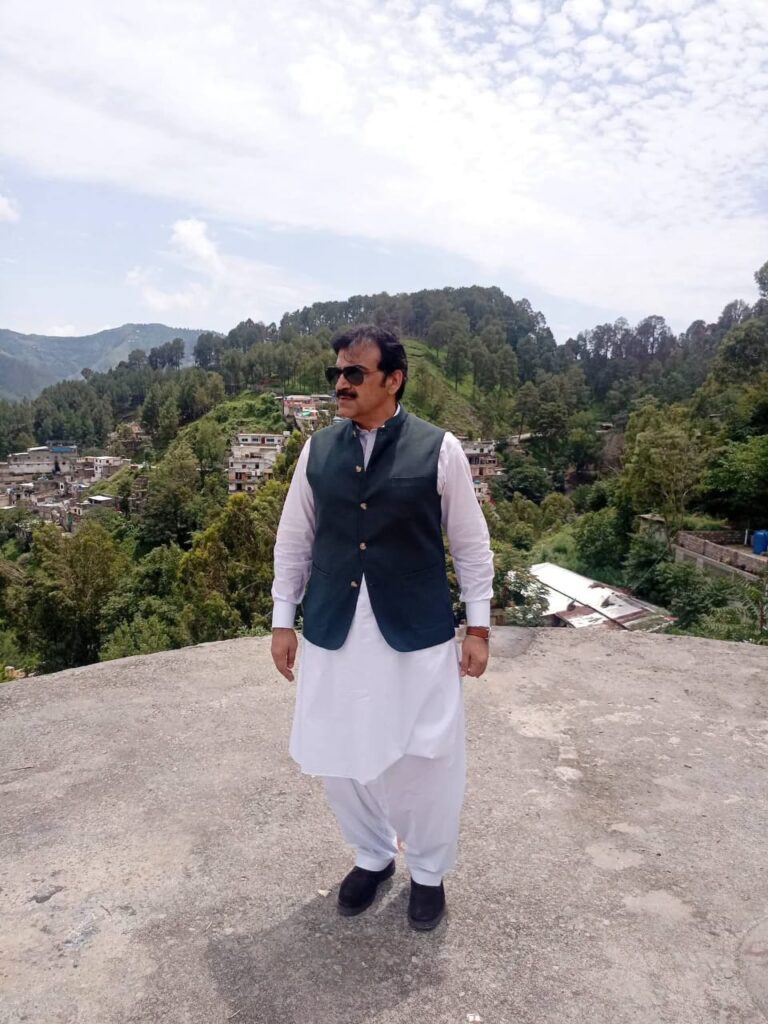
Sometimes strange coincidences occur after making a promise. By pure coincidence, the very next week I had reason to visit Bannu. As soon as I was free from my prior engagements, I enthusiastically set off for Shahidullah’s old school, Government High School No. 2. Interestingly, my colleague Saeed Khan’s father had also been a student at the same school in the late sixties. This emotional connection persuaded him to join me on this journey as well.
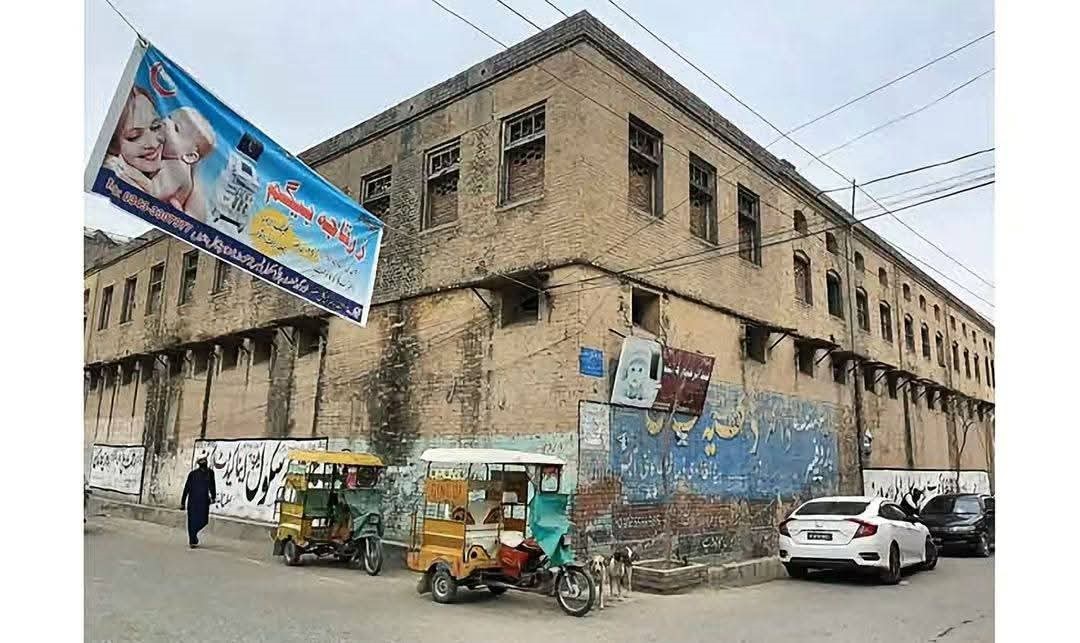
It was late afternoon, an unusual time to visit a school; however, with the help of the local administration, the visit became possible. Two teachers at the school guided us, one of whom was a former classmate of Shahidullah. The school was a two-storey, rectangular building made of red bricks with a large courtyard in the middle. Unfortunately, the courtyard was in a dilapidated condition, and the wild shrubs growing there bore witness to years of neglect. Both wings of the building had two doors facing each other that opened onto streets on opposite sides, although one of these doors appeared to be permanently closed.
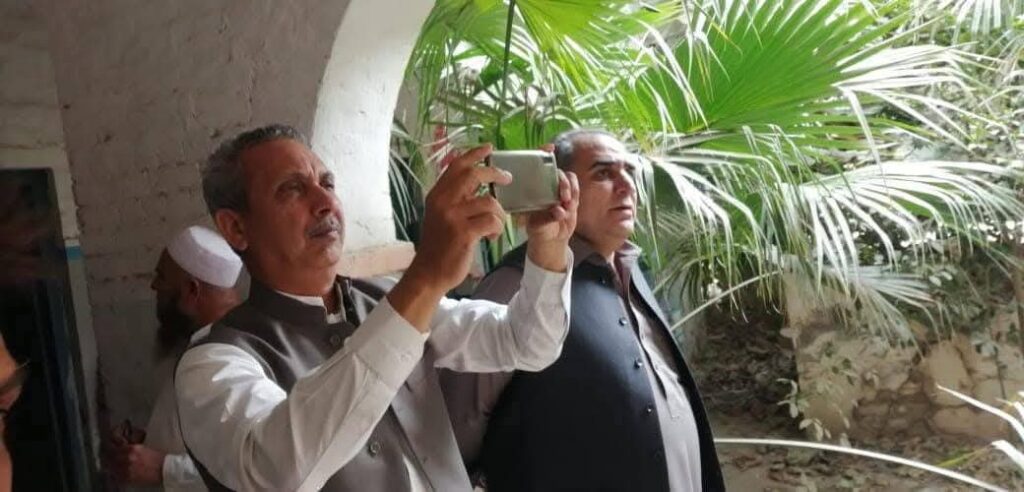
In the past, this school building was much more spacious than it is now. A few years ago, due to the lack of annual repairs, the roof of a room on the upper floor collapsed. Currently, classes are being held in a similar second building nearby. The rooms were quite large, with high ceilings and fairly spacious skylights that ensured the circulation of fresh air during Bannu’s intense summers. A unique feature of each room was a fireplace built into the back wall facing the blackboard. It was clear that these fireplaces were used to keep the rooms warm during harsh winters, in which coal or wood was probably burned.
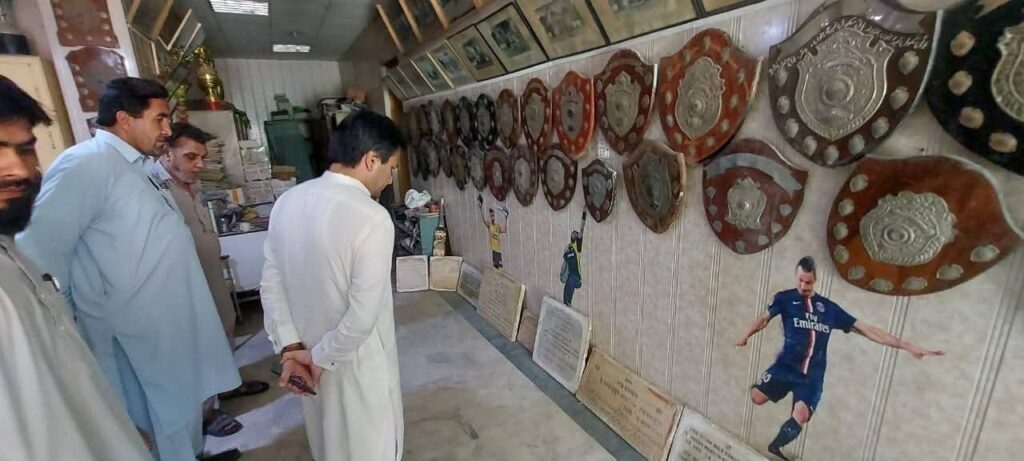
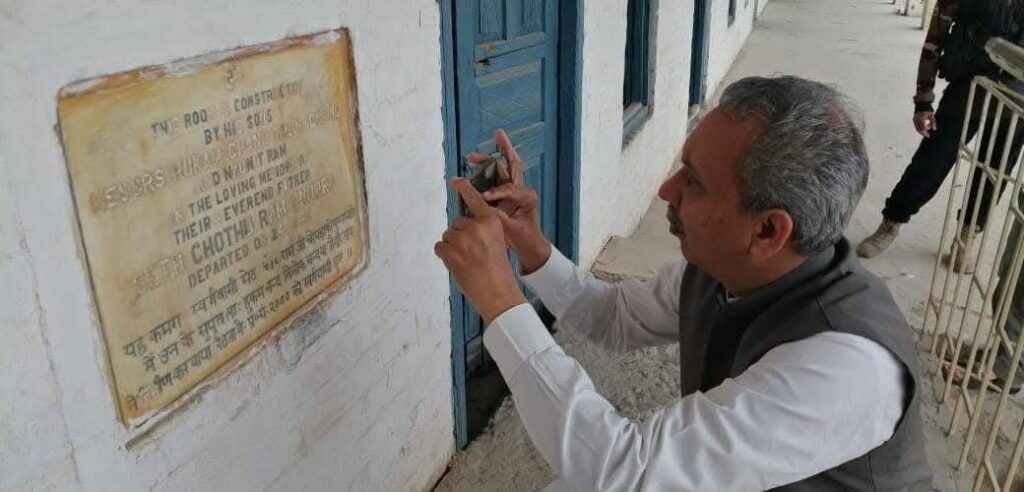
Most of the rooms, especially those on the upper floor, were constructed with donations from the city’s enlightened citizens. The evidence for this was the marble plaques mounted on the walls near the doors. These plaques bore inscriptions in three languages—Hindi, English, and Urdu—clearly recording the donor’s name and the motivations for the donation. Most donations were given in memory of a departed loved one. Some plaques also recorded the amount of the donation. All the dates inscribed on these plaques fell between 1930 and 1946, that is, the pre-Partition era, which suggests that these generous Hindu donors likely migrated to India after Partition.
One room was constructed in 1936 with a donation from R.S. Das Ram’s wife, Shrimati Mooli Bai, in memory of their beloved daughter, Shrimati Sita Bai. Another room was donated by Seth Goverdhan Ram Lakhani in memory of his father, Seth Tilak Das. In 1940, Lala Rakhepand Chawla had a room built at a cost of 420 rupees in honour of his late brother, Lala Tej Bhan Chawla.
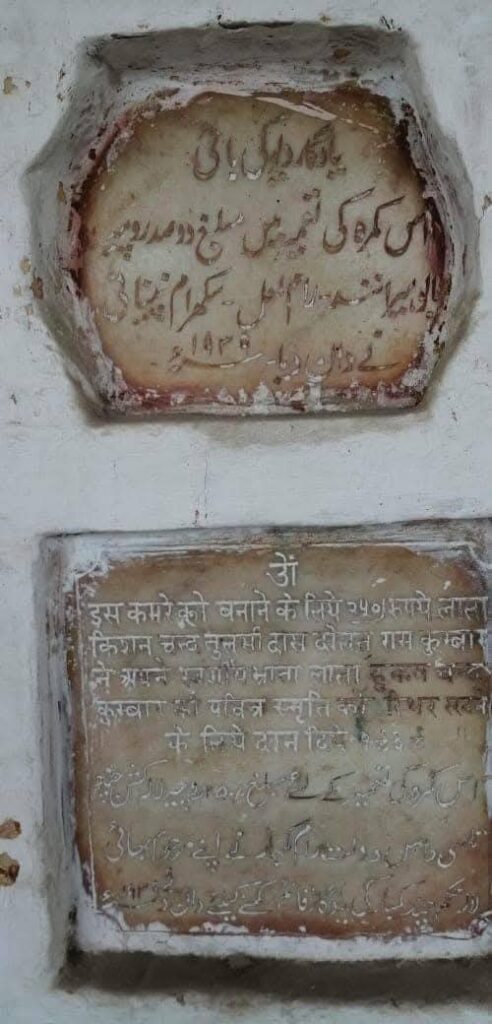
Babu Hira Nand, Ram Lal, and Sukh Ram Paniyani donated a room in 1939 at a cost of 200 rupees as a tribute to the sweet memory of Devaki Bai. Although their relationship with this lady was not specified, she was probably their mother. Seth Vasand Ram Nandwani and his sons Manohar Lal and Thakur Das also had a room constructed, though no date was inscribed on the plaque. However, Chaudhry Bhagat Singh M.C., while donating a room in memory of his father Lala Das Ram Chawla, specifically had the year 1930 inscribed, making him the first person to donate for the promotion of education in Bannu.
There were several more plaques installed there, and as we passed through the corridors, we would stop to read them and marvel at the philanthropic spirit of the donors. This was the “special purpose” behind Shahidullah asking me to write about his school—these plaques and the charitable spirit of their donors. He feared that once the Department of Construction demolished this old structure, a part of Bannu’s glory would be erased forever.
My jovial colleague from Bannu, Saeed Khan, is well-versed in the art of entertaining you with his stories and interesting anecdotes. A particular plaque installed by Hakam Chand, Tilak Chand, and Navnit Ram in memory of their renowned father, Seth Chhotu Ram Chopra, caught Saeed’s attention for two reasons.
Seth Chhotu Ram was a wealthy and well-known lawyer of Bannu who passed away in April 1943. In 1936, a young Hindu girl named Ram Kori had run away from her home with a Muslim youth, Mir Noor Ali Shah, of Jhandu Khel, a village near Saeed’s village. She married him and took the Islamic name Islam Bibi. This incident sparked intense street protests by the Hindu community. Seth Chhotu Ram filed a case in the local court, alleging abduction and forced marriage. The British judge ruled against the marriage, stating that the girl was a minor and not capable of making independent decisions until she reached the age of maturity. The girl was handed back to her community, which sparked strong protests from the Muslim community.
A month after this verdict, a popular dervish named Mirzali Khan in the village of Ipi near Mir Ali convened a tribal jirga and declared war against the British Empire. Soon, more Pashtun tribes joined this jihad under the leadership of the Faqir of Ipi, and by 1937, the Faqir’s forces had defeated a British expeditionary force, which retreated after suffering heavy casualties. However, the tide of war turned when Royal Air Force squadrons bombed the Faqir of Ipi’s tribal lashkar, forcing them to retreat into the mountains and adopt guerrilla tactics. Thereafter, the tribal uprising in Waziristan fluctuated in intensity. Finally, in 1940, a new energy was seen in the Faqir’s forces, which the British Indian government alleged was the result of secret German assistance via Kabul.
This uprising of the Faqir of Ipi continued until June 1947, when he held a large jirga in Bannu. Together with the Khudai Khidmatgars, they demanded that the Pashtuns be given the right to establish an independent state, “Pashtunistan.” However, the British government ignored their “Bannu Resolution,” and in the subsequent referendum, only the option of joining India or Pakistan was given. In response, the Faqir of Ipi and the Khudai Khidmatgars boycotted the referendum. After this time, the Faqir gradually faded into obscurity. He died in 1960. A road in Islamabad is named after him.
Saeed Khan believed that during World War II, the Germans did indeed provide secret assistance to the Faqir of Ipi’s guerrilla campaigns in Waziristan. After the Faqir’s visit to Kabul, he consistently carried a new Mauser 7.65 mm pistol, a model introduced in Nazi Germany during that same period. Saeed Khan conjectures that this pistol was gifted to the Faqir of Ipi by secret Nazi agents in Afghanistan.
One of Saeed Khan’s classmates at Bannu Degree College was Seth Sounder Nath, the great-grandson of the renowned lawyer Seth Chhotu Ram Chopra. This family was among the last of the wealthy Hindu families residing in Bannu until the 1980s, after which they migrated to India. After graduating from college, Saeed Khan moved to Peshawar, joined the Civil Services of Pakistan, resigned a few years later, and currently works in a UK-funded programme to improve governance in the province. Consequently, he lost contact with Sounder Nath, but he remembers him very fondly. Sounder Nath, despite being a Hindu boy, achieved a unique feat by defeating all his Muslim competitors to win a speech competition on “Seerat-un-Nabi (PBUH)” at college. Shahidullah also remembered “Soni,” as Sounder was affectionately called by his friends. Soni’s family migrated to India in the early 1990s.
Shahidullah’s maternal uncle had migrated to England after graduating from Khyber Medical College in 1965. During a visit to Jaipur, India’s “Pink City,” in 1992, he entered a shop to buy a watch. The shopkeeper asked about his nationality. Upon learning that he was a British citizen of Pakistani origin, the shopkeeper inquired about his hometown. Dr. Abdul Rahman took some time to explain the geography of the North-West Frontier Province, thinking that perhaps Bannu was too small a town to be internationally known. However, the name of the city elicited an unexpected reaction.
The shopkeeper almost dragged him to his home, where he was introduced to an elderly man—the shopkeeper’s father—as a “Pathan from Bannu.” Tears flowed from the elderly man’s moist eyes. He began asking about the streets and neighbourhoods of Bannu where he had roamed with his family and friends in his youth before migrating to India in 1947. The elderly man mentioned various places like Kachahri Gate, Chowk Bazaar, Das Street, Mohalla Bhagat Singh, Gopa Mohalla, Mohalla Chhota Ram, the water tank, and several wells. He spoke in the purest Bannuchi Pashto. The wounds of his tumultuous migration had healed, and Dr. Abdul Rahman was received like a celebrity; the elderly man embraced him several times. The elderly man expressed a desire to visit Bannu with his son someday. As he was leaving, he asked Dr. Sahib about his beloved Bannu’s Sanatan Dharam High School.
The name of Shahidullah’s old school underwent several changes, reflecting the historical changes in the city’s name itself. The city was founded in 1848 as “Dalip Nagar.” In 1869, it became “Edwardsabad,” and in 1903, “Bannu.” Similarly, this school, located near Kachahri Gate, was established as “Sanatan Dharam High School.” In the 1950s, it was renamed “Islamia High School,” and in the 1970s, it became “Government High School No. 2.”
There were some other plaques in the city as well that reflected Bannu’s cultural history, and Saeed wanted to show them to me. We quickly navigated the crowded traffic of Qasaban Road, turned right at Das Chowk, and entered Custodian Street. Saeed was extremely surprised to see that the beautiful mansion he intended to show me was no longer there. In its place stood an ugly modern shopping plaza built by a judge of a superior court. After the Auqaf Department illegally occupied the property, the judge reportedly obtained a court ruling in his favour and demolished the magnificent building. Saeed well remembered that a plaque had been affixed to the arched entrance of the mansion, which read: “Gokhale Art Academy – 1868.”
The mansion that once housed the province’s first art academy no longer exists, but that plaque could have been preserved to highlight Bannu’s rich cultural history. In 1868, Gokhale, the founder of this art academy, could never have imagined that his beloved city would become prone to intolerance and that a biased decision would deprive the city of its invaluable heritage for the sake of a single individual.
Will Shahidullah’s old school, Government High School No. 2, and these marble plaques that embody its history withstand the challenges of changing times? After the roof of one room collapsed, the school building was declared unsafe, and the authorities approved a plan to demolish the old structure and build a modern building in its place. However, thanks to the efforts of the Additional Deputy Commissioner (ADC) of Bannu, who succeeded in having the school declared a cultural heritage site with the help of the Department of Archaeology, the approved plan was halted before implementation. Ikramullah, another former student of this old school and a civil servant currently serving as Additional Chief Secretary for Planning and Development, has promised to safeguard this precious heritage of Bannu.
As I have fulfilled my promise to Shahidullah, I am strongly hopeful that my friend Ikramullah will also honour his pledge. I am confident that the plaques in the old school building will remain safe and continue to bear witness to Bannu’s glorious history. Saeed Khan has many more interesting stories to tell, and he insists that we take more time to explore other plaques scattered throughout the city. Prominent among these stories is the tale of the “Matcham Frangi,” which deserves to be told separately.
- This piece was published by Dr. Rahil Ahmed Siddiqui on 28 May 2023 in The News on Sunday, and the present text is its Urdu translation. The author is a retired civil servant, an environmental conservationist, and an advocate for animal rights.