

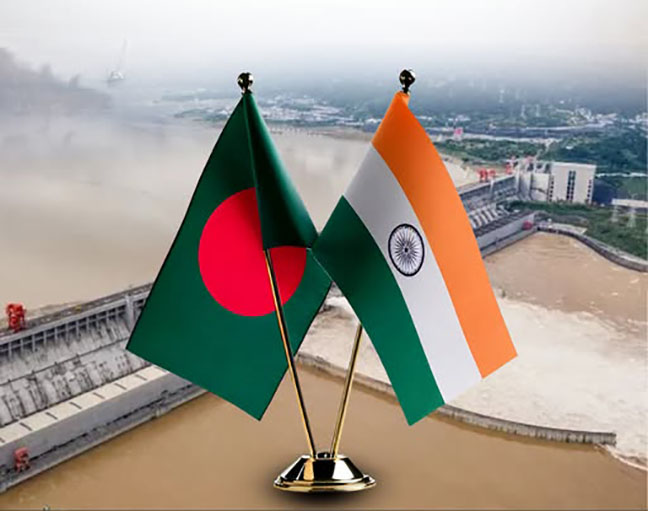
NEW DELHI, November 20, 2026 (Agencies) – The 30-year water-sharing treaty between India and Bangladesh is at risk of expiring on December 12 without a renewal agreement, as strained bilateral relations and the absence of formal negotiations raise concerns over the future distribution of Ganges river waters.
According to Indian media reports, Bangladesh Water Resources Minister Shahiduddin Chowdhury Anee wrote to India’s Jal Shakti Minister C.R. Patil on November 17, urging the two countries to begin negotiations. Dhaka has established a high-level technical committee and asked New Delhi to nominate its negotiating team.
The latest request follows similar approaches in June and August that failed to produce a timetable for renewal discussions.
Signed in December 1996, the treaty regulates the sharing of Ganges waters at the Farakka Barrage in India’s West Bengal state, approximately 18 kilometres from the Bangladesh border. It divides river flows between the two countries in ten-day periods from January to May, when water is particularly important for irrigation, agriculture and other downstream requirements.
The agreement can be renewed only through mutual consent. Although an Indian delegation is scheduled to visit Dhaka from November 21 to 23 for a meeting of the joint committee monitoring the treaty, renewal negotiations are reportedly not included in the agenda.
A temporary extension has been discussed as a possible arrangement to provide additional time for negotiations, but it would require approval from the political leadership of both countries.
Bangladesh is seeking a new agreement that restores stronger minimum-flow guarantees similar to those included in the 1977 Ganges Water Agreement, particularly during the dry season when river levels decline.
India has not officially announced its position on renewing or extending the treaty, maintaining that the Joint Rivers Commission remains the established mechanism for discussing transboundary water issues. New Delhi has also consulted the neighbouring states of Bihar and West Bengal regarding their drinking water and industrial requirements.
In July, an Indian parliamentary committee urged the government to initiate negotiations promptly, taking into account changing river flows and the effects of climate change. However, Indian media reports have suggested that New Delhi may allow the treaty to expire while continuing water-sharing arrangements under its existing provisions as a goodwill measure.
The renewal issue has emerged against the backdrop of deteriorating relations following the removal of former Bangladeshi Prime Minister Sheikh Hasina in August 2024. Hasina subsequently took refuge in India, while Dhaka has repeatedly sought her extradition.
The future of the treaty is therefore emerging as a significant diplomatic and environmental challenge for both countries, with millions of people on either side of the border depending on the Ganges for agriculture, livelihoods and water supplies.