

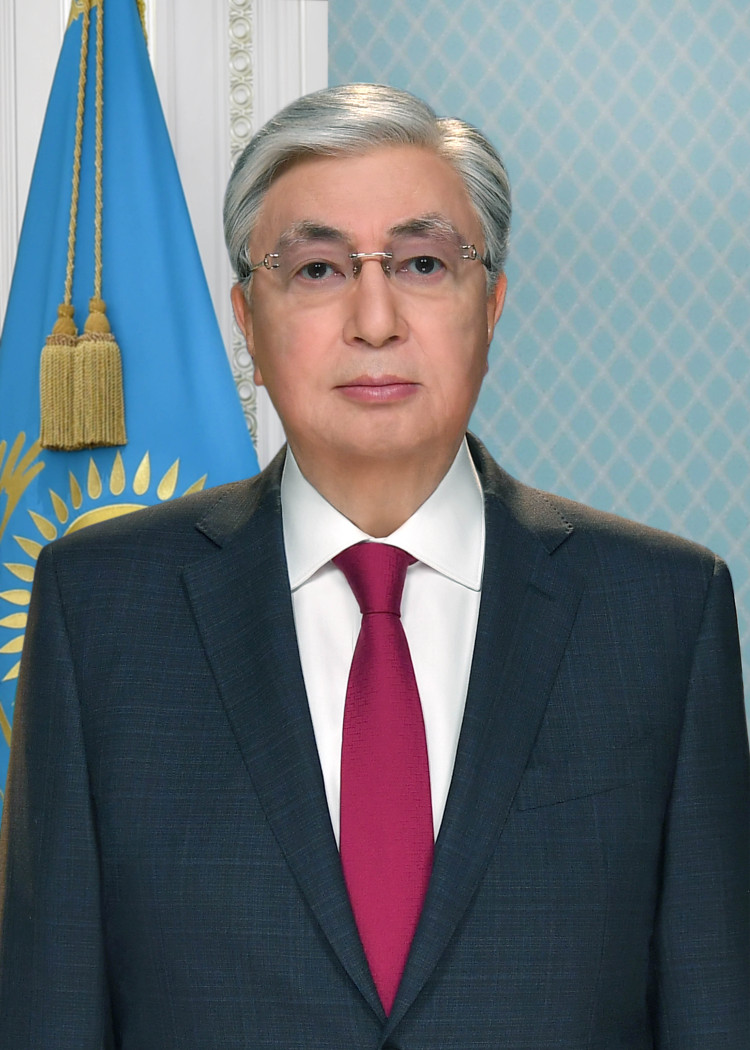
- By: Rizwan Inayat
“Today, as Head of State, I deliver my traditional Address to the people of Kazakhstan.
This Address is of particular significance, both in its essence and content.
On October 25, we celebrated our national holiday, Republic Day. It was on this day that the Declaration of State Sovereignty was adopted. We took a bold step towards becoming an independent state. Soon afterwards, we proudly raised the flag of Independence and laid a solid foundation for our statehood.
This year marks the 35th anniversary of our cherished Independence. This historic milestone holds a special place in the annals of our nation.
In March of this year, our people adopted the Constitution, the fundamental pillar of our statehood. This was an event of profound historical significance for our entire country.
The Constitution can rightly be described as a sacred covenant between generations, as it clearly defines both the present identity of Kazakhstan and the vision of its future.
The Constitution, which received overwhelming support from our citizens, entered into legal force on July 1, providing powerful impetus for the fundamental modernization of our country’s political system and the establishment of new institutions of government.
Our people have actively embarked on the large-scale efforts required to build a brighter future.
All these historic transformations in the life of our nation are taking place before the eyes of our people. Although this is an issue of great importance, I believe there is no need to elaborate further.”
“Today, I will share my views on improving the socio-economic situation in our country and outline the goals and objectives that lie ahead.
Frankly speaking, not all issues related to safeguarding our independence and sovereignty have yet been fully resolved. This means that we still face a number of pressing challenges.
To successfully accomplish the tasks before us, our society must, first and foremost, remain united and harmonious. It is abundantly clear that without unity and social cohesion, no reforms or progress can be achieved.
At a time when global challenges have become considerably more dangerous, we must place greater emphasis on discipline, responsibility and respect for order within our society.
Today, unfounded and irrational accusations, as well as covert confrontations, are intensifying among countries around the world, while a widespread crisis of mutual trust has emerged between major and influential powers.
Uncontrolled and unregulated migration flows have increased significantly, and we have witnessed the serious damage they
have caused to the security of several European countries.
The credibility and authority of the United Nations have suffered a profound crisis. The value and significance of international law have diminished. In short, the world has entered an era of profound uncertainty, and there is no consensus among politicians and experts as to what the future may hold.
It would be no exaggeration to say that the entire international community is living through a period of unprecedented turbulence.
Such a complex and unpredictable situation did not exist even during the Cold War.”
“Despite these turbulent times, Kazakhstan has entered a new era of national development with great confidence and implemented far-reaching political reforms. This is an exceptionally rare phenomenon on the global stage.
Looking ahead, we must continue to strengthen our country’s sovereignty. In the current climate of global uncertainty, this means ensuring continued growth and prosperity while maintaining domestic stability.
To achieve this goal, our entire society, including patriotic, proactive and educated citizens, must work diligently and with dedication. I also have high expectations of the deputies of the Kurultai.
Under these circumstances, the crucial role of the state apparatus and law enforcement agencies is evident to all.
In other words, our generation must leave to future generations not merely plans and concepts, but a Kazakhstan with a strong and dynamic economy, advanced technologies, a solid foundation in education and science, respect for the rule of law, a progressive and innovative society, and significant geopolitical strength and influence.
This is the truly strategic task facing our nation.”
“To ensure our country’s sustained and dynamic development, it is essential to implement large-scale objectives efficiently, promptly and to a high standard.
Our citizens must have access to comprehensive social infrastructure. This is a fundamental prerequisite for improving their quality of life.
Therefore, we will place particular emphasis on infrastructure development.
As I have stated before, Kazakhstan must become a vast construction site. This is not merely about implementing individual projects.
We need to launch and intensify large-scale construction activities across all regions of the country.
As a matter of priority, we must promptly complete comprehensive research and analysis to identify in detail the needs of each region for healthcare, education, cultural and sports facilities.”
“We have consistently paid special attention to the development of rural areas. We are making every effort to create favourable conditions for a decent standard of living for rural residents.
At the same time, it is important to recognize that cities have now become the principal centres of economic activity, education and technological advancement, as well as the main hubs for nurturing and developing talent.
Ultimately, strong cities form the foundation of strong regions, while strong regions underpin a strong state. Therefore, every major city must have a clearly defined medium- and long-term development plan approved by the Government.
Furthermore, to ensure the efficient management of urban resources, the Government, in cooperation with local administrations, must develop digital twins of urban infrastructure in the near future.
Making our cities safe, comfortable and attractive must be regarded as a priority and an essential task of national importance. This requirement is fully consistent with the nationwide “Taza Kazakhstan” (Clean Kazakhstan) initiative.
When a city develops dynamically, the economy of the surrounding region also prospers, and its human potential grows accordingly.”
“In this regard, we will place particular emphasis on the construction and modernization of facilities of social and economic importance. We have both the resources and the capacity to accomplish this.
According to projections by the International Monetary Fund, Kazakhstan’s gross domestic product (GDP) will approach USD 400 billion this year, while GDP per capita will exceed USD 19,000.
Our country will rise to 47th place in the world in terms of the size of its economy. This means that Kazakhstan will outperform a number of countries with populations significantly larger than our own.
The manufacturing industry is also developing rapidly. Its share of GDP has exceeded 14 percent. This is a tangible result of the systematic efforts undertaken to diversify the national economy.
The combined value of our gold and foreign exchange reserves and the assets of the National Fund has exceeded USD 130 billion.
We must now channel this considerable potential into modernizing infrastructure and improving the living environment across every region of our country.
Therefore, I instruct the Government to actively implement the large-scale construction initiative I announced earlier. Under this initiative, essential social, transport and engineering infrastructure facilities will be built throughout the country.
The Government will develop an unprecedented Infrastructure Modernization Plan.
To implement this ambitious programme, approximately KZT 6.5 trillion will be allocated from the National Fund by the end of 2029.
In addition, KZT 1.5 trillion must be earmarked to launch social projects during the remainder of this year and the first two months of 2027.”
“The primary purpose and mission of the National Fund is to prudently preserve and further increase the nation’s wealth, while ensuring that it serves the interests of both present and future generations.
For many years, the National Fund has successfully fulfilled this fundamental mission, making a significant contribution to ensuring financial stability.
If we truly care about the well-being of younger generations, we must begin taking concrete and decisive steps in this direction today. Pressing issues cannot be postponed. Every problem must be addressed and resolved. This is the fundamental requirement.
We must pass on to future generations a civilized, progressive and modernized state. This is our duty and our responsibility to those who will come after us.
I am deeply convinced that our historic responsibility to future generations lies not only in leaving them financial savings in bank accounts, but also in building and passing on to our descendants a fundamentally transformed country: one that is technologically advanced, has a strong and competitive economy, modern infrastructure and high standards of living, and where every citizen has the opportunity to realize their full potential.
This is our foremost task and, indeed, a mission of historic significance.
This represents a long-term investment in human capital development, improving the quality of life of our citizens and, ultimately, securing the future of our country.”
“However, a balance must be maintained between accumulating the resources of the National Fund and utilizing them. These resources must be directed exclusively towards initiatives that deliver the greatest possible benefit to society.
Most importantly, the funds spent must generate tangible economic and social returns. After all, the primary purpose of allocating public resources is to improve the well-being of our people.
Local small and medium-sized enterprises with adequate technical and material resources, as well as extensive practical experience, should be involved in implementing the relevant projects.
The entire construction process will be subject to strict oversight.
As a first priority, approximately 70 healthcare facilities will be constructed across the regions.
These will include maternity hospitals, general hospitals, emergency medical service stations, rehabilitation centres for children, and sports facilities specifically designed to meet the needs of children with special needs.
In addition, construction will begin on approximately 50 educational, sports and cultural facilities.
We must promptly commence construction of these essential, high-quality facilities and ensure that they become operational without unnecessary delay.”
“In addition, substantial funding will be allocated to the housing and utilities sector. Many communities will be provided with access to natural gas and clean drinking water.
By the end of the year, the Government will prepare an initial list of specific projects. This list must cover all regions of the country.
We must live up to the high expectations of our people.
Our plan is aimed solely at improving the well-being of our citizens, with no hidden agenda or ulterior motives.
Therefore, I believe there should be no objection to naming this large-scale construction initiative “Halyqtyq Qurylys” (People’s Construction).
The Halyqtyq Qurylys Programme will become the largest infrastructure project in our nation’s history, significantly contributing to improving citizens’ well-being, promoting entrepreneurship and business development, and revitalizing the national economy.
I firmly believe that this initiative will create hundreds of thousands of jobs and that its benefits will be enjoyed by our entire population, particularly the younger generation.”
“The next issue concerns the development of logistics infrastructure, which requires particular attention.
This is one of the key factors contributing to our country’s growth and prosperity.
Today, every country is focusing on logistics. Without a well-developed transport and logistics system, even a powerful nation today may face serious decline tomorrow.
Next year, the Bakhty-Ayagoz railway line will become operational. This new route will increase freight transportation capacity between Kazakhstan and China by 20 million tonnes.
In August, construction began on the Aral–Caspian highway. This project will shorten the Trans-Caspian Corridor by approximately 1,000 kilometres and reduce cargo delivery times by up to three days.
The Government will exercise strict oversight to ensure the timely and high-quality implementation of all projects launched in this sector.
Global logistics has entered a period of profound transformation and accelerated development.
The growing vulnerability of maritime routes has increased the strategic importance of overland transport corridors.
Kazakhstan must seize this historic opportunity to become a leading logistics hub of Eurasia in practice, not merely in name.
Already, approximately 85 percent of freight shipments from China to the European continent pass through our territory.
However, being satisfied with the current favourable situation would mean condemning ourselves to the role of a country struggling to catch up in the future.
We must act now to become a fully fledged organizer of international freight flows.
Particular emphasis should be placed on developing domestic logistics operators and establishing cargo consolidation and distribution centres.
It is also important to develop new manufacturing facilities and trading platforms around major transport hubs.”
“We must establish a comprehensive network of modern, highly developed railways and highways connecting all regions of Kazakhstan and strengthening our country’s transit potential. This is a strategic priority.
The volume of freight transported through Kazakhstan continues to increase every year. Consequently, further improvement of our road infrastructure remains an important task. This issue is particularly pressing for the northern regions.
Therefore, we must now proceed with the widening of the Kokshetau–Petropavl highway.
We must also provide support to domestic businesses engaged in road freight transportation. More than half of the road transit traffic passing through Kazakhstan is currently handled by foreign operators. It is time to bring order to this sector as well, and the Government will take the necessary measures.
Our primary objective is to strengthen the capacity of our national road network and increase the incomes of our citizens.
Next year, we must complete the comprehensive, high-quality reconstruction of all road border crossing points.
Until recently, progress in this area had been slow and inconsistent.
We face an extremely urgent task: ensuring the high-quality construction of all roads and I emphasize, all roads both national and local.
Citing various provisions and regulations, executive authorities at both central and local levels have engaged in a veritable game of passing the buck. They have shifted responsibility from one authority to another and done everything possible to bury the issue in a seemingly impenetrable bureaucratic quagmire.
Therefore, I hereby instruct that the Government, through the Ministry of Transport, assume responsibility for all roads, whether national roads, which account for approximately 26 percent of the country’s entire road network, or local roads currently administered by regional and local authorities (akimats).
Let me reiterate: we need roads of the highest quality.
Excuses concerning the quality of bitumen or crushed stone will not be accepted.”
“Let me remind you: without high-quality roads and modern roadside service infrastructure, Kazakhstan cannot aspire to become a major global transit corridor or a Eurasian transport and logistics hub.
This is what is at stake. The issue must be resolved at all costs.
If our borders become bottlenecks, causing traffic congestion stretching for many kilometres, which is precisely what is happening now — then there can be no question of Kazakhstan assuming a leading position in this sector.
Key air corridors connecting Europe and Asia pass through our territory. This represents an enormous competitive advantage, which, however, has so far remained little more than an attractive feature of colourful presentations.
To translate this advantage into tangible results, we must establish a well-developed ground-based service infrastructure. This is standard international practice.
For now, however, enormous potential revenues are literally flying past our country.
High expectations have been placed on the private company Air Cargo. It has considerable financing capabilities, including the ability to offer competitive remuneration to leading international specialists, and enjoys the autonomy to make decisions independently. Yet neither concrete decisions nor tangible results have materialized so far.
You have been entrusted with this responsibility, and we expect concrete results.”
“In today’s world, the availability of electricity has become a decisive factor in determining the competitiveness of every country and even its economic sovereignty.
The realities of our time have effectively ushered in an ‘era of electricity.’
For Kazakhstan, it is critically important to transform its advantages in natural resources into sustainable progress in energy and technology.
Frankly speaking, there is no shortage of problems in this area.
We have only a handful of truly qualified energy professionals, yet forums and discussions on energy-related issues are held with remarkable frequency and on an impressive scale.
Meanwhile, Kazakhstan’s energy sector faces serious shortages every year. As a result, during winter periods of peak demand, electricity is purchased from neighbouring countries at high prices, only to be supplied back to them in summer at substantially lower prices.
Such is this rather simplistic ‘business model’, which has persisted for decades.
I am assured that this is standard practice in the energy sector.
It is therefore hardly surprising that, at one point, the construction of the combined heat and power plant in Balkhash, which had already commenced, was effectively derailed.
And now, the commissioning of new power generation capacities in Turkestan, Kyzylorda, Almaty and Ekibastuz is also being delayed.”
“Kazakhstan generates 123 billion kilowatt-hours of electricity.
For a country with developing industries, a growing construction sector and an expanding agro-industrial complex, and, most importantly, with plans for the comprehensive digitalization of the economy and the introduction of artificial intelligence into all spheres of public life, which will inevitably require the construction of data centres, this volume of electricity generation is critically insufficient.
Therefore, we face a fundamentally strategic objective: to achieve a sustainable electricity surplus by 2029.
To this end, we must build new power plants, modernize existing generating facilities and transmission lines, fully develop clean coal power generation, and pay due attention to renewable energy, particularly solar power plants.
Overall, the Government must update the country’s unified long-term energy balance through 2035.”
“Nuclear power generation is of fundamental importance.
Following the nationwide referendum, the right decision was made to construct nuclear power plants — indeed, several of them.
We must already begin considering how we will secure the uranium resources required to operate these plants fifty years from now and beyond.
I believe that the proposal to establish a state strategic uranium reserve deserves serious consideration. Such a reserve would make it possible to meet the uranium requirements of Kazakhstan’s nuclear power plants for the next century.
It is important to involve foreign partners participating in the construction of nuclear power plants in establishing high-tech manufacturing facilities in Kazakhstan, transferring expertise and competencies in nuclear energy, and training domestic nuclear specialists. Proposals to this effect have already been received from Russian and Chinese companies.
I believe it would be possible, and perhaps necessary, to begin construction of the Balkhash Nuclear Power Plant as early as next year and to sign a comprehensive cooperation agreement aimed at launching construction of the Moyynkum Nuclear Power Plant as soon as possible.
Naturally, all negotiating positions must be thoroughly developed and coordinated to ensure that Kazakhstan’s national interests are fully taken into account.”
“To summarize, the entire country will embark on a comprehensive modernization and reconstruction of its civilian infrastructure.
However, in addressing a task of such strategic importance, it would be unacceptable to rely solely on state resources.
Otherwise, entrepreneurial activity would decline, and the seeds of paternalism — or, to put it simply, dependency on the state — would be sown in the economy, with all the well-known consequences.
The Government must mobilize all available sources of long-term financing.
Together with the financial community, we must determine how to accomplish this in full compliance with the law and in the interests of our country.
The underlying principle of these decisions is straightforward: public funds must serve as a guarantee for attracting private investment.”
“In addition, we must develop mechanisms necessary to accelerate our country’s industrial and technological development.
Kazakhstan is a country rich in minerals and raw materials. This represents a strategic advantage for us.
Therefore, we must fundamentally transform our approaches to geological exploration. It is clear that searching for new mineral deposits using outdated methods will not produce the desired results. Today, we must recognize geology as a high-technology sector.
It is essential to conduct comprehensive studies of our country’s mineral resources using advanced technologies, while ensuring the transparency and accessibility of geological data. Private investment should be actively attracted to the search for and exploration of new mineral deposits.
As you are all aware, the importance of critical metals is steadily increasing. Drawing on international experience, we must establish a national system for the effective management of reserves of such metals.
This system must include specific mechanisms that enable long-term financing of mining projects.
Guaranteed demand should be secured through offtake agreements with enterprises operating in this sector in Kazakhstan.
This is one of the important tasks facing the Government. The matter must be discussed jointly with the business community, and concrete proposals must be submitted to me by the end of the year.”
“Furthermore, according to experts and industry specialists, there is a growing need to establish national reserves of non-ferrous and rare metals.
Our ultimate objective is to integrate Kazakhstan into global production and value chains. Our export policy must also be aligned with this goal.
The Government must establish strategic partnerships with developed countries that possess advanced capabilities in this sector.
Newly established enterprises must not create unjustified obstacles for existing local businesses. This issue must also be carefully considered when attracting investors, with thorough assessments conducted of each region and industry.
We have already witnessed the negative consequences of misguided decisions.
For example, Kazakhstan has a major steel producer, Qarmet. Nevertheless, there are plans to establish similar production facilities in three other regions. Will there be sufficient market demand for the products of these enterprises? It appears that no clear answer to this question has been provided. Therefore, the benefits of such poorly coordinated decisions are undoubtedly questionable.
Unless we strengthen interagency coordination, our economy risks losing its potential. Every region must identify its own priorities and pursue development accordingly.
It is evident that the Government’s coordinating role in this area must be significantly strengthened.
At the same time, regions must not become dependent on a single industry or enterprise. Therefore, while developing a region’s core industry, it is important to establish a comprehensive, integrated system both within and around that industry.
In particular, we should promote the development of education, applied science, logistics, services, related industries and technological entrepreneurship.
I am confident that the Halyqtyq Qurylys (People’s Construction) programme will make a positive contribution to establishing such integrated systems or, as we would say today, ecosystems in every region.”
“The next issue concerns agriculture. We must make every effort to ensure its continued dynamic development.
Last year, the sector grew by approximately 6 percent, while the total value of output produced by the agro-industrial complex reached KZT 15 trillion.
The volume of financing provided on preferential terms increased from KZT 1 trillion to KZT 1.5 trillion compared with the previous year.
Nevertheless, part of the allocated funding is being used to cover day-to-day operating needs and replenish working capital.
Farmers need a comprehensive financing system that will enable them to plan their activities over the long term.
Therefore, the Government must introduce effective and practical mechanisms to provide farmers with access to long-term investment resources.”
“The Baiterek Holding has prepared a list of promising projects in the food processing industry with a total value exceeding KZT 500 billion.
To ensure their successful implementation, we must resolve the issue of providing accessible financing on preferential terms without unnecessary delays and immediately proceed with the implementation of high-quality projects.
At the same time, the time has come for the technological modernization of the agricultural sector.
We must increase domestic production of technologically advanced, high-quality tractors and combine harvesters. This is a pressing priority.
By doing so, we will further improve the efficiency of agricultural production.”
“During his visit to Astana last week, Jensen Huang, the head of NVIDIA and a leading entrepreneur of the new generation, expressed the view that the time had come to introduce artificial intelligence technologies into Kazakhstan’s agricultural sector.
I believe this is a highly relevant and timely proposal. We must move swiftly to implement it.
If our country successfully achieves this objective, I have no doubt that Kazakhstan could become a major food supply hub for Eurasia in the event of a global food shortage or even a worldwide famine.
Kazakhstan possesses vast areas of land located near major water sources. Using these lands for irrigated agriculture could increase the yields of traditional crops by 2 to 2.5 times.
When bringing new agricultural lands into production, it is critically important to apply advanced water-saving methods and agrochemical technologies. However, the effectiveness of these efforts in our country remains insufficient.
I wish to emphasize in particular that the problem of water scarcity in Kazakhstan requires systematic and decisive measures.
First and foremost, we must ensure the widespread adoption of principles of rational and responsible water use a resource whose value can hardly be overstated under present-day conditions.
The Government and local administrations (akimats) must strengthen oversight of water consumption, reduce losses in water distribution networks, and eliminate the misuse of drinking water, particularly at car wash facilities.
Water must be valued according to its true cost.
On my instructions, the Government has launched a large-scale tariff reform in the water consumption sector. This reform must be brought to its logical conclusion.
The responsible and efficient use of water must become a fundamental principle of economic activity.
To ensure comprehensive and reliable accounting of water resources, it is critically important to make full use of digital technologies.
This will enable well-informed decisions to be made when planning new industrial facilities.
Therefore, the Government must complete the establishment of the National Water Resources Information System as soon as possible.”
“In addition, particular attention should be paid to developing the advanced processing of agricultural products. Successful projects in this area are already being implemented.
For example, despite challenging climatic conditions, farmers in the Kyzylorda Region are cultivating and processing corn and soybeans. Meanwhile, in the Turkestan Region, a Chinese company is establishing a modern cotton and textile cluster based on efficient water-use technologies.
The Government must create favourable conditions for the widespread adoption of such best practices across the country and
provide timely support to investors.
Furthermore, these modern approaches should also be extensively applied in the livestock sector.
To date, drawing on the experience of the North Kazakhstan Region, 71 commercial dairy farms have been commissioned across the country. These farms produce more than 462,000 tonnes of milk annually.
In the Akmola Region, a meat production and processing cluster is being established in line with advanced international practices. Such projects deserve support, including financial assistance where necessary.”
“Alongside agricultural production and processing, we must improve the systems for storing and marketing agricultural products.
Agricultural enterprises of all sizes, from major holdings to small farms, must have unhindered access to the services of agricultural logistics centres.
Overall, within the framework of the Halyqtyq Qurylys (People’s Construction) Programme, particular attention must also be paid to the development of agricultural infrastructure. This is a task of strategic importance.
Therefore, the Government and Baiterek Holding must work together to adopt concrete decisions.
To develop the key sectors of the economy, priority should be given to projects focused on advanced processing, greater value addition and increased labour productivity. This is a fundamental requirement.
In particular, construction materials, metal structures and engineering equipment required for major infrastructure initiatives should be manufactured domestically. I believe such projects must become a cornerstone of the Halyqtyq Qurylys Programme.
The resources of the National Fund must not be used to finance imports. This is an essential requirement.
To provide fresh impetus to economic development, we must attract leading companies with advanced technologies, the necessary expertise and extensive access to global markets, including domestic companies that meet these criteria.
The effectiveness of investments must be assessed based on the number and quality of production facilities that have become operational, as well as their tangible contribution to the economy.”
“Global competition for investment is intensifying. To remain competitive, we must make decisions promptly and act swiftly.
However, Kazakhstan still lacks a coherent and consistent system for attracting investors and providing them with comprehensive support.
Each institution or individual acts at their own discretion. As a result, there is a lack of a comprehensive approach, coordination, sound judgment and professional expertise.
Therefore, we must further improve the integrated system that will enable investment attraction efforts to be managed and coordinated centrally.
In my view, it is time to resolve a long-standing issue that has remained on the agenda for years: identifying a single institution responsible for systematically managing investment-related matters.
At present, there is no coherent system in this area. Several government agencies have been assigned overlapping responsibilities. Under current circumstances, such approaches no longer meet the demands of the times and have become thoroughly outdated.
Perhaps a more active role for Baiterek Holding in investment-related matters would be an appropriate solution.
Meanwhile, the Ministry of National Economy and the Ministry of Foreign Affairs will continue to exercise certain responsibilities related to investment.”
“Another pressing issue deserves attention.
I believe that the enormous significance of constructing Alatau as a city of accelerated development, designed to provide a favourable environment for investment and entrepreneurship, has become evident to the majority of people.
The fundamental prerequisite for the long-term attractiveness of any international jurisdiction is an effective system of justice.
Therefore, Alatau must establish a judicial system capable of ensuring the highest standards in the administration of justice.
An Investment Court operating under the English common law model will hear commercial cases.
All other matters relating to the special legal regime will fall within the jurisdiction of the Civil Court.
By the end of January 2027, the Government must submit to the Kurultai the relevant amendments to the Constitutional Law ‘On the Special Legal Regime of the City of Alatau.’
I would like to remind everyone that the investment interests of all reputable and law-abiding entrepreneurs are guaranteed the strongest and most reliable legal protection that provided by the Constitution itself.”
“I would now like to share my views on small and medium-sized enterprises.
Their contribution to GDP has now reached 40 percent, while their share of investment in fixed capital is approaching 70 percent.
We are all well aware of the importance of small businesses, which are regarded as a driving force of economic growth in many countries.
Today, more than one-third of entrepreneurs in this sector are engaged in trade. This is why we have consistently emphasized the need to diversify the structure of small businesses.
At the same time, the Government must develop a dedicated plan for the development of medium-sized enterprises.
This document must outline mechanisms for providing enterprises with long-term financing and supporting their technological modernization.
Conditions must also be created to enable medium-sized businesses to cooperate closely with large enterprises and supply them with their products.”
“Be that as it may, the state continues to play an important role as a major purchaser of goods and services in our economy.
Therefore, we must improve the mechanisms for involving small and medium-sized enterprises in procurement by government agencies and quasi-public sector companies.
A certain share of procurement contracts could be reserved for small and medium-sized enterprises.
At the same time, requirements imposed on suppliers should be eased. It is critically important to ensure stable and predictable rules of the game for entrepreneurs.
Although state oversight is relatively liberal, its impact on business operations persists through fines, unscheduled inspections and desk-based audits that may result in the freezing of bank accounts.
Such interference can hardly be described as beneficial.
At first glance, the number of violations committed by individual entrepreneurs decreased by 34 percent in the first half of the year alone.
However, the total amount of fines increased by almost 11 percent, while the number of unscheduled inspections rose several dozen times.
Meanwhile, an analysis of business activity demonstrates that, in many cases, businesses simply need to be allowed to operate without unnecessary interference.
In this regard, the experience of the 2020–2023 moratorium on inspections of micro and small businesses is particularly instructive. This measure proved effective.
I propose that the deputies of the Kurultai, together with the Government, discuss the feasibility of introducing another three-year moratorium starting on January 1, 2027, taking into account both the positive and negative aspects of the previous moratorium.
This measure should be regarded as a strategic pause aimed at resetting the state control and supervisory system and facilitating the transition to a digital regulatory model.”
“At the same time, we continue to receive appeals from entrepreneurs who have become subject to criminal prosecution for economic offences.
Therefore, further measures must be taken to decriminalize economic offences.
We must ensure equal opportunities for entrepreneurs, particularly small and medium-sized businesses, and create conditions for fair competition. Unfortunately, these principles are not always upheld.
Evidence of this can already be seen in the difficulties faced by domestic producers, especially enterprises in the food industry. In some cases, they encounter deliberately created obstacles.
For example, the declared value of imported goods is artificially understated, while access to the domestic market for locally produced goods is deliberately restricted.
Frankly speaking, this is corruption. Such manipulative practices must therefore be brought to an end.
There is no doubt that these circumstances significantly undermine the competitiveness of Kazakhstan’s companies and products.
Unless we take firm action to prevent such practices, the damage to our economy will be inevitable.
In other words, protecting businesses means strengthening the economic sovereignty of our country.
It would be no exaggeration to say that deliberately creating unlawful obstacles to business activity constitutes a crime against the state.
Therefore, mechanisms for supporting and protecting entrepreneurs must be further improved and strengthened. This work can also be carried out through trade associations.”
“Next, Kazakhstan must – and I emphasize, must – build a digital economy.
As realists who accurately assess our capabilities, we must make full use of the best opportunities offered by new technologies to improve the well-being of our people.
Construction of the core infrastructure required to implement the comprehensive Digital Qazaqstan strategy has already begun.
Two supercomputers have been launched, and a third high-performance supercomputer will be commissioned by the end of the year.
The laying of a fibre-optic backbone cable along the seabed of the Caspian Sea has been completed, and data centres are under construction.
And this represents only a small part of the work being undertaken to achieve the country’s digital transformation.
We are at the beginning of a long journey towards a new technological paradigm.
To keep pace with the times, we must focus on achieving tangible, practical results.
However, we must acknowledge that, so far, there has been more talk than action. Genuine digitalization is sometimes replaced by the automation of existing processes or the organization of various events and initiatives.
Digitalization must not be reduced to purchasing expensive software products without a clear understanding of their practical value.”
“In essence, we have only just begun our efforts to commercialize artificial intelligence, tokenize assets, and develop blockchain technologies and digital platform ecosystems.
We must develop a programme for the practical application of digital technologies across the economy.
Today, millions of our citizens use marketplaces, food delivery and ride-hailing services, and numerous other digital services, including banking platforms, on a daily basis. In this regard, Kazakhstan has, admittedly, surpassed many countries traditionally regarded as technologically advanced. However, we must continue moving forward.
We have everything necessary to provide powerful momentum for the development of a truly highly productive digital economy.
Our young people are well educated and creative, affordable internet access is available across the country, and a well-developed digital infrastructure has been established.
Today, any citizen can open a bank account, arrange an instalment payment plan or purchase goods within minutes without leaving home.
At the next stage of digitalization, we must move beyond simply providing access to services and focus on expanding individual opportunities.
We need to change our paradigm and approach the challenges before us from a different perspective.
Our goal is to build a truly people-centred digital economy.
In the public consciousness, the internet should be perceived not merely as a space for consumption and entertainment, but also as a virtual environment for productive activity, creativity and work.
For our citizens, smartphones can and should become not so much a means of leisure an expensive toy that wastes time — as an effective tool for work and earning a living.
Therefore, by the end of the year, the Government will establish a simplified legal framework for digital employment.”
“To build a people-centred digital economy, it is essential to ensure that opportunities available to individuals do not depend on where they live.
Our citizens, whether residing in rural areas or cities, must learn to use smartphones as tools for earning legitimate income.
We must integrate existing government measures to support entrepreneurship with the capabilities of private marketplaces, banks, logistics companies and digital service providers.
In addition to providing loans and subsidies, we need additional digital tools to support the production and marketing of goods.
Next year, the Government, together with the business community, must launch pilot digital development projects in several regions to help rural producers establish effective sales channels for their products. Successful practices must then be scaled up across all regions.
We must fully realize the potential of asset tokenization, that is, the conversion of assets into digital form.
This will enable citizens to become co-owners of companies and various assets, while allowing entrepreneurs to raise capital directly without unnecessary intermediaries.
The strategic objective of building a people-centred digital economy is to harness the opportunities offered by modern technologies to improve the well-being of every citizen.”
“This year, as part of the Year of Digitalization and Artificial Intelligence, we have given fresh impetus to our efforts to build an advanced and technologically developed state.
We must now continue this work systematically and establish a digital economy powered by artificial intelligence. The Government, national companies and the creative industries sector must actively participate in this process.
This is a major nationwide priority that fully corresponds to the demands of the new era. To build the economy of the future, we must decisively abandon outdated approaches and conventional ways of thinking.
We must establish an entirely new foundation for the development of society. In essence, this can be described as a long-term national mission aimed at creating the conditions for younger generations to enjoy a decent quality of life in an age of advanced technologies.
No matter how complex, challenging or even fraught with risks the digital era may be, our fundamental aspirations and objectives will remain unchanged.
Our goal is to build a new type of state and remain firmly committed to the path of modernization and renewal.”
“Therefore, I propose declaring next year the Year of Nationwide Large-Scale Construction.
During this year, we must begin constructing and renovating civil infrastructure facilities in every regional centre, district and even smaller communities across the country.
Thus, our collective nationwide response to the approaching era of artificial intelligence is clear: build, and I repeat, build!
In particular, we must begin the construction of roads, airports, railway stations and healthcare facilities, including rehabilitation centres for children with special needs.
Creative arts centres, sports complexes, libraries and scientific research centres must also be established in every region. Naturally, housing construction will remain an important priority.
The Constitution identifies improving the well-being of the people as a strategic priority of the state.
I wish to emphasize that all these initiatives are being undertaken for the benefit of our people, particularly with the interests of the younger generation in mind.”
“Another important task is to fundamentally improve the quality of public administration.
Substantial budgetary resources are being allocated to infrastructure modernization, comprehensive digitalization and industrial development. Private investment is also being attracted.
In this regard, I would like to draw attention to the following issue.
It is critically important to carefully select projects under the large-scale construction programme, work with reliable companies and closely monitor every stage of implementation.
The state apparatus must be fully prepared to carry out these responsibilities professionally and without shortcomings.”
“In addition, macroeconomic policy must be carefully designed and implemented.
In recent years, the Government has undertaken a comprehensive overhaul of the budgetary and taxation systems.
However, the effectiveness of government policy is assessed primarily by the well-being of citizens and the level of economic activity.
Therefore, our most important objective is to increase the incomes of our people. To achieve this, we must first and foremost pursue a systematic and sustained fight against inflation.
Inflation is, figuratively speaking, a silent enemy that erodes the well-being of our citizens day after day.
The pace of price increases has slowed somewhat. Nevertheless, inflation remains at a high level.
Therefore, the Government and the National Bank must, above all, work together in a coordinated and consistent manner.
Inflation must be contained and brought down. This is a task of paramount importance.
The Government must pursue a prudent and balanced fiscal and taxation policy.
It is also essential to strengthen the productive capacity of the economy and create favourable conditions for increasing business productivity.”
“Financial market regulatory authorities must also fulfil their responsibilities effectively and to a high standard.
Today, Kazakhstan’s financial system has achieved a considerable degree of stability. This is evidenced by the fact that the total assets of the country’s banks have exceeded KZT 75 trillion.
The volume of deposits has reached a record high of KZT 52 trillion.
As much as 78 percent of deposits are held in the national currency. This demonstrates growing confidence in the Kazakhstani tenge.
The next important task is to channel these accumulated financial resources into the development of the real sector of the economy.
In this regard, the time has come for the National Bank, alongside its responsibility for ensuring price and financial stability, to play an active role in implementing initiatives that promote economic development.”
“Our economy requires long-term financing on a scale that exceeds the capacities of the state budget and development institutions.
Banks must play the most active possible role in providing investment loans to businesses. This is their primary mission.
To achieve this, appropriate regulatory conditions must be established, including through the effective management of excess liquidity in the banking system. Such liquidity is available in substantial amounts.
We have no time for endless discussions. We need decisions that will put the country firmly on the path of progress.
New mechanisms for long-term lending to key sectors of the economy must be introduced, with the participation of banks, development institutions, international financial organizations and the Unified Accumulative Pension Fund.
We must significantly expand the capabilities of the capital market. Therefore, it is important to encourage private enterprises to make greater use of stock exchange instruments.
A critically important task is to mobilize additional sources of financing and strengthen investment discipline.
Specific mechanisms must be incorporated into the Capital Markets Law currently under development.
Particular attention should be paid to establishing a unified national financial ecosystem.
The Kazakhstan Stock Exchange, the Astana International Financial Centre and Alatau City must operate in close partnership.”
“Another way to ensure long-term macroeconomic stability is to improve budgetary policy.
The Budget Code adopted last year has provided a framework for more efficient management of public funds and stronger fiscal discipline.
Nevertheless, we must take into account the fact that expenditures continue to increase year after year. Therefore, the quality of budget planning and public financial management must be further improved.
The capabilities of artificial intelligence should be utilized to prevent unnecessary and inefficient expenditures.
It is also necessary to complete the comprehensive digitalization of the state treasury system.
An automated budget management system based on unified principles and approaches must be established.
I expect concrete proposals from the Government and the National Bank.”
“The next priority is to improve taxation policy.
The new Tax Code has laid the foundation for a comprehensive overhaul of the entire taxation system.
However, a reform of such magnitude inevitably reveals issues that are difficult to anticipate during the drafting stage.
As a result, businesses are encountering difficulties in applying certain provisions.
The Tax Code is not a dogma or sacred scripture, and it must not be detached from reality.
Therefore, we must eliminate contradictions, prevent ambiguous interpretations of legal provisions, correct existing imbalances and remove excessive burdens on entrepreneurs.
The taxation system must not deprive businesses of incentives for growth, hinder investment or obstruct job creation.
Therefore, the Government must listen to the business community and develop a package of targeted amendments to tax legislation.
This must be done with the utmost care and precision to avoid repeatedly changing the rules under which entrepreneurs operate.
Our legislation has become so cumbersome and difficult to understand that it has turned into a genuine headache for businesses.”
“I would like to address separately the issue of fairness in taxation.
I believe the time has come to discuss the introduction of a higher tax rate for individuals possessing substantial wealth.
Let me emphasize that no one intends to impose any restrictions whatsoever on legally acquired assets. Such measures would contradict the Constitution itself.
What we are discussing is the proportionate and fair contribution of every citizen to the development of our country. This is a matter of justice.
The Government and the Kurultai must examine this issue and submit their proposals.
Fairness in taxation requires transparency and, consequently, comprehensive digitalization.
We must make use of advanced technologies, including artificial intelligence, to improve tax collection, reduce the shadow economy and minimize corruption risks.”
“Under present circumstances, the legal system plays a particularly important role in the successful introduction of innovations and in enhancing the competitiveness of the economy.
The current Civil Code was adopted in the 1990s.
It would be no exaggeration to say that the Code has fully accomplished its historical mission.
This document paved the way for the establishment of the fundamental institutions of a market economy and enshrined the principle of property rights protection.
It also laid the legal foundations for civil law relations in a new historical era. Nevertheless, regardless of its merits, the Civil Code was designed for an economy undergoing transition.
At that time, the advanced technologies we know today did not even exist as concepts, let alone as practical realities. Naturally, over the past 30 years, the entire world, including our society, has undergone fundamental changes.
Taking all these factors into account, I believe it is necessary to adopt a new Civil Code that will provide a sound legal foundation for a well-considered transition to the economy of the future.
This will help ensure legal stability and certainty, enabling entrepreneurs, investors and citizens to conduct their activities with confidence.
The deputies of the Kurultai, together with the Government, should promptly begin drafting this important document.
It would be appropriate for the Kurultai to adopt the new Civil Code by the end of next year.”
“The Halyqtyq Qurylys (People’s Construction) Programme is driven not only by economic objectives but also by the accumulated burden of structural imbalances.
Population growth and internal migration are placing an excessive strain on social infrastructure facilities, many of which are already operating at the limits of their capacity. This problem did not emerge yesterday.
In previous decades, it was common practice to conceal shortcomings and failures in public administration by substantially increasing social assistance, effectively seeking to appease citizens.
Public resources were simply spread too thinly: even relatively well-off families received social benefits, while the shortage of accessible schools and hospitals continued to grow rapidly.
This encouraged paternalism and an increasing culture of dependency within society, while also giving rise to outright abuses and corrupt schemes in the social security system.
We must clearly understand that an excessive number of unjustified benefits and payments is a sign of institutional immaturity and even weakness within the state apparatus, as well as a lack of foresight in securing a prosperous future for the nation.
The appearance of generosity towards citizens at the expense of public funds is, in fact, populism in its purest form, cynically concealing various schemes and manipulations that run counter to the interests of the people and the country’s sustainable development.
Such an approach reflects the mindset of those who live only for the present, lack strategic vision and fail to demonstrate statesmanship in the broadest sense of the word.
Therefore, it is essential to fundamentally reconsider our social policy, shifting its focus from addressing immediate concerns to achieving long-term strategic objectives.”
“Let me reiterate: state assistance must be provided only to those who are genuinely in need. This is one of the Government’s principal tasks.
Overall, there are numerous pressing issues in this area, and the Government is putting forward its proposals and solutions accordingly.
These matters are currently the subject of intense public discussion. Citizens are openly expressing their concerns.
Therefore, this complex issue must be addressed carefully, prudently and with a balanced approach, ensuring that necessary changes are made without causing unnecessary harm or disruption. We must not allow well-intentioned measures to produce adverse consequences.
Every reform must be based on thorough analysis and careful examination, with the circumstances and needs of citizens taken into account to the greatest extent possible.
New approaches to social assistance, as well as the operation of the relevant information systems, must undergo rigorous testing in advance. The most appropriate approach would be to introduce such projects initially on a pilot basis and expand them nationwide only after their effectiveness has been demonstrated.
Ultimately, a social state is not one that makes citizens dependent on social benefits. Rather, it is a state that, above all, improves people’s quality of life and well-being.
This is why we are placing particular emphasis on improving the quality of human capital and creating favourable conditions for the comprehensive development of the younger generation.”
“Kazakhstan is home to nearly seven million children, representing 34 percent of our population. More than 330,000 babies are born in the country every year.
Our population is growing rapidly. Therefore, the systematic and accelerated development of healthcare infrastructure is a task of paramount importance.
During the first phase of the large-scale construction programme, we plan to build eight modern perinatal centres across the country.
In addition, seven multidisciplinary children’s hospitals will be constructed in Atyrau, Aktobe, Almaty, Shymkent, Kaskelen, Semey and Aktau, along with two additional medical facilities in Astana.
Alongside budgetary funding, private capital should be extensively mobilized for these projects.
It is essential to ensure the successful implementation of the public-private partnership projects already initiated. This form of cooperation will help increase the volume of private investment in social infrastructure.
Most importantly, decisions must be made promptly, without unjustified delays in the necessary procedures.”
“We will also place particular emphasis on modernizing the primary healthcare system.
In this regard, it is important to expand the responsibilities and authority of general practitioners and gradually increase funding for the primary healthcare system.
I instruct the Government to increase the salaries of primary healthcare professionals working in community-based services by up to 40 percent, depending on their length of continuous service, starting from January 1 next year.
This measure will increase the incomes of more than 77,000 healthcare professionals.
At the same time, we will continue to gradually raise the minimum wage.
I instruct the Government to increase the minimum wage from KZT 85,000 to KZT 100,000.
This measure must take effect on January 1 next year.
It will contribute to increasing the incomes of 1.8 million people, including more than 370,000 public sector employees whose salaries are funded from the state budget.”
“Another pressing issue deserves particular attention: inclusive education.
Today, there are more than 237,000 children in Kazakhstan who require inclusive education.
Unfortunately, the number of children with special needs has been increasing in recent years.
Therefore, the Government, in cooperation with regional and local administrations, must develop the necessary infrastructure in this area.
This priority must not be overlooked during the implementation of the large-scale construction programme.
Systematic efforts must also be undertaken to address the shortage of qualified specialists and ensure the early diagnosis of children with special needs.
The Qazaqstan Halqyna (To the People of Kazakhstan) Foundation should play an active role in these efforts.”
“Another issue concerns the reforms in the education sector, which have recently become the subject of extensive public discussion.
In general, every reform should be aimed at making teachers’ work easier and reducing unnecessary administrative burdens.
It is no secret that, in practice, this objective has not yet been fully achieved.
Previously, teachers were overwhelmed by paperwork. Now, this has been replaced by the need to submit numerous reports through various platforms and digital systems.
The primary mission of a teacher is to provide children with a quality education and raise a knowledgeable, responsible and conscientious generation.
All unnecessary tasks that prevent teachers from fulfilling this mission must be eliminated.
We must protect the dignity, authority and professional reputation of teachers.
Recently, there have been numerous incidents in schools where students have behaved disrespectfully towards teachers, verbally abused them and, in some cases, even resorted to physical violence.
In such situations, school administrations often place additional pressure on teachers. This is unacceptable.
Every incident must be examined carefully, thoroughly and from all perspectives.
Families, students, teachers and schools alike must approach every situation with an equal sense of responsibility.
The Ministry of Education must keep this matter under close supervision.”
“As I have already stated, our country is entering a new historical cycle.
At this turning point, we must critically reassess all our national plans and strategies.
We must clearly understand what achievements, resources and unresolved challenges we will carry with us as we approach the next significant milestone of our Independence.
A clear vision of the long-term future will enable us to define our immediate tasks and priorities, remain firmly committed to our sovereign strategic course and translate our constructive plans into reality.
Therefore, I instruct the Presidential Administration, together with the Agency for Strategic Planning and Reforms, and with the involvement of research institutions, particularly the Kazakhstan Institute for Strategic Studies, to develop, within one year, a document outlining a long-term vision of the country’s development priorities.
I believe that members of the Kurultai could also make a valuable contribution to the preparation of this important document.”
“However, we must begin this extensive work by reforming the public administration system.
Following the entry into force of the Constitution, our country’s political system underwent comprehensive modernization. As a result, the tasks facing government institutions have become increasingly complex.
In accordance with the new strategy for developing the system of governance, there is now a need for fundamental reform in this area.
A key priority in this process must be to improve the efficiency and effectiveness of the entire state apparatus and every individual civil servant.
First and foremost, we must review the administrative structure at all levels, from the Government to rural akims.
The system of governance must operate in accordance with the demands of the digital era and make effective use of the opportunities offered by artificial intelligence.
Government institutions must be encouraged to put forward constructive initiatives and make decisions independently.”
“Every government institution must have a clear understanding not only of its own powers and responsibilities, but also of how the entire state apparatus functions.
With the help of artificial intelligence, we must eliminate overlapping responsibilities and inconsistencies within the public administration system.
The state apparatus must completely and permanently free itself from excessive paperwork and bureaucracy. All procedures that hinder decision-making and, consequently, development must be streamlined or eliminated.
Civil servants must be highly qualified, competent and forward-thinking professionals. Unfortunately, it is difficult to say that we have reached this standard so far.
Therefore, new principles of professional ethics for civil servants should be developed.
Above all, every civil servant must be guided by the requirements of the Constitution and serve the country and its people faithfully and with integrity.
We are not talking about isolated or superficial changes.
What we need is genuine reform. There must be no room for window dressing or merely cosmetic measures.
This is an extremely complex process that will require both legal and financial measures.
The Presidential Administration must submit a comprehensive plan for reforming the public administration system by June 1, 2027.
In short, the public administration system must be modernized and adapted to the new economy driven by digital technologies and artificial intelligence.”
“We have one overarching goal: to build a Just, Strong, Clean and Progressive Kazakhstan.
We have entered an era of immense opportunities and, at the same time, enormous risks.
It is precisely during such defining moments that the true character of a nation is revealed.
Inertia and a wait-and-see approach are tantamount to historical defeat.
The only appropriate response to the challenges of our time is to act with strategic foresight, proactively shaping the architecture of Kazakhstan’s future.
Otherwise, we risk becoming trapped in an endless cycle of trying to catch up with others.
The ultimate measure of a state’s progress, and the principal beneficiaries of the positive outcomes of all reforms, are its citizens.
That is why the idea of Justice lies at the very heart of my strategic course.”
“As we enter a new historical cycle, we are embarking on the construction and comprehensive modernization of our entire civilian infrastructure.
Over the next several years, a construction boom will extend across every region of the country.
As already stated, we will build highways, industrial and energy facilities, railways, bridges, utility networks, hydraulic engineering structures, schools, hospitals, sports complexes and, of course, cultural facilities.
The development of modern infrastructure will go hand in hand with the establishment of dozens of new production facilities and, most importantly, the development of a people-centred digital economy.
Thus, through discipline, responsibility and dedicated hard work, we will together fundamentally transform the appearance of our villages and cities in the very near future, making our common home the Republic of Kazakhstan a stronger and more attractive country.
By adhering to the principle of ‘Law and Order’ and working conscientiously, we will undoubtedly achieve all our objectives and leave a worthy legacy for future generations.
Let me reiterate what I have emphasized on numerous occasions: in the face of unprecedented global challenges, we must strengthen national unity and the social foundations of our society in every possible way.
This is the ultimate guarantee of the successful realization of our strategic vision and plans.
I am confident that, by following this path, Kazakhstan will take its rightful place at the forefront of global civilization.”
“In general, improving legislation and strengthening political institutions alone are not enough to implement any reform successfully. Above all, there must be a transformation in our mindset.
For our country to achieve sustainable development, a new ethical culture must take root in society. The principles of Adal Azamat (Responsible and Honest Citizen) must become an integral part of our daily lives.
As our people say, ‘Prosperity comes through action.’ Therefore, it is essential that we remain proactive and demonstrate our patriotism through constructive deeds.
Being a patriot means respecting the law, maintaining discipline and working diligently for the benefit of the country. A person who respects the law will always achieve success.
I want Kazakhstan to become a Just and Progressive State, united and strong, where every citizen has opportunities for personal development and everyone is given an equal chance to succeed.
I have devoted all my efforts to achieving this goal, and I will continue to do so.
Today, the greatest sources of strength are education, science and advanced innovation. Countries that master new technologies and artificial intelligence will prosper.
Our country will always need outstanding scientists, professional engineers, dedicated teachers and highly qualified doctors.
I place great hope in patriotic citizens who are capable of leading our nation forward.”
Today, I have spoken extensively about the far-reaching transformations taking place in our country. I have outlined important initiatives that will shape our bright future.
We must successfully accomplish the historic tasks that lie ahead of us.
We will undoubtedly build a prosperous society and a Just Kazakhstan, where every citizen has the opportunity to develop and all our people can thrive.
I wish you all well-being and success!
Long live our Motherland – Kazakhstan!