

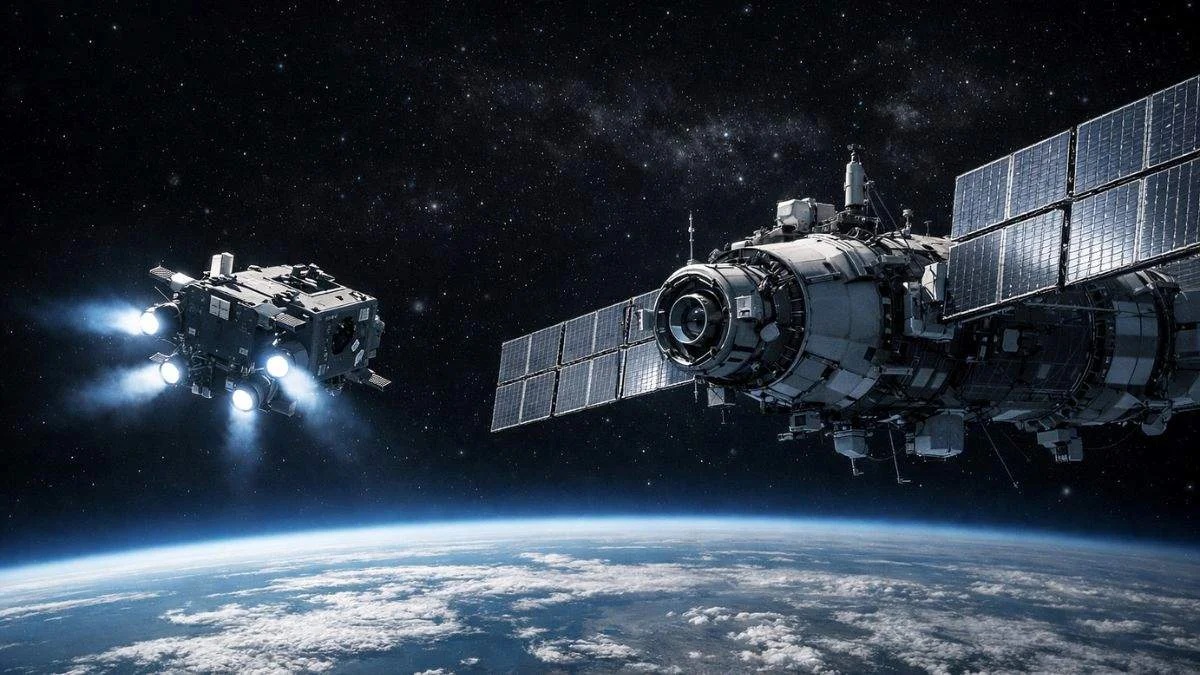
- Statement marking Space Forces Day outlines orbital and radar monitoring systems for missile-threat directions and global space situational awareness
MOSCOW 4 OCTOBER 2026 (Agencies) – A system for orbital and radar control of missile-threat directions, along with a system ensuring global monitoring of the situation in space, has been created within the Russian Aerospace Forces, the Russian Ministry of Defence said on Sunday, in a statement marking Space Forces Day.
“At the moment, the Space Forces have established and are operating an effective system for preparing the launch and controlling domestic spacecraft of various purposes, a system for orbital and radar monitoring of missile-threat directions, and a system for ensuring global monitoring of the space situation,” the ministry said.
The ministry also outlined the primary tasks of the Space Forces, including maintaining constant readiness to operate missile attack warning and space surveillance systems, as well as launching and controlling spacecraft. “Mastering new types of weaponry and military hardware entering service with Space Forces units is equally important. Key priorities also include adhering to the launch schedule for military and dual-use spacecraft, as well as for intercontinental ballistic missiles,” the statement said.
The Space Forces operate as a branch within the broader Russian Aerospace Forces, a unified command created in August 2015 that merged the country’s air force, air defence, anti-missile defence and space forces under a single structure. The Aerospace Forces are currently led by Commander-in-Chief Colonel General Aleksandr Chayko, who has held the post since May 2026.
Previous statements from the Russian Defence Ministry have provided some detail on the kind of infrastructure involved in the capabilities described on Sunday. A 2023 inspection by the ministry’s leadership highlighted a radar station for detecting small space objects in near-Earth orbit, which officials said had quadrupled the number of tracked small-size space objects and reduced the minimum detectable object size to 10 centimetres, while halving the time needed to identify small space objects after launch. A 2024 inspection of the Aerospace Forces command post found it provided continuous monitoring of the air and space situation across Russian territory and along strategic air and space directions, integrating aviation, air and missile defence, and space forces under unified command-post control.