

- Largest NSA shake?up in a decade — Agency launching major reorganization to address new priorities.
- Five new departments planned — To focus on AI, China, cybersecurity, combat support, and global intelligence.
- Timeline — Departments to be created by mid?October 2026, fully operational by early 2027.
- Leadership concerns — Director General Joshua M. Rudd may appoint heads from outside the agency, causing unease among insiders.
- AI integration — Reports of NSA testing Anthropic’s Mythos model despite federal restrictions.
- Past restructuring — Previous “NSA 21” overhaul from 2016 remains incomplete.
- China rivalry — US agencies accuse Chinese AI firms of “industrial?scale” extraction of US model capabilities.
- Beijing’s response — China rejects allegations, warns of countermeasures, accuses Washington of seeking AI monopoly.
- Agency size — NSA employs ~30,000 people, specializing in digital espionage.
- Snowden legacy — Agency still faces scrutiny after 2013 surveillance leaks.
Washington, 14 September 2026 (Agencies) — The US National Security Agency (NSA) is undertaking its largest internal restructuring in at least a decade to prioritize artificial intelligence, China, and other pressing challenges, the Washington Post reported Monday, citing current and former officials.
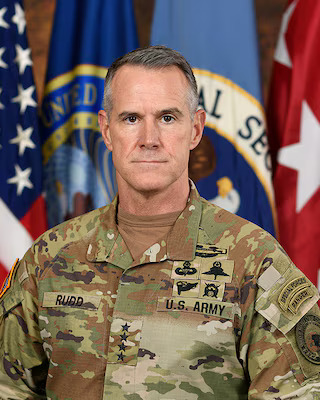
NSA Director General Joshua M. Rudd has proposed the creation of five new departments by mid?October, with full operational capacity targeted for early 2027. According to the report, the new organizations will focus on artificial intelligence, countering Beijing, cybersecurity, combat support, and global intelligence.
The NSA, believed to be the largest US intelligence agency with some 30,000 employees, specializes in digital espionage both abroad and at home. It faced controversy in 2013 when whistleblower Edward Snowden exposed its surveillance of American citizens.
Since assuming leadership in March, Rudd has actively integrated AI into agency operations. Reports earlier this year claimed the NSA had tested Anthropic’s advanced Mythos model, despite federal restrictions and Pentagon concerns over supply chain risks.
Officials described the overhaul as “aggressive,” noting that Rudd also heads the US Cyber Command. However, insiders expressed unease over his plan to appoint heads of the new departments from outside the agency. Sources said no appointments have yet been confirmed.
The Washington Post recalled that the previous major restructuring, known as “NSA 21” under then?Director Mike Rogers in 2016, remains incomplete. One official said the current plan lacks coherence, adding that Rudd admitted decisions may need to be reversed if proven wrong.
The restructuring comes amid Washington’s growing view of AI competition with China as a national security issue. Last week, the NSA, FBI, and Cybersecurity and Infrastructure Security Agency accused six Chinese AI firms, including DeepSeek and Alibaba, of conducting “industrial?scale” efforts to extract capabilities from leading US models. Beijing rejected the allegations as groundless, accusing Washington of seeking an AI monopoly and warning of “resolute countermeasures” if Chinese companies are targeted.