

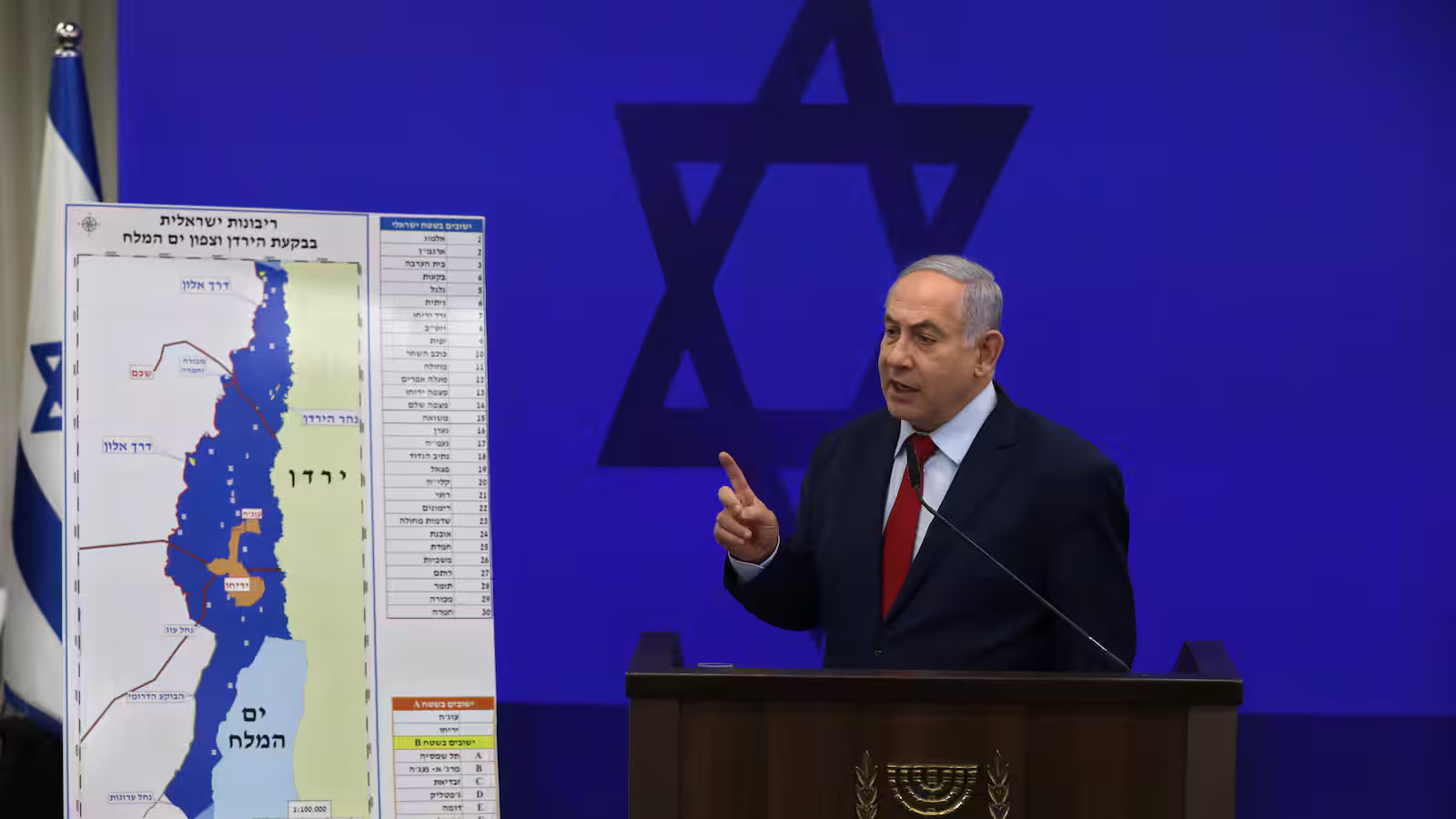
JERUSALEM, August 26, 2026 (Agencies) — Israeli Prime Minister Benjamin Netanyahu has vowed to continue expanding settlements in the occupied West Bank, saying Israel is preparing for a “major” wave of Jewish immigration and declaring that the territory is “our land.”
Speaking at an event organised by the Binyamin Regional Council, which oversees dozens of Israeli settlements in the West Bank, Netanyahu said Israel would continue establishing and expanding settlements despite international opposition.
“Today, many of our brothers and sisters around the world understand: This is our land and it will remain ours,” Netanyahu said. He added that Israel was preparing for a major wave of Aliyah, referring to Jewish immigration to Israel.
Netanyahu also highlighted his government’s settlement activity, saying it had established and regularised more than 100 settlements and numerous agricultural outposts and would continue expanding them.
The Israeli government’s settlement policy has drawn widespread international criticism. The United Nations considers Israeli settlements established in territory occupied since 1967 to have no legal validity under international law, while the international community broadly regards settlement construction in the West Bank as an obstacle to the establishment of an independent Palestinian state.
The remarks came shortly after Israel opened bidding for the construction of more than 1,200 housing units under the controversial E1 settlement project east of Jerusalem. The wider project is expected to include more than 3,400 homes and would connect the settlement of Ma’ale Adumim with Jerusalem.
Palestinians and several international governments have warned that development in the E1 area could further fragment the occupied West Bank and undermine prospects for a two-state solution.
Saudi Arabia, Pakistan, Türkiye and several other Arab and Muslim countries have rejected the settlement plan, calling it a “dangerous escalation.” The United Kingdom, Canada, Australia, New Zealand, the European Commission and a number of European countries have also criticised the project.
In a joint statement, the countries warned that the E1 development could “drive a wedge through the West Bank” and undermine prospects for a negotiated two-state solution.
Netanyahu has for years kept the possibility of annexing parts or all of the West Bank on the political agenda. His far-right coalition partners have repeatedly called for Israel to formally extend sovereignty over the territory, which Palestinians seek as the core of their future independent state.
The latest remarks are likely to intensify international concerns over Israel’s settlement policy and its implications for the future of the Israeli-Palestinian conflict, particularly amid continuing violence and deteriorating conditions in the West Bank.