

- Special Operations helicopter crashes during training near Denver a day after CNN reported Apache attack helicopters crashing at historically high rate
DENVER 25 AUGUST 2026 (Agencies) – A US Army Black Hawk helicopter went down during a training flight in Colorado on Tuesday, the latest in a string of incidents fueling concern over a sustained rise in serious Army aviation accidents.
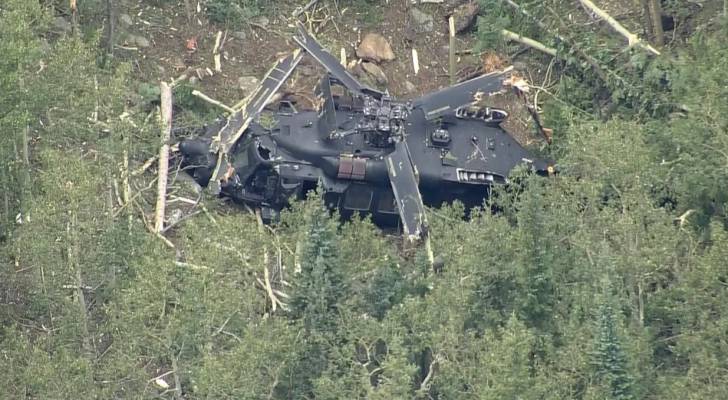
The helicopter came down on the east side of Thorodin Mountain in Gilpin County, west of Denver near Golden Gate Canyon State Park, with the Gilpin County Sheriff’s Office reporting the incident just before 11:30 am. Four people were aboard, but no injuries were reported, and emergency crews found no fuel leak or fire, with officials saying there was no danger to the surrounding community. Footage and aerial images from the scene showed the aircraft sitting upright among trees with its rotor blades heavily damaged.
The aircraft was an MH-60 Black Hawk belonging to the Army’s 160th Special Operations Aviation Regiment, known as the Night Stalkers, and had flown from the unit’s home base at Fort Campbell, Kentucky. US Army Special Operations Aviation Command confirmed the mishap occurred during routine training operations near Denver and said it could not provide further comment while a safety investigation remains active. The sheriff’s office set up a media staging area at the Aspen Meadows Campground for reporters covering the incident.
The crash comes just a day after CNN reported that the Army’s AH-64 Apache attack helicopters are crashing at a historically high rate amid persistent mechanical problems. According to the network’s analysis of military accident data, five Class A flight mishaps involving the Apache have been recorded so far in fiscal year 2026, a rate of approximately 6.24 major crashes per 100,000 flying hours, based on internal Army safety data and flight-hour figures supplied by the service. That rate approaches the 7.02 recorded in fiscal year 2024, the worst year on record for the E-model Apache since it was introduced in 2011, putting the current fiscal year on pace to be the second-worst since then. A Class A mishap is the military’s most serious accident category, covering any incident involving a fatality, permanent disability, loss of an aircraft, or at least 2.5 million dollars in damage.
Investigators have pointed to a widespread transmission defect in the AH-64E that can potentially knock out the tail rotor, electrical power and hydraulics, according to internal Army safety messages. The problem drew renewed attention after a deadly Apache crash near Salado, Texas, earlier this month killed two soldiers and sparked a wildfire, prompting the Army to temporarily bar Apache pilots from routine training flights nationwide, excluding units deployed to the Middle East. That pause ended this past Wednesday. An internal Army safety newsletter has also attributed just over half of this year’s Apache accidents primarily to human error rather than mechanical failure.
The 160th Special Operations Aviation Regiment has faced its own recent losses. In September 2025, an MH-60M Black Hawk belonging to the unit crashed during nighttime training near Summit Lake, Washington, killing all four soldiers aboard.
Army aviation safety has faced heightened scrutiny since January 29, 2025, when an Army UH-60L Black Hawk collided with American Airlines Flight 5342 as the passenger jet approached Ronald Reagan Washington National Airport. Both aircraft plunged into the Potomac River, killing all 64 people aboard the airliner and all three soldiers in the helicopter, in the deadliest US aviation accident since 2001. The disaster triggered intensified scrutiny of military helicopter operations, and internal Pentagon figures provided to Congress and reviewed by the Associated Press last year showed the rate of Class A mishaps across military aviation jumped 55 percent from 2020 to 2024.
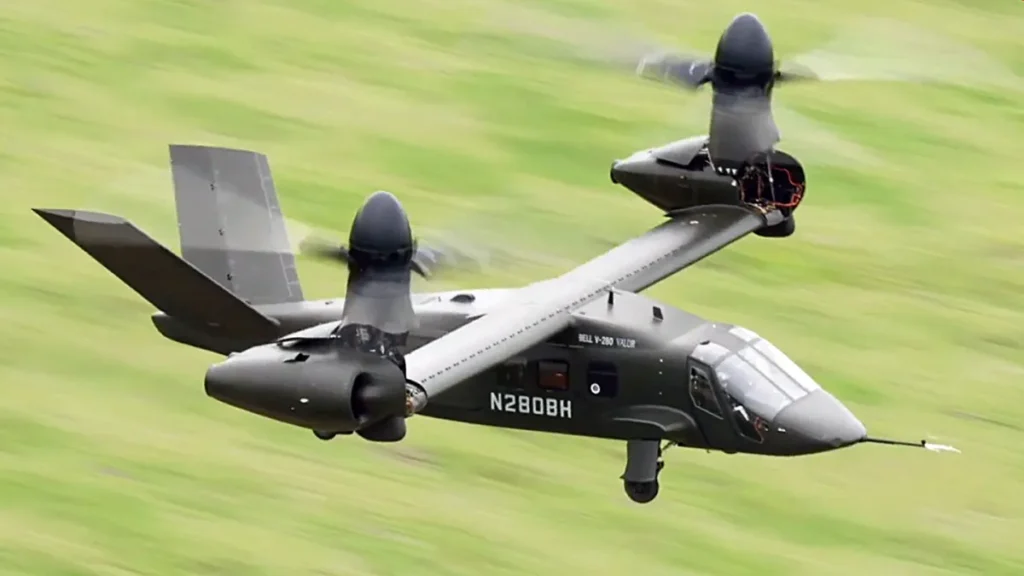
The Army already has a partial successor to the Black Hawk in the pipeline. Under the Future Long-Range Assault Aircraft program, launched in 2019 to find a successor to the UH-60, the Army selected Bell’s V-280 Valor tiltrotor in December 2022 over a competing Sikorsky-Boeing design, in a deal that could be worth 70 to 80 billion dollars depending on the eventual fleet size. The aircraft, now designated the MV-75, combines helicopter-style vertical takeoff and landing with cruise speeds and range roughly double that of the Black Hawk. Its fielding timeline has repeatedly moved up, from an original target in the mid-2030s to 2030 and now to 2028, with Army Chief of Staff Gen. Randy George pushing this year to accelerate the schedule further; an Army spokesman has said testing is planned for this year with fielding to follow in 2027. Bell has begun assembling the first six MV-75 test aircraft at its Wichita facility. The new aircraft is expected to replace a significant portion of the fleet, including some special operations MH-60Ms flown by the 160th SOAR, but Army officials have said it will not fully retire the Black Hawk line, with some variants expected to remain in service well into the 2030s alongside it.