

- By Ibn-Taha and Syed Ahmer Raza
The student teachers were jubilant, the parents were proud, and the mentor teachers had a deep sense of achievement. It was the culminating session of the Summer Teacher Training Program 2026, a professional development initiative aimed at equipping educators with the latest trends in cognitive and participative learning, leadership skills, emotional intelligence, technology integration, child safety awareness, civic responsibility, social development, and emergency preparedness.
The program was held under the auspices of the Roshan Pakistan Foundation (RPF). It brought together renowned educationists, psychologists, healthcare professionals, communication experts, technologists, media professionals, and community leaders under the theme “Empowering Educators, Transforming Futures.” The initiative was founded on the belief that meaningful educational reform begins with investing in teachers. The training program was structured around four guiding principles—Inspire, Connect, Grow, and Transform—encouraging educators to continuously enhance their professional skills while fostering classrooms that nurture creativity, empathy, resilience, and lifelong learning.
The founder’s story was hair-raising. She was horrified in adolescences to see a young woman experiencing her first childbirth being asked to go to a buffalo barn and receive injections using the same syringes that had been used on buffaloes.
Education for girls? A resounding NO. Girls were expected to marry and spend their lives serving their in-laws. Any attempt to educate a girl could put her and her family’s lives at risk. In such communities, there seemed to be only one law: those in power defined the rules according to their own desires.
This is the reality faced by countless girls living in the slums and underprivileged communities, including the suburbs of Karachi. Humera Bachal was one of the many victims of these social norms and cultural constraints. The only ray of hope in her life was her courageous mother, who stood firmly by her side. Having herself been a victim of oppressive traditions and social taboos, her mother—like many other women—had spent her life serving her in-laws and relatives, with little freedom or opportunity. These women had developed a deep resentment toward the shackles that bound them, yet they lacked the means to break free. Nevertheless, Humera’s mother made a solemn commitment: the cycle that had continued for generations would not be repeated through the future daughters.
Humera was born in 1988 in a poor family in Thatta, Sindh, to Muhammad Bachal and Zainab Bibi. Burdened by heavy debts, the family was forced to move to Karachi in search of a better livelihood. Humera was only eight years old at that time. To help support her family, she searched for leftover food to survive. Instead of accepting this hardship, she came up with the idea of collecting and selling firewood from nearby areas. She recalls her mother’s palms bleeding from cutting wood—a painful sight that strengthened her resolve to work even harder than her mother to earn a living and improve their circumstances.
In early childhood, Humera witnessed the tragic death of her cousin’s child after the child was mistakenly given an expired medicine. This heart-breaking incident inspired her to promote education and awareness within her community. She began educating children and adults wherever she could—under streetlights, in rented rooms, on roadsides, and in any available space. Living in a large city like Karachi also helped her recognize the difference between literacy and education. Her vision extended far beyond simply teaching people to read and write. Unlike many government programs and short-sighted initiatives that focused primarily on literacy, Humera believed in providing meaningful education, especially for girls, so that they could empower future generations through knowledge. She understood that while individuals may pass away, the mission of education lives on long after them.
Determined to achieve this vision, Humera completed her FA (Humanities), followed by a bachelor’s degree in Liberal Arts and Sciences (General Studies and Humanities) from Benazir Bhutto Shaheed University, Karachi.
After nearly 15 years of struggle, Humera’s sincere efforts were recognized by a group of philanthropists who supported her in establishing a small school, Dream Model School, in Mochi Goth, Karachi. The school focused on the holistic development of children by integrating education with physical and mental well-being, reproductive health, and social empowerment.
Recognizing the challenges faced by the community, the school introduced comprehensive health initiatives. In a society where menstruation remained a taboo subject, Humera launched menstrual hygiene awareness programs and ensured access to sanitary products for girls. Basic healthcare services and mental health counseling were made available on campus, with trained counselors helping students cope with trauma, anxiety, and stress.The philosophy of the initiative is best reflected in its guiding words:
“Together, we empower educators. Together, we transform futures.”
As the initiative grew, its scope expanded beyond education to include community development and humanitarian assistance. It organized disaster relief efforts, facilitated access to clean drinking water, and distributed food rations to families in need. Today, these efforts have evolved into the non-governmental organization (NGO) Roshan Pakistan, supported by local, national, and international donors. The organization currently works in the following areas:
a. Quality Education: Operates four formal school campuses (Nursery to Grade 10), four informal education centers, adult literacy programs for mothers, and digital literacy courses.
b. Community Welfare: Provides monthly food rations, distributes warm clothing during winter, and organizes Ramadan Iftar and food basket drives for underprivileged families.
c. Healthcare: Runs school-based health clinics, mental health and well-being programs, and medical camps that offer free health check-ups and essential medical services.
d. Disaster Relief: Establishes temporary community kitchens, provides emergency health services and shelter, and coordinates with partner organizations to support long-term rehabilitation following disasters.
e. Food Security: Ensures nutritional support through school meal programs, community lunch initiatives, and community kitchen gardens.
f. Community Empowerment: Promotes skills development, literacy, academic support, awareness sessions, entrepreneurship, financial empowerment, and community development initiatives.
g. Social Welfare: Supports vulnerable families through Zakat-based assistance, small business support, self-employment
opportunities, and programs aimed at achieving sustainable household income.
Individuals or families in need may approach the Roshan Pakistan Foundation for any of the above-mentioned assistance through its website: www.roshanpakistanfoundation.org.
Through its teacher training programs, the Foundation has developed a unique multidisciplinary approach to learning that addresses the diverse dimensions of the teacher–student relationship. The program emphasizes the philosophy of “Connect Before Correcting,” encouraging educators to build trust and meaningful relationships with students before addressing their academic or behavioral challenges.
The training recognizes that teachers are not merely instructors but also mentors, role models, and community builders whose daily interactions shape children’s confidence, values, and future aspirations. Through practical examples and interactive sessions, participants learn the importance of intentional leadership, compassionate classroom practices, and creating positive learning environments. Humera is lucky being supported by educationists, philanthropists, volunteers, doctors, communication experts, social reformers, opinion leaders and visionary community influencers. She is aptly supported by Dr. Adina Sheikh and Dr. Kishwar Enam , Sabina Khatri, Founder of the Kiran Foundation, Educationists Madiha Shaikh, Maham Zehra, Almas Baloch, Umme Haris, Ishaq Bin Sadiq and Danial Hussain Shaikh and technology expert Areeb Minhaj.
The program introduces educators to the latest trends in Artificial Intelligence (AI), focusing on practical applications and digital tools that enable more interactive, personalized, and engaging learning experiences.
Storytelling and real-world experiences are integral components of the curriculum, helping teachers connect classroom instruction with community issues. This approach enables students to understand that education extends far beyond textbooks and into everyday life. By making lessons more relevant and experiential, educators foster curiosity, critical thinking, problem-solving skills, and civic responsibility.
Life-saving education is another key component of the training. Teachers receive hands-on instruction in:
- Fire safety and burn management
- Fracture management and emergency stabilization
- Earthquake preparedness
- Choking response
- Heatstroke recognition and management
- Heart attack response
- Management of convulsions (seizures)
- Water rescue awareness and drowning emergencies
Communication experts demonstrate how positive and effective communication strengthens relationships, motivates learners, and creates emotionally safe classrooms where students feel heard, respected, valued, and encouraged to succeed.
Another important area of training focuses on understanding and working with people from diverse backgrounds. Participants explore different personality traits and learn strategies for adapting their teaching styles to meet the varied emotional, behavioral, and learning needs of their students, thereby creating more inclusive and supportive classrooms.
The Child Safety session focuses on creating secure and supportive school environments by increasing awareness of child protection, safeguarding responsibilities, and practical measures that ensure every student feels safe, respected, and empowered.
An outdoor, beachside session titled “Calm Classrooms, Strong Minds” is conducted in the open air to promote mindfulness, emotional well-being, stress management, and practical techniques for creating calm, positive, and emotionally supportive learning environments.
As the Summer Teacher Training Program 2026 concluded, the Roshan Pakistan Foundation reaffirmed its belief that meaningful educational transformation begins with investing in those who shape future generations. By equipping teachers with contemporary knowledge, practical skills, compassion, and confidence, the Foundation is helping create classrooms where students are not only taught academic subjects but are also inspired to become thoughtful, resilient, and responsible citizens.
A devoted follower and fellow citizen of Abdus Sattar Edhi, Humera does not aspire to the Nobel Prize or to awards and public recognition. Her sole aspiration is to serve humanity through the noble cause of education and community development.
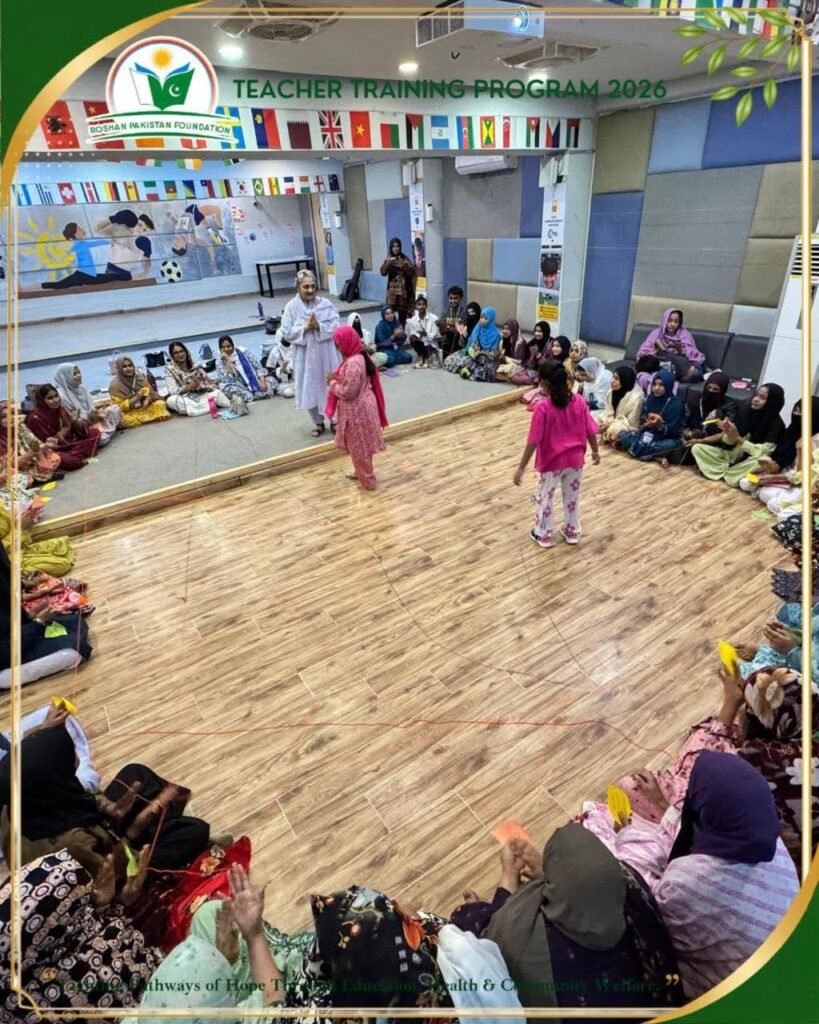
“Connecting Before Correcting | Teacher Training” by Ms. Sabina Khatri
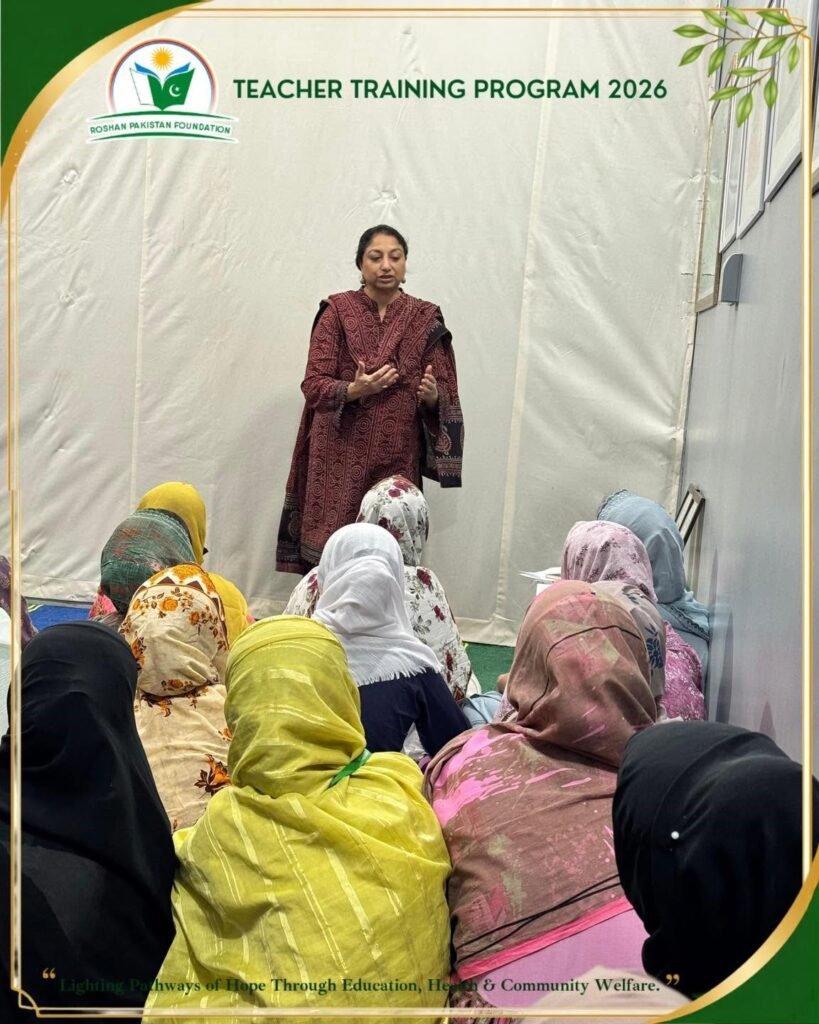
Interactive session on “Every Child Deserves to Feel Safe” by Dr. Adina Sheikh
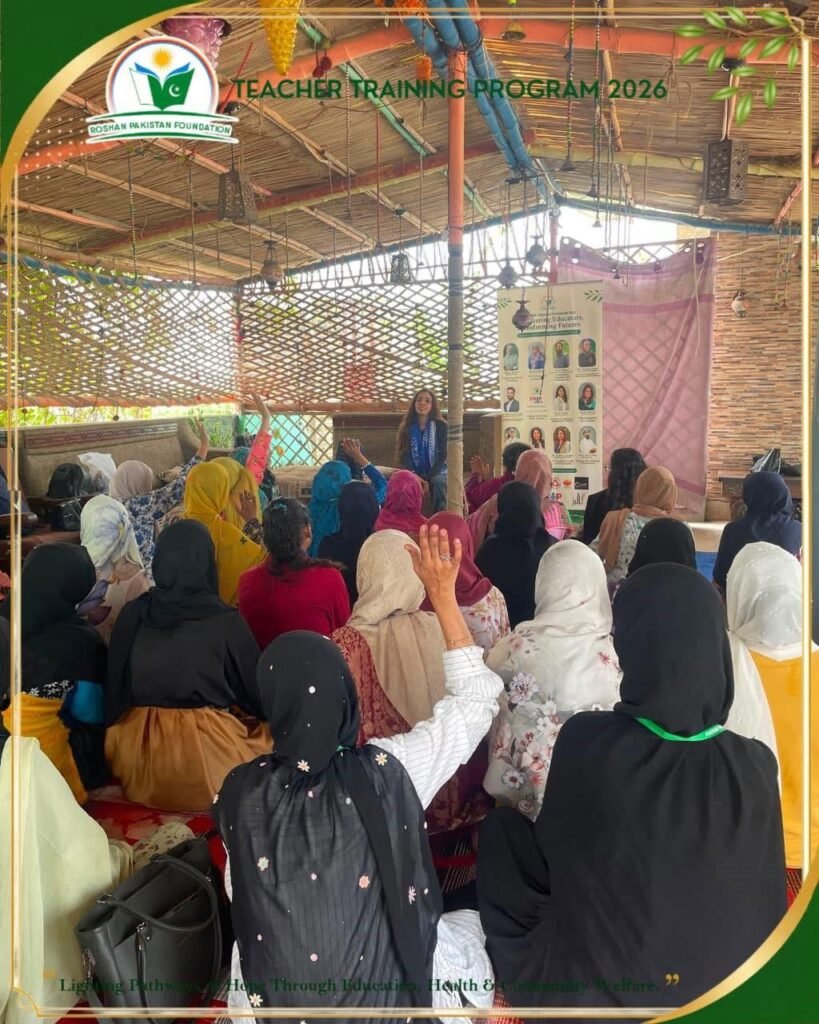
“Calm environment; The strong minds” educated in calm environment by Almas Baloch
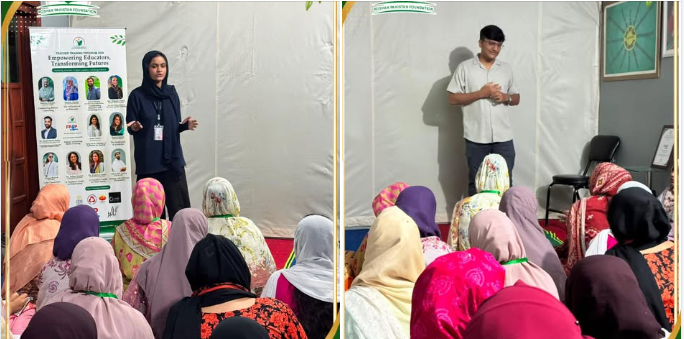
Community education on FRIP (First Response Initiative of Pakistan).
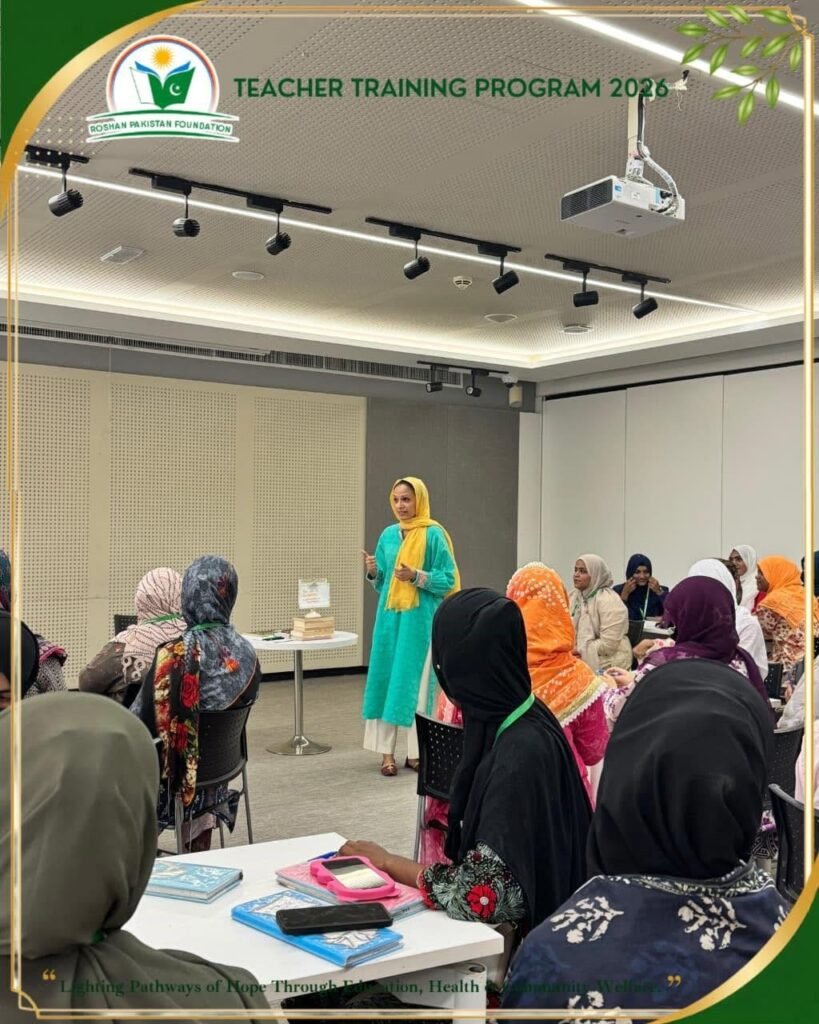
Power of storytelling and community-driven education through engaging sessions by Ms. Maham Zehra.
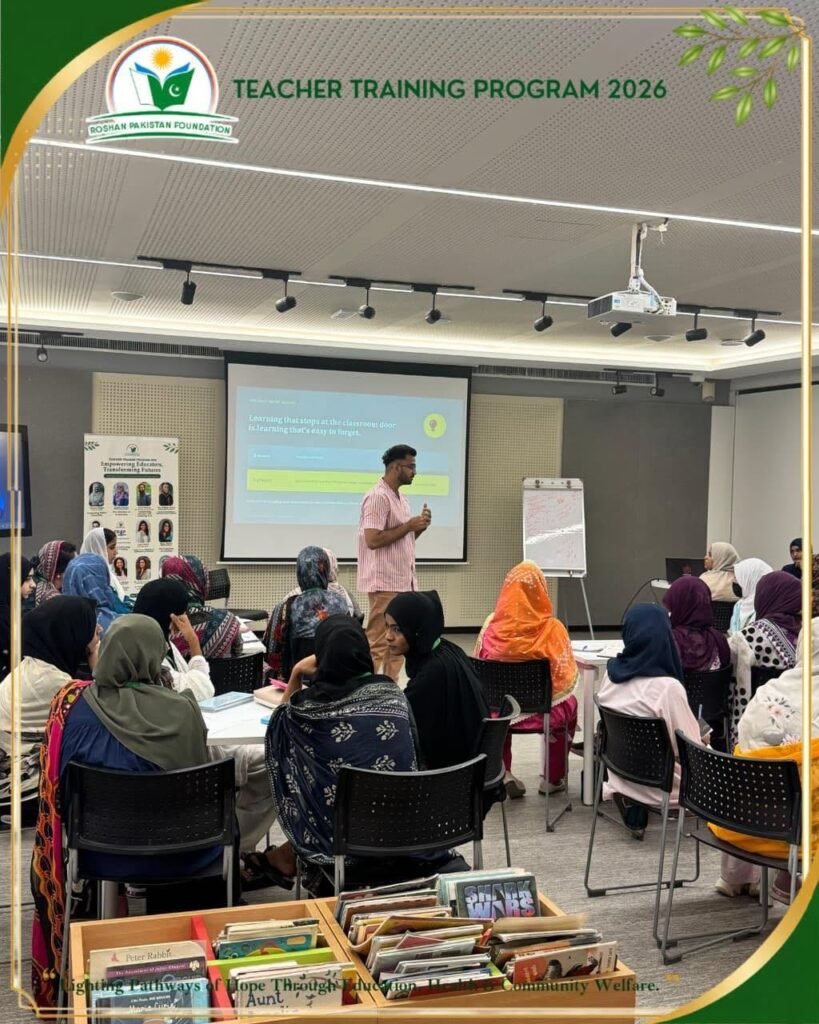
Power of storytelling and community-driven education through engaging sessions by Mr. Danial Hussain Shaikh.