

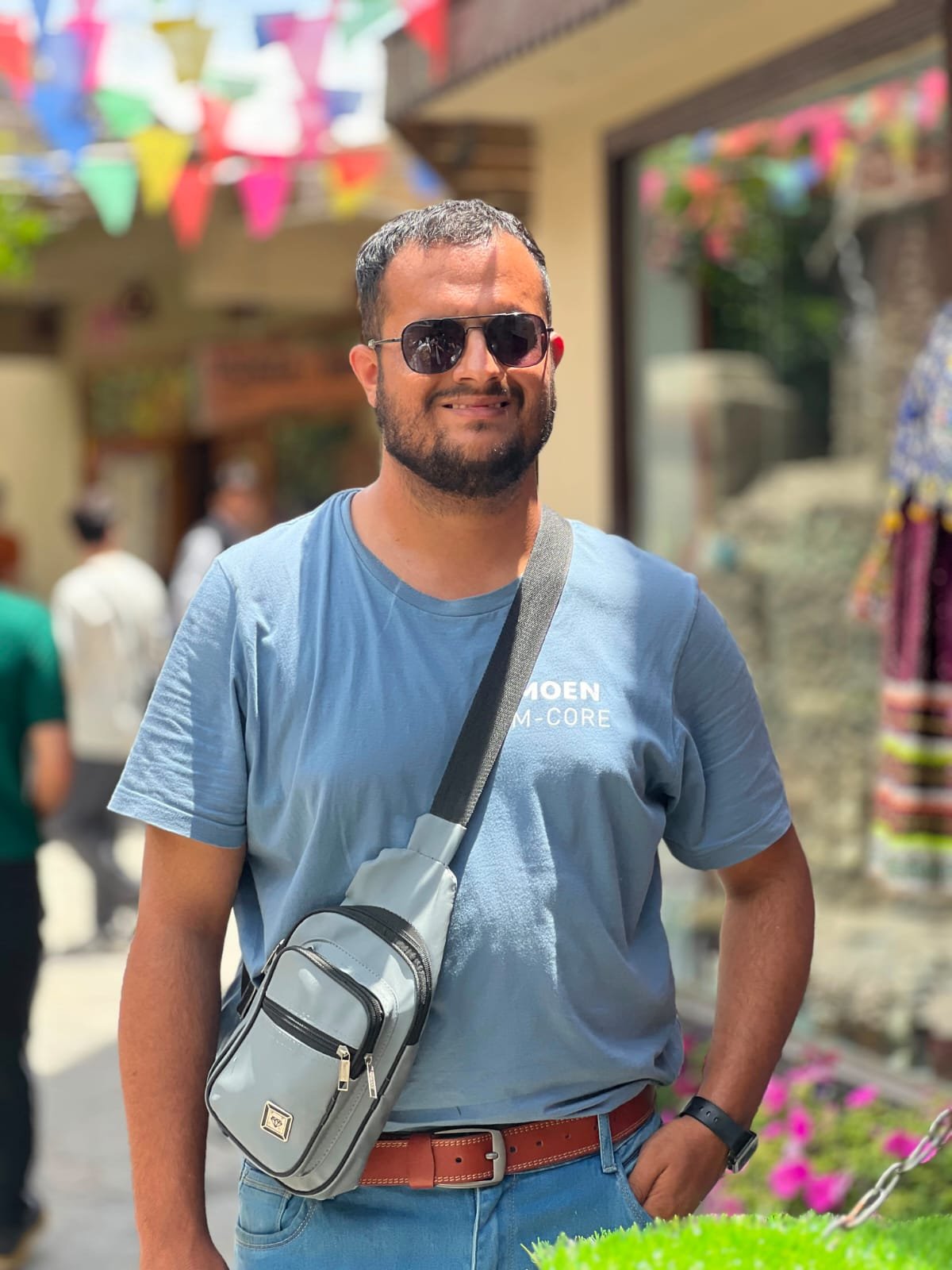
- By: Salman Khursheed Dawar
Let me be precise about what I am describing. Not rumor. Not sentiment. A documented, lived reality that the Ryasat has deliberately kept obscured because the more it is hidden, the more dangerous it becomes.
Some conservative commentators attribute what they see in today’s youth of North Waziristan to the side effects of the Covid vaccine . I will leave that aside. What forces me to think rationally, seriously is something else entirely. Let me lay the groundwork for this first .
The generation currently coming of age in North Waziristan has been born and raised inside a war environment for nearly two decades. Their grandfathers also picked up the Kalashnikov handed to them by foreign powers sometimes pointed at their own feet, sometimes against the US – Soviet invader. Their appetite for it was also considerable. But the attachment this current Waziristani generation has to the gun to the Kalashnikov as an extension of the body defies description. And the question that follows is simple what will become of them?
I will tell you something personal for this.
Around 2013, I was ten or eleven years old. My eyesight had deteriorated but I did not know it yet I did not have the awareness to recognize it, nor the courage to ask. Then something happened that diagnosed me.
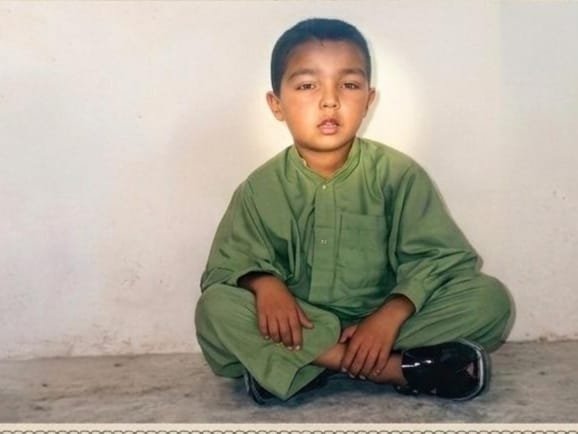
One day, the state’s F-16s came and bombed in the vicinity of our area. They were deafeningly loud. There was a light rain. People had come out to watch because until then, we had only ever seen Cobra helicopters. The jets were circling directly overhead, and people were shouting: “There it is it fired a missile ” And I could see nothing. I did not understand why.
The following week I went to an eye doctor in Mir Ali. Got glasses. After that I could see the jet. I could see the ball while playing cricket. I could see the writing on the board. I still see that same doctor to this day.
When the Cobra helicopters or F-16s were engaging targets nearby, this ten-year-old would press himself flat against the wall like a thief inside his own home. When the firing stopped, we would come out into the courtyard, prayers murmured under our breath.
That was one year before Operation Zarb-e-Azb.
During and after Zarb-e-Azb came a new instrument of terror: the drone.
To this day, no one in that area can publicly ask: Whose drone is it? Who operates it? What is the target?
When a Waziristani man, woman, or child is wounded or killed by a drone, they see only two things: a sound and a perforated body.
Local representatives have repeatedly raised these questions with the institutions: Who is operating these machines? What do they want? Why is this machinery being deployed in a densely populated civilian area? The answer is always silence. Evasion. Our own leadership has now accepted the conclusion: this region is a component of the war economy, where the dollar sets the price of the human transaction.
After Operation Zarb-e-Azb, the distance between the state’s checkpost and the very militants the operation was supposedly conducted against is one kilometer. At one checkpoint, they verify your Pakistani identity. At the other, they look at your face and collect their cut. The face-check is to determine: could you be useful?
Meanwhile, every ordinary person man or woman walks among open Kalashnikovs, heavy weapons, what can only be called open-air arms markets.
Internet is not as good as in other districts of Pakistan. And beyond that, the following regulation applies every Friday and Saturday night at 6:15 PM: curfew. All civilian movement normal or emergency is suspended. Only military vehicles move on the roads. If anyone dares step onto a road, they are shot. I still carry names in my mind. Nadeem. Others I cannot now recall.
When a young generation is raised inside these conditions, the capacity for human solidarity dies. And over all of this sits a deeper inheritance: the radicalization that American imperialism ignited against the Soviet Union. That fire did not go out. It is burning inside this generation right now.
I began to develop awareness early partly because we had a satellite dish at home. CNN. GEO. PTV. Geo Tez. I listened to Radio Pakistan, Mashaal Radio, Deewa Radio. Events lodged themselves in my memory with unusual speed and force. A mind trained by violence learns to retain everything.
A generation had been forged in the middle of war. They had developed a fascination an obsession with weapons and combat that no one knew how to close down.
When America finally withdrew, our region exhaled slightly. But fear remains the permanent weather. Life carries no guarantee. And whenever American imperial policy shifts and Pakistani state interests rotate accordingly, the people of this area feel a momentary relief but the damage that twenty years of this war circus has inflicted on their generations is beyond adequate description.
When I begin counting my primary school seniors and juniors, I find myself whispering: God forgive him. God forgive him. This generation killed each other. With their own hands. Over nothing. Listen carefully to what this looks like on the ground.
The child with slightly more money buys a plastic rifle. And then the fractures begin.
We used to flatten ourselves against walls to hide from F-16s. Today you must hide from this generation on moonlit nights{Eid} because the random gunfire is so incessant that you cannot walk to the bathroom without hugging the wall, hoping that whatever bullet is discharged does not find you. We have watched solar panels destroyed by stray fire.
Over small disputes trivial disagreements this generation shoots each other in the head. One day news came that someone had killed someone. When I asked, I learned that my own primary school teacher had been shot dead by his own student and that the teacher, before dying, had returned fire and killed the student. That student was my senior in primary school. He was the one who taught me to write numbers on my slate. Later, when we had both entered professional life, he would joke: “Salman, half your salary belongs to me.”
Children’s quarrels are now resolved with bullets.
On moonlit nights, they come out of their homes with heavy machinery as if aid has arrived for Gaza aboard the Nusrat and fire it into crowds while others record videos. Watching those videos, the thought is inescapable: if that barrel dips even slightly, how many skulls.
They post it on Facebook as if it is tradition. It is not tradition. It is a curse manufactured inside the war factories that were built on this soil and in these people.
Poverty has reached the point where when it rains, people have nothing to eat.
Educational institutions exist but the environment is not educational. They function as commercial enterprises. The youth you see: their occupation is drugs, motorcycles, hired killing. That is their economy.
From childhood they are conditioned with one sentence: “Son, your father couldn’t study what makes you think you will?” The dream of Saudi Arabia becomes the purpose of their life.
The people of this region have endured more suffering than perhaps anywhere in this country. The rational expectation would be that suffering produces consciousness that those who have seen the most would understand the most.
But that is not how systematic dehumanization works. When a state runs a population through twenty years of bombs, drones, curfews, debt, and deliberate ignorance what it produces is not wisdom. It produces exactly what you see: a generation that has lost the capacity to recognize its own wound, let alone name who inflicted it.
That is not their failure. That is the design.