

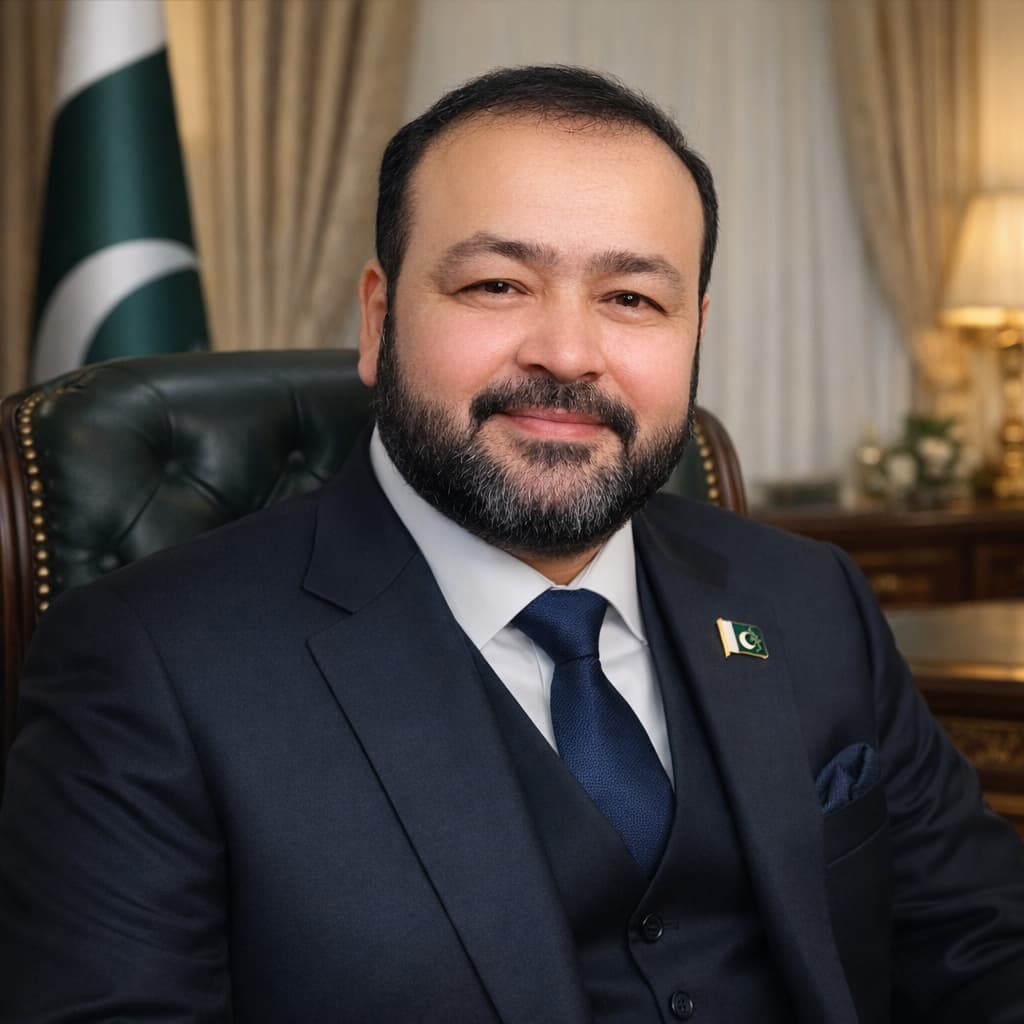
- By: Dr. Muhammad Tayyab Khan Singhanvi, Ph.D
In the very heart of a metropolis fashioned from stone and echo there stood an ancient bridge, reverently known among its inhabitants as the Bridge of Constitutional Order. Upon its opposing banks dwelt communities that, across successive generations, oscillated between aspiration and apprehension, conviction and uncertainty, concord and contention. Whenever an impassioned multitude persuaded itself that traversing the bridge constituted an intolerable delay upon the path to its desired destination, it abandoned the carefully laid passage and descended instead into the turbulent current, supposing that indignation, numerical strength, and unrestrained fervour would accomplish what patience could not. Yet the river, indifferent to human passions, invariably swept away both their expectations and their certitudes. The bridge itself remained resolutely silent, for it had long understood that emotional surges are inherently ephemeral, whereas the architecture of civilization is erected not upon excitement but upon restraint, legality, institutional continuity, and the disciplined organization of collective existence. This allegorical landscape encapsulates, with remarkable fidelity, the enduring trajectory of political history. A reflective examination of the twentieth century reveals that German National Socialism, Italian Fascism, China’s Cultural Revolution, and the ethnic absolutism that culminated in the Rwandan catastrophe each sought to persuade their respective populations that inflamed masses possessed a legitimacy surpassing that of constitutional governance and institutional prudence. History, however, rendered an altogether different verdict. Millions perished, public institutions disintegrated, economic foundations collapsed, and entire nations expended decades bearing the grievous consequences of their own political excesses. Politics inscribed through coercive force may indeed evoke transient applause, yet it has never succeeded in constructing a durable and resilient state.
Pakistan’s own political evolution appears as a continuation of this universal historical experience. Across successive epochs, political leaderships enjoying substantial public legitimacy repeatedly confronted the same decisive question: whether political disagreement ought to be transformed into constitutional dialogue or surrendered to the consuming flames of confrontation. The constitutional crisis of 1977 demonstrated with unmistakable clarity that once political actors abandoned the indispensable virtues of restraint and accommodation, democratic continuity itself became vulnerable, allowing extraordinary constitutional arrangements gradually to assume the character of ordinary governance. During subsequent decades, persistent tensions between political movements and state institutions, the ascendancy of street mobilization, and increasingly uncompromising political rhetoric occasionally yielded immediate tactical advantages; nevertheless, their ultimate legacy consisted of prolonged litigation, political disenfranchisement, institutional fragmentation, and deepening national uncertainty. In more recent years, notwithstanding considerable popular support, political polarization intensified to such an extent that ordinary democratic competition increasingly assumed the appearance of direct confrontation with the constitutional order itself. The events of 9 May constituted a solemn demonstration that whenever political movements transgress the limits prescribed by constitutional governance, the resulting injury extends far beyond individual parties, inflicting profound damage upon national confidence, institutional equilibrium, and the broader stability of the polity. Once politics begins to erode the very foundations of the state, it inevitably undermines its own future, for political life cannot flourish where the state itself has been rendered fragile.
An analogous constitutional test is presently discernible within the contemporary circumstances of Jammu and Kashmir. Peaceful protest indisputably constitutes a fundamental civic entitlement within every civilized society, while principled dissent remains an indispensable attribute of any genuinely vibrant political community. Nevertheless, between legitimate protest and destructive confrontation there exists a distinction both delicate and decisive. Once public demonstrations cross the threshold into lawlessness, institutional repudiation, and violence, even the most legitimate grievances begin to recede into obscurity. The tragic loss of civilian lives, the deaths of law-enforcement personnel, widespread injuries, and the progressive escalation of public disorder collectively reaffirm the enduring truth that when political emotion becomes detached from constitutional discipline, the moral authority of justice itself is correspondingly diminished. The ethical strength of any political movement resides less in the substance of its demands than in the constitutional integrity of the methods through which those demands are pursued. Should constitutional institutions, judicial mechanisms, representative forums, and the organized framework of the state be categorically rejected; should institutions entrusted with public security become objects of systematic contempt; and should political aspirations increasingly depend upon coercive pressure exerted through the streets rather than lawful constitutional processes, such movements gradually become preoccupied with defending their own continued existence rather than advancing their original objectives. This principle acquires additional significance when considered alongside the experiences of Indian-administered Kashmir, where the fraught relationship between civilian populations and state authority presents a distinct yet profoundly instructive historical context. Consequently, wisdom, disciplined restraint, and unwavering adherence to constitutional procedure remain the most enduring forms of political capital available to any movement seeking lasting legitimacy.
The destiny of nations is never fashioned by slogans alone, but rather through sustained confidence in public institutions, unwavering fidelity to constitutional supremacy, and the collective capacity to accommodate disagreement without descending into disorder. The world’s most successful societies have never imagined that political disagreement could be eradicated; instead, they have cultivated the institutional wisdom necessary to resolve such disagreement within the disciplined framework of law. Pakistan and Jammu and Kashmir alike presently stand at a critical historical juncture, where every political organization, every protest movement, and every institution of the state must determine whether it shall proceed across the ancient bridge of constitutional order or descend into the merciless torrent of unrestrained political passion. Reason invariably endures, whereas anger is ultimately consumed by the very flames it kindles. Genuine political statesmanship therefore requires that disagreement never be transformed into enmity, that protest never be permitted to degenerate into anarchy, and that every legitimate struggle remain firmly enclosed within the protective boundaries of constitutionalism, legality, and the broader national interest. Societies capable of preserving this delicate equilibrium bequeath to succeeding generations the enduring inheritance of stability, public confidence, and sustainable progress; those that mistake perpetual confrontation for political destiny eventually disappear into the very abyss they had imagined would secure their emancipation.
- The author is a Ph.D. scholar, columnist, and currently serves as the General Secretary of the Pakistan Federal Union of Columnists and Creators (Sindh).