

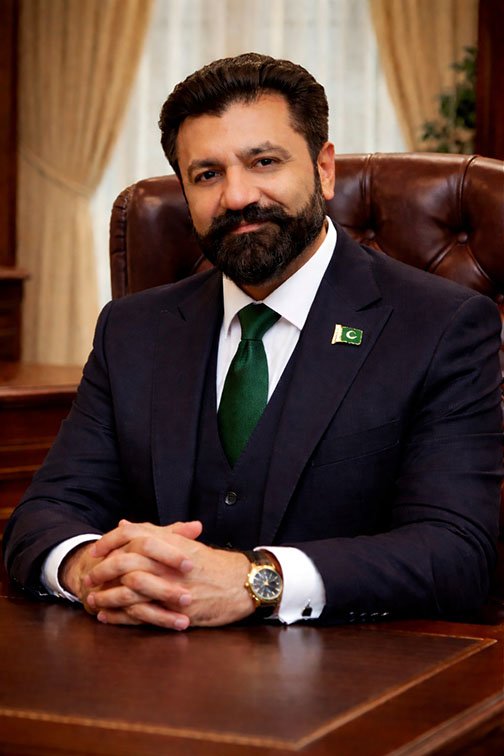
- By: Muhammad Mohsin Khan (Rajput)
Amid the glittering banquet hall of the White House, surrounded by crystal glasses, diplomatic smiles, and ceremonial elegance, two seemingly lighthearted remarks suddenly awakened centuries of history. On one side stood the American President’s familiar assertion: “If America had not existed, Europe would be speaking German today.” Opposite him, King Charles III responded with remarkable wit: “If we had not existed, you would be speaking French today.” The audience responded with laughter and applause, yet beneath the humor lay the echoes of two great historical empires. It was not merely an exchange between two statesmen but a symbolic encounter between rival historical legacies, each seeking to transform its past into contemporary political capital. In global politics, a single sentence can sometimes reveal more than volumes of historical scholarship.
If history is imagined as a vast river, the civilizations settled along its banks inherit not only water but also languages, cultures, and shifting currents of power. The Seven Years’ War of the eighteenth century was far more than a military confrontation between Britain and France; it became a decisive moment in shaping the linguistic and cultural geography of the modern world. The forests of North America, the fortresses of Canada, and the waters of the Atlantic could scarcely have foreseen that the thunder of cannons would determine the language spoken by future generations. Britain’s victory secured the dominance of English across much of North America, yet history also witnessed those very British colonies ignite a revolution that gave birth to the United States. Decades later, the United States emerged as Europe’s principal defender during the Second World War. Empires, therefore, do not merely compete; they often give rise to one another and contribute to each other’s survival. Without British supremacy, American English might never have evolved into its present form, while without French assistance during the American Revolution, the story of American independence could have unfolded quite differently. History rarely belongs exclusively to a single victor; every triumph carries within it the indispensable contribution of another actor.
Donald Trump’s political worldview has consistently been shaped by the language of transactions, bargaining, and national interest. He has frequently viewed geopolitical conflicts through the lens of negotiation, presenting mediation in disputes including tensions between Pakistan and India as a form of strategic deal-making. King Charles III’s response, however, reflected not merely the perspective of a monarch but that of an ancient state reminding the world that power is measured not only by present military or economic strength but also by accumulated historical prestige. Contemporary debates over NATO spending, European security, American commitments, and Britain’s global legacy have therefore evolved beyond discussions of defense budgets into broader questions concerning historical responsibility and political partnership. The laughter heard within the White House echoed a changing international order in which allies increasingly remind one another of past contributions, while strategic interests quietly shape even the warmest diplomatic exchanges. Expressions of gratitude have gradually given way to historical accounting.
The deepest lesson emerging from this episode is that wars are not won solely on battlefields; they are equally won within languages, educational systems, cultural traditions, and collective memory. Victorious armies eventually depart, but their languages continue to shape legal systems, literature, commerce, and patterns of thought for generations. The global predominance of English today represents not only the enduring legacy of the British Empire but also the influence of American economic power, technological innovation, diplomacy, and cultural reach. Consequently, this brief exchange of wit at the White House was far more than an amusing conversation; it served as a living metaphor for the intricate relationship between power, history, and identity. When nations celebrate their achievements, they also reinterpret their past to reinforce their present. Yet history remains remarkably generous, preserving the contributions of every participant alongside those of the victor. Perhaps its greatest lesson is this: empires may conquer territories, but their ultimate triumph lies in embedding their language, narrative, and collective memory into the consciousness of future generations. Cannons eventually fall silent, but words continue to speak across the centuries.
- The columnist is the first elected President of the Pakistan Federal Union of Columnists and Creators (PFUC), Karachi Chapter.