

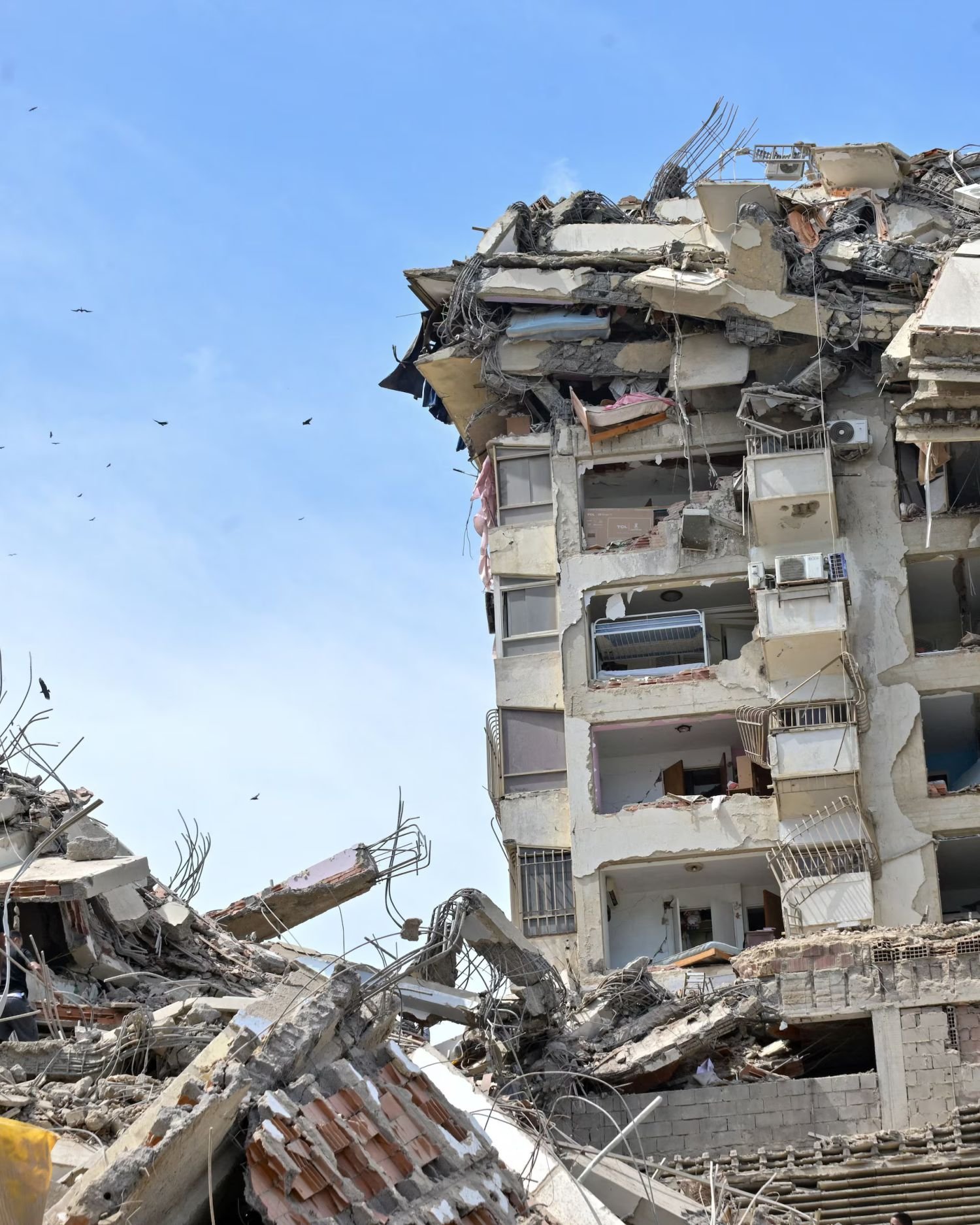
- At least 920 people are dead and 3,360 injured after twin earthquakes struck Venezuela Wednesday evening, according to National Assembly president Jorge Rodríguez; the US Geological Survey warns the toll could eventually run into the thousands.
- The coastal state of La Guaira, home to Venezuela’s main international airport, has suffered the heaviest damage and casualties, with roughly 250 buildings damaged or destroyed.
- A crowdsourced tracker lists more than 46,000 people as missing, though officials have not confirmed the figure; 138 aftershocks have complicated rescue efforts.
- Residents in hard-hit areas say the official emergency response has been too slow, calling for civilian volunteers with “pickaxes and shovels” to help clear debris.
- At least 25 international search-and-rescue teams with about 1,000 personnel — including from the US, Mexico, Spain, Qatar, Colombia and the Dominican Republic — have mobilized to help.
- The disaster has struck a country already gripped by economic and political crisis, with strained US-Venezuela relations following the January raid that captured former President Nicolás Maduro.
Caracas, June 27, 2026 (Agencies) — The death toll from Venezuela’s devastating twin earthquakes has soared past 900, as rescuers raced through a second full day of search efforts to reach survivors before the critical window for finding people alive beneath the rubble closes.
Two powerful earthquakes — magnitude 7.2 and 7.5 — struck Venezuela in quick succession around 6 p.m. local time on Wednesday, with the epicenter of the first quake located near San Felipe, roughly 100 miles west of the capital. Officials and seismologists describe it as the country’s strongest earthquake in more than a century. At least 138 aftershocks have followed, further hampering rescue operations.
The toll has climbed steadily and rapidly since the quakes struck. Venezuela’s Health Minister initially reported 235 dead and more than 4,300 injured; by Friday, National Assembly president Jorge Rodríguez announced in a televised briefing that the death toll had reached 920, with 3,360 injured and hundreds of homes seriously damaged or completely destroyed. The US Geological Survey has estimated the final toll could run into the thousands, with a substantial probability of exceeding 10,000 given the scale of destruction. A crowdsourced website tracking missing persons has listed more than 46,000 names, though Venezuelan authorities have not confirmed that figure.
The coastal state of La Guaira, north of Caracas and home to the country’s main international airport, has absorbed the heaviest damage and casualties. Acting President Delcy Rodríguez described it as a “true tragedy” and a “disaster zone.” Roughly 250 buildings have been damaged or destroyed across La Guaira, Caraballeda and Playa Larga, with entire apartment blocks collapsing — one ten-story building, rescue team leader José Luis Núñez said, was flattened “like a pancake.” The region’s Maiquetía “Simón Bolívar” International Airport was closed due to damage, significantly complicating the flow of international aid. La Guaira has a tragic history with natural disaster: a 1999 mudslide there killed thousands and remains one of Venezuela’s worst calamities.
Dramatic rescues have unfolded alongside devastating losses. Television broadcasts showed a woman pulled alive from beneath a concrete slab after rescuers spotted only her bare foot, and a young girl freed from the rubble of the collapsed ten-story La Guaira building. But grief has been just as visible — one mother collapsed as the bodies of her 3- and 10-year-old children were carried away wrapped in blankets, while others wandered the wreckage calling out the names of missing loved ones. Acting President Rodríguez has declared a nationwide state of emergency, militarized La Guaira, and deployed state security forces alongside heavy machinery to clear debris, while urging all available doctors and nurses to report to hospitals as emergency rooms strain under the surge of casualties.
Frustration with the pace and scale of the official response has mounted in several hard-hit communities, particularly outside Caracas. In the coastal area of Catia La Mar, groups have called for civilian volunteers armed with “pickaxes and shovels” to help clear debris by hand. Dayana Delgado, a mother of three searching for her missing 8-year-old son, said she didn’t know where the heavy machinery officials had promised actually was. Volunteer Sebastian Arias described uneven coverage on the ground — some sites overcrowded with helpers, others left with little support or equipment at all.
International assistance has been ramping up since Thursday. The United Nations’ humanitarian affairs body said 25 international search-and-rescue teams, totaling roughly 1,000 personnel, have been mobilized, with crews arriving from the United States, Mexico, Spain, Qatar, Colombia and the Dominican Republic, among others — notably including countries that have otherwise maintained tense diplomatic relations with Caracas. Dozens of vehicles, buses and off-road convoys have been ferrying relief personnel, heavy machinery and supplies between Caracas and La Guaira. US President Donald Trump pledged support on Truth Social, calling the quakes “massive in scale” with “a devastating number of deaths,” and said he had instructed US government agencies to “get ready to move quickly.” Acting President Rodríguez has also established a $200 million reconstruction fund for hospitals, housing and other collapsed infrastructure. Casualties have included foreign nationals: China’s state news agency Xinhua reported two Chinese citizens killed, while Italy’s ANSA news agency confirmed the death of a 56-year-old Italian-Venezuelan man in La Guaira.
The earthquakes have struck a nation already mired in deep economic and political crisis. Millions of Venezuelans face chronic instability, inconsistent access to electricity and clean water, and a healthcare system long weakened by underfunding and equipment shortages. The disaster also unfolds against a particularly sensitive diplomatic backdrop: former President Nicolás Maduro was captured in a US military raid in January, leaving relations between Washington and Caracas notably strained even as American rescue teams now operate on the ground alongside Venezuelan forces in the race to save lives.