

- By: Akbar Ali Balti JMC UOP
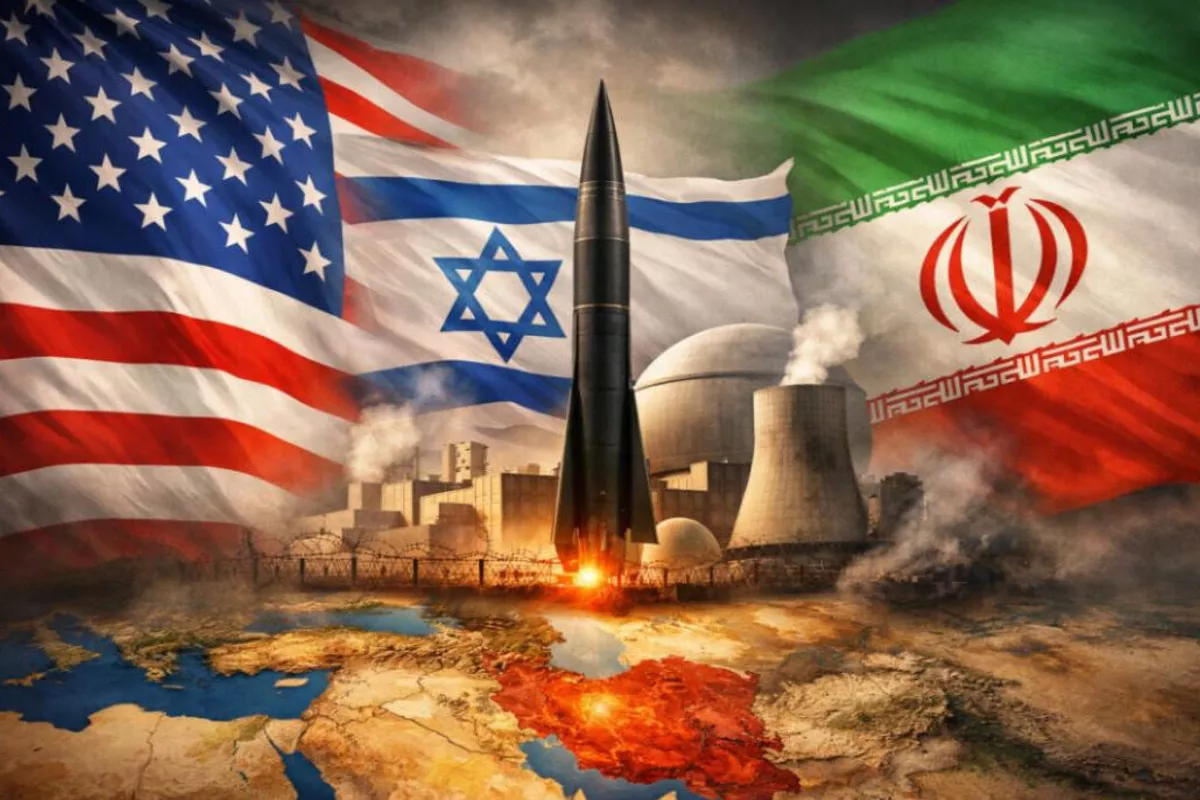
Iran–US tensions continue to increase day by day, but what was the real reason behind this conflict, and when did it actually begin? This is not merely a military confrontation; it has also deeply affected global economies, international policies, energy markets, and regional stability.
If we examine history, the roots of this conflict go back to the period after World War II. At that time, the Middle East gained immense global importance because of its oil reserves and strategic geographical position. Iran, in particular, became a key state in the region.
After World War II ended, Iran was ruled by Shah Mohammad Reza Pahlavi, who was considered a close ally of the United States and Western countries. During the Cold War, the United States heavily relied on Iran to counter Soviet influence in the region.
In 1951, Iranian Prime Minister Mohammad Mossadegh nationalized Iran’s oil industry. This decision severely affected British and American economic interests. In 1953, a secret operation backed by the CIA and British intelligence overthrew Mossadegh’s government and restored Shah Mohammad Reza Pahlavi to full power. This event became one of the major reasons behind anti-American sentiment and resistance movements inside Iran.
During the Shah’s rule, modernization, industrial growth, and Western influence expanded rapidly in Iran. However, internal religious and political opposition also grew stronger. Ayatollah Ruhollah Khomeini emerged as the leading voice against the Shah and described his government as an “American-backed dictatorship.”
In 1979, the Islamic Revolution took place in Iran. The Shah fled the country, and Ayatollah Khomeini became the Supreme Leader of Iran. Iran transformed into an Islamic Republic and completely severed its relations with the United States.
Later in 1979, Iranian students seized the US Embassy in Tehran and took dozens of Americans hostage. This incident permanently destroyed diplomatic relations between the two countries.
Soon after, the Iran-Iraq War began. Iraq was led by Saddam Hussein, while the United States openly supported Iraq by providing weapons, intelligence, and advanced technology. On the other hand, Iran positioned itself as a symbol of resistance against American influence.
After the death of Ayatollah Khomeini, Ayatollah Ali Khamenei became Iran’s Supreme Leader. Iran continued its foreign policy of resistance and expanded its influence across the Middle East. Many people believed that after Khamenei’s death, the United States hoped a new Iranian leadership would emerge that could align more closely with American interests, but those assumptions proved wrong.
In the 2000s, Iran’s nuclear program became a major source of tension. The United States and Western countries accused Iran of pursuing nuclear weapons, while Iran insisted that its program was only for peaceful and defensive purposes. Severe economic sanctions were imposed on Iran, damaging its economy.
In 2015, Iran and world powers signed a historic nuclear agreement under which Iran agreed to limit its nuclear program. However, in 2018, President Donald Trump withdrew the United States from the deal and reimposed strict sanctions on Iran.
The death of Iranian General Qassem Soleimani further intensified tensions and pushed the region closer to a larger conflict. His killing raised fears of a broader war in the Middle East.
When tensions escalated between Israel and Palestine in October 2023, Iran openly supported Palestine as well as groups such as Hamas, Hezbollah, and the Houthi rebels. During the prolonged conflict, Israel targeted and killed several important leaders associated with these groups, including influential figures such as Hassan Nasrallah.
By late 2025 and early 2026, Iran and Israel entered into direct military confrontation. Both sides launched missile strikes and hundreds of drone attacks against each other. The United States strongly supported Israel at every stage of the conflict and eventually became directly involved.
According to several reports, Iran’s Supreme Leader Ayatollah Ali Khamenei was killed on 28 February 2026 in an operation allegedly supported by US intelligence. Iranian news channels reportedly announced the news late at night, further escalating tensions between Iran and the United States.
As a result, the global economy began to suffer heavily. Stock markets declined continuously, and oil prices in international markets increased sharply. Iran itself faced rising unemployment, inflation, and severe economic difficulties. The Iranian rial also lost much of its value. Currently, one US dollar is worth approximately 1,792,000 Iranian rials.
The effects of this conflict are no longer limited to the Middle East; they are also spreading toward Europe, where inflation and unemployment are becoming serious concerns.
Pakistan and Qatar have attempted to mediate peace negotiations between the two sides, but no final agreement has yet been achieved. Although some conditions have been accepted by both parties, several major issues remain unresolved.
Key Disputed Issues
- Control of the Strait of Hormuz
Iran insists on maintaining control over the Strait of Hormuz and wants the authority to collect taxes and fees from ships and trade routes passing through the region.
- Iran’s Nuclear Program
Iran argues that it has the right to develop and maintain a nuclear program for defensive and national security purposes.
- Complete End to the War
Iranian officials also demand a complete end to the conflict. They claim that the US administration often changes its position and cannot be trusted fully regarding peace commitments.
- Conclusion
Will this conflict eventually come to an end, or will tensions continue to rise? How has life in the Middle East changed because of these wars? Could this conflict turn into a wider global war involving powers such as Russia and China? What role will Pakistan play in the future, and can Pakistan strengthen its economy and foreign policy amid growing global instability?
- Resources
- Council on Foreign Relations (CFR) — U.S.–Iran Relations Timeline
- https://www.cfr.org
- BBC News — Middle East Analysis & Iran History Reports
- https://www.bbc.com
- Al Jazeera — Iran–US Conflict Coverage & Middle East Analysis
- https://www.aljazeera.com
- Reuters — International Political & Military Reports
- https://www.reuters.com
- The Guardian — Middle East Conflict Reporting
- https://www.theguardian.com
- CNN World — U.S. Foreign Policy & Iran Coverage
- https://www.cnn.com
- Washington Post — U.S. Foreign Policy Analysis
- https://www.washingtonpost.com
- International Energy Agency (IEA) — Strait of Hormuz & Oil Supply Reports
- https://www.iea.org
- Academic Research (ArXiv) — Economic Impact of Sanctions Studies
- https://arxiv.org