

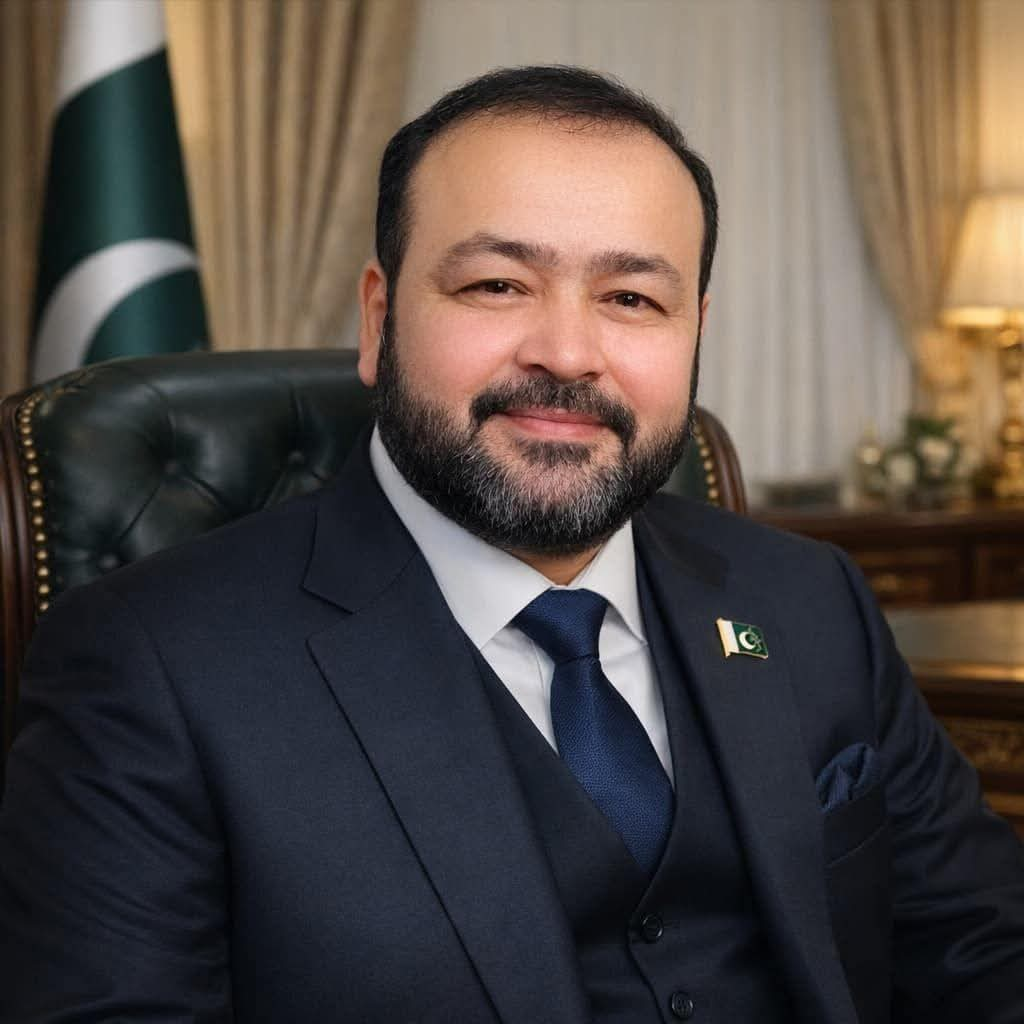
- By: Dr. Muhammad Tayyab Khan Singhanvi (Ph.D)
The recent negotiations between the United States and Iran concluding without any concrete agreement represent far more than a mere diplomatic failure; they reflect the deeper structural tensions of global politics, mutual mistrust, and the psychology of power. At face value, these talks were accompanied by cautious optimism, particularly in a region already burdened by instability, proxy conflicts, and strategic uncertainty. Yet, the outcome once again followed a familiar pattern: deadlock, ambiguity, and renewed questions about the future.
It is important to recognize that relations between Washington and Tehran have never been simple or linear. Their history is marked by decades of ideological divergence, geopolitical rivalry, and competing visions of regional order. In such a context, any direct or indirect engagement between the two states is, in itself, a significant diplomatic development. However, expectations of swift or decisive breakthroughs are often unrealistic given the depth of structural contradictions involved.
The failure of the recent round of talks cannot be explained solely by the intensity of disagreements. Rather, it is rooted in deeper strategic and psychological factors. The United States, committed to preserving its global influence and the security of its allies, views Iran’s nuclear ambitions and regional activities as a direct challenge to its strategic interests. Iran, on the other hand, asserts its sovereign right to pursue independent policies free from external coercion. This fundamental divergence continues to define and constrain every attempt at meaningful negotiation.
Another critical dimension is the persistent deficit of trust between the two sides. Trust is the cornerstone of any diplomatic process, yet in the case of US–Iran relations, it remains profoundly eroded. Historical grievances, perceived betrayals, and inconsistent commitments have created an environment in which every proposal is viewed with suspicion. Consequently, even prolonged negotiations accompanied by optimistic statements rarely translate into tangible progress.
This impasse must also be understood within the broader geopolitical landscape of the Middle East. The region remains a theatre of overlapping conflicts and competing power projections. Any potential US–Iran agreement inevitably carries implications not only for bilateral relations but also for regional alliances, security architectures, and the strategic balance of power. The absence of agreement, therefore, signals the continued fragility of regional stability and the complexity of achieving consensus among multiple stakeholders.
At the same time, diplomacy should not be judged solely by immediate outcomes. It is, by nature, a gradual and iterative process. Even negotiations that appear unsuccessful may lay the groundwork for future breakthroughs by clarifying positions, narrowing misunderstandings, and identifying possible areas of convergence. In this sense, the recent talks may be interpreted not as a definitive collapse, but as an intermediate phase in a longer diplomatic trajectory.
Time, in international relations, is itself a strategic variable. Both Washington and Tehran are acutely aware that any eventual agreement would have long-term consequences extending far beyond present circumstances. It would reshape political alignments, economic frameworks, and security calculations for years to come. As a result, both sides tend to adopt cautious and calculated positions, prioritizing strategic leverage over immediate compromise even at the cost of prolonged stalemate.
From this perspective, the current situation may be better described as a temporary diplomatic pause rather than a terminal breakdown. Channels of communication have not been entirely severed, and behind-the-scenes interactions are likely to continue. Historical precedent suggests that even deeply entrenched conflicts can witness unexpected shifts when political will, flexibility, and mutual interest converge at critical junctures.
Ultimately, the broader lesson of the US–Iran diplomatic impasse is that sustainable global peace cannot be achieved through coercion or unilateral pressure alone. It requires sustained dialogue, mutual respect, and a willingness to accommodate differing perspectives. While the latest round of talks did not produce an agreement, they reaffirm the enduring necessity of engagement as the only viable pathway toward long-term resolution.
In conclusion, although the current deadlock may appear discouraging, it still contains within it the latent possibility of future progress. Whether this potential is realized will depend on the wisdom, strategic foresight, and diplomatic commitment of both parties in the days ahead.
- The writer is a recipient of the Sanad-e-Imtiaz, and a distinguished senior analyst, scholar, and PhD holder.
- He can be reached at +92 333 2103855.
- muhammadtayyabk773@gmail.com